The Liberation of Kherson
Kherson and the right bank of the Kherson region
Kherson was the only regional capital russia captured after 24 February 2022. For months its people came out to rallies with Ukrainian flags, and from 29 August Ukraine’s forces advanced in the south. On 11 November Ukrainian troops entered the city, and crowds with flags greeted them.
Timeline
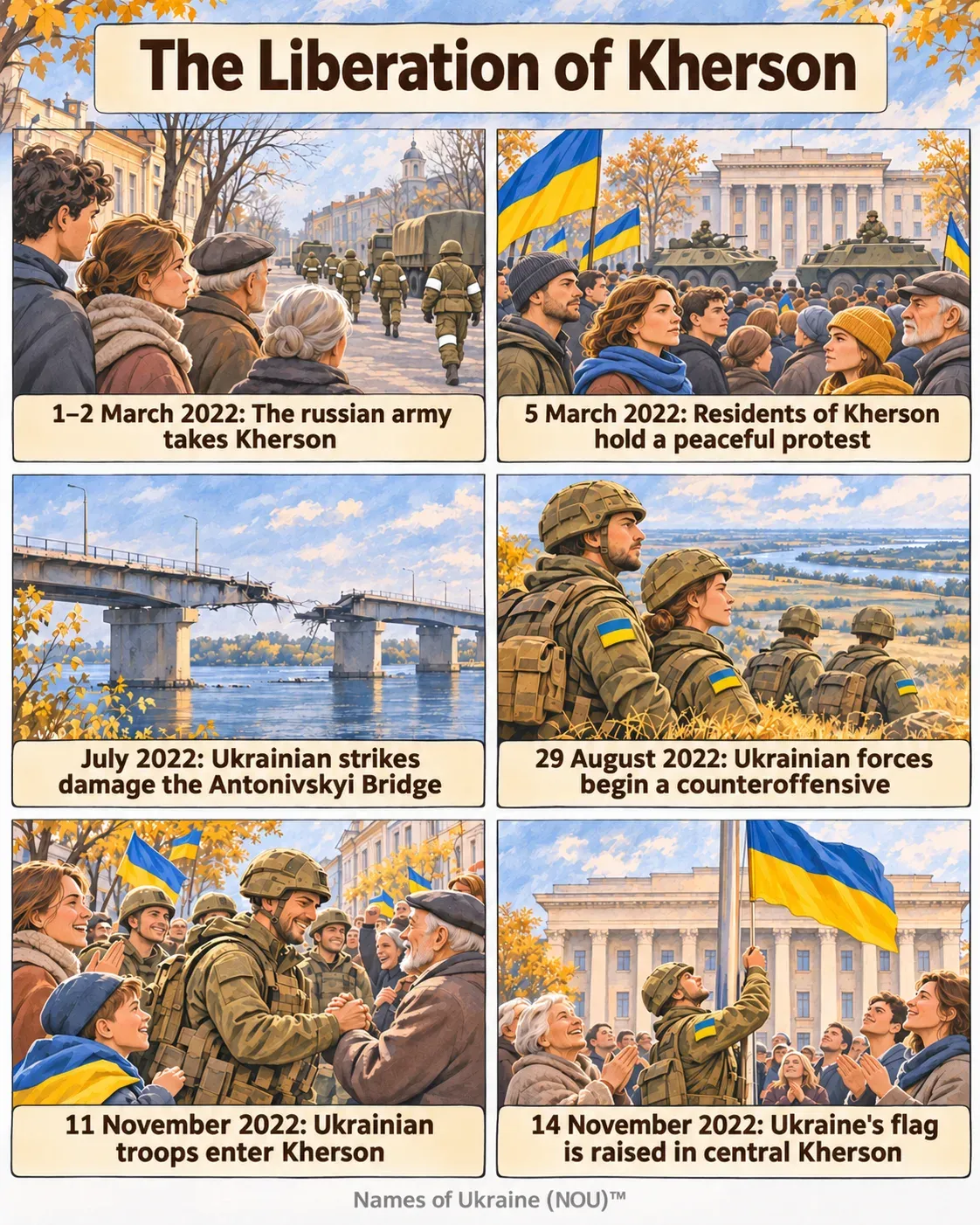
- 1–2 March 2022 The russian army takes Kherson, the only regional capital occupied after 24 February
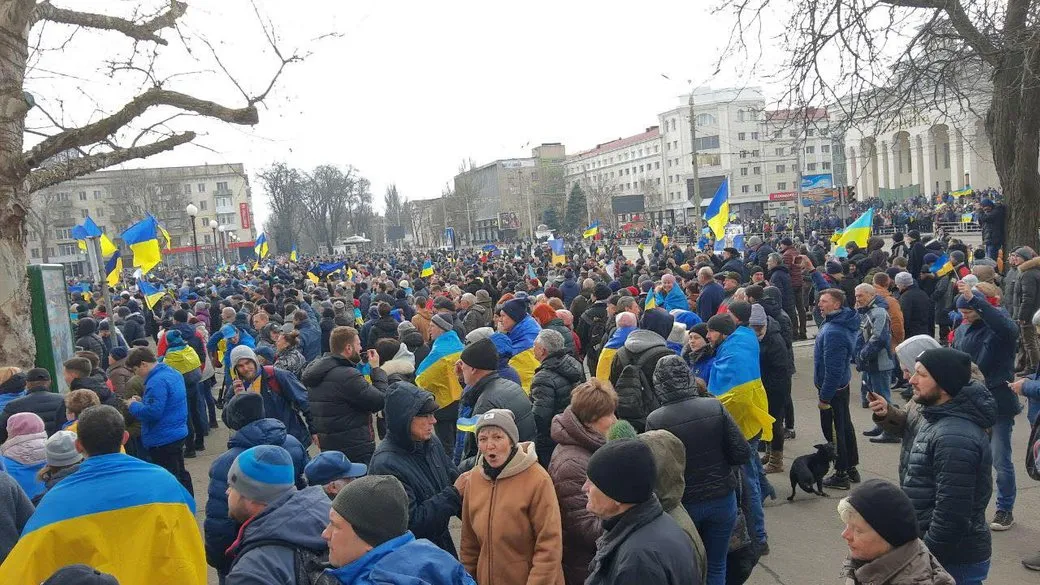
- 5 March 2022 Thousands of Kherson residents gather on Freedom Square, chanting “Kherson is Ukraine!”
- July 2022 Ukrainian strikes damage the Antonivskyi bridge, russia’s supply route to its troops on the right bank
- 29 August 2022 Ukraine’s forces begin the offensive in the Kherson region
- Early October 2022 A breakthrough along the Dnipro in the north of the region
- 9 November 2022 Moscow announces it is pulling its troops off the right bank of the Dnipro
- 11 November 2022 Ukrainian troops enter Kherson
- 14 November 2022 The State Flag of Ukraine is raised in a ceremony in the centre of Kherson
For more than eight months Kherson lived under occupation, and all that time its people waited for their own. On 11 November 2022 Ukrainian troops entered the city. People came out into the streets with blue-and-yellow flags, hugged the soldiers and had their photos taken with them. So ended an offensive that had been fought on the right bank of the Dnipro for almost two and a half months.
Why it happened
On 24 February 2022 russian troops moved into the Kherson region from Crimea. The very next day they seized the Antonivskyi bridge over the Dnipro, and on 1–2 March they took Kherson. It was the only regional capital russia managed to capture after the start of the full-scale invasion.
But the city did not give in. On 5 March thousands of people gathered on Freedom Square with Ukrainian flags, chanting “Kherson is Ukraine!”. The rallies went on for weeks, and the occupiers broke them up by force. When russian troops took over the square, people gathered in other parts of the city. A civil resistance movement, “Yellow Ribbon”, was active too: its members tied yellow ribbons, put up leaflets and posters, painted graffiti, and from May to September ran the “Stop the Referendum!” campaign. In September russia held a sham referendum in the occupied lands, which Ukraine and Western countries called illegal, and on 30 September it announced the “annexation” of the Kherson region.
What happened
The russian forces on the right bank depended on a few crossings over the Dnipro. In July Ukrainian strikes, some of them with American HIMARS launchers, damaged the Antonivskyi bridge, and it grew ever harder for russia to supply its troops.
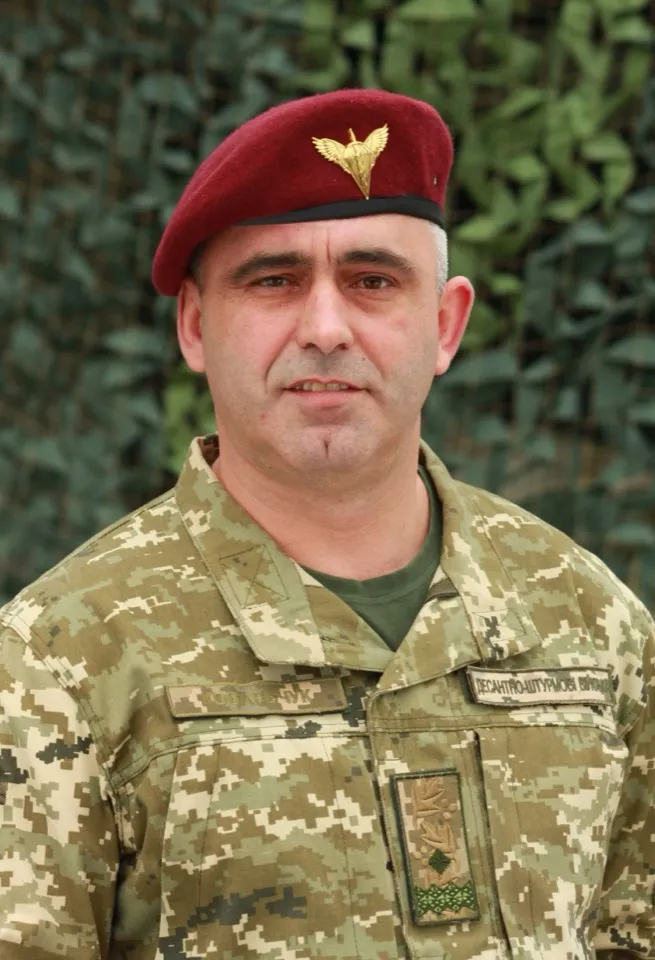
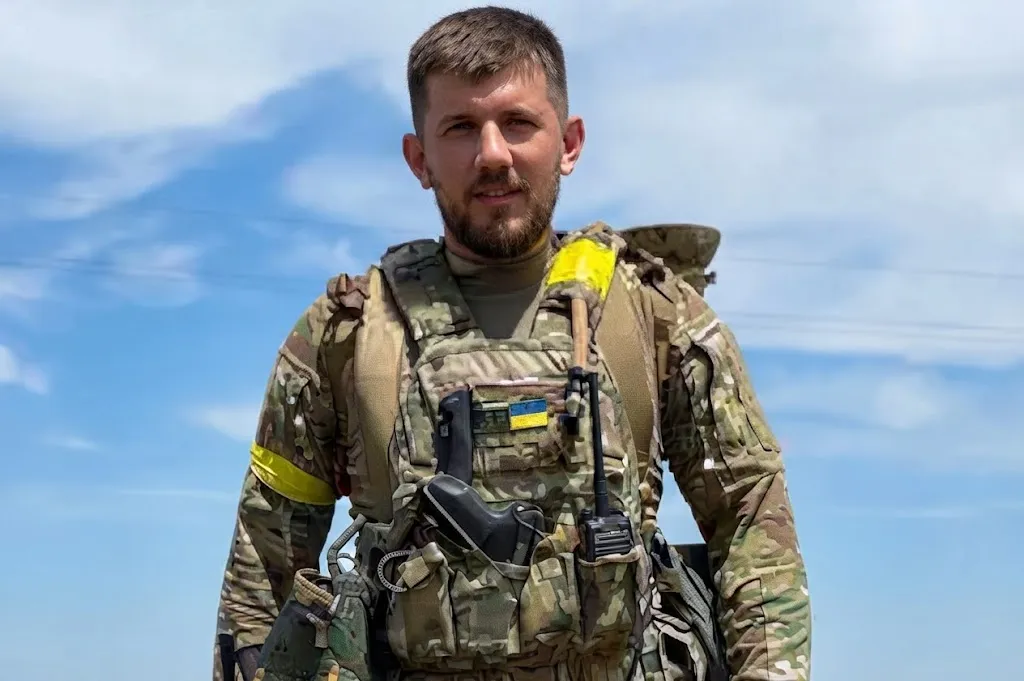
On 29 August Ukraine’s forces began the offensive in the Kherson region. At first it was led by the commander of Operational Command South, Andrii Kovalchuk: his aim was not only to free the land but to cut off the russian troops on the right bank. The offensive was hard going; according to press reports, command of the operation was later handed to Brigadier General Oleksandr Tarnavskyi. Pavlo Petrychenko, an aerial scout of the 59th Brigade, used drones to find the occupiers’ equipment and adjust artillery fire. In early October Ukrainian troops broke through the defences along the Dnipro in the north of the region. According to the command, between 1 October and 10 November alone they took back 41 towns and villages.
On 9 November russia announced that it was pulling its troops back to the left bank of the Dnipro. As they retreated, they blew up bridges: the Antonivskyi road and railway bridges, the bridge on the dam of the Kakhovka hydroelectric plant in Nova Kakhovka, and the Darivka bridge. On 11 November Ukrainian soldiers entered Kherson, and people with flags greeted them in the city centre. The troops of Mykhailo Drapatyi also took part in liberating Kherson, and after the city was freed he commanded the “Kherson” grouping. On 12 November the regional administration and the police were back in the city, and on 14 November the State Flag of Ukraine was raised in a ceremony in the centre of Kherson.
Why it matters today
Kherson showed that occupation cannot make people forget who they are. Its people stood up to armed soldiers with nothing but flags, and their resilience became an example for the whole country. The city’s liberation proved that Ukraine’s army can win back its land even when the enemy already counts it as its own. The memory of those days is a reminder that freedom rests on the courage of soldiers and on the loyalty of ordinary people.