1897–c. 1942
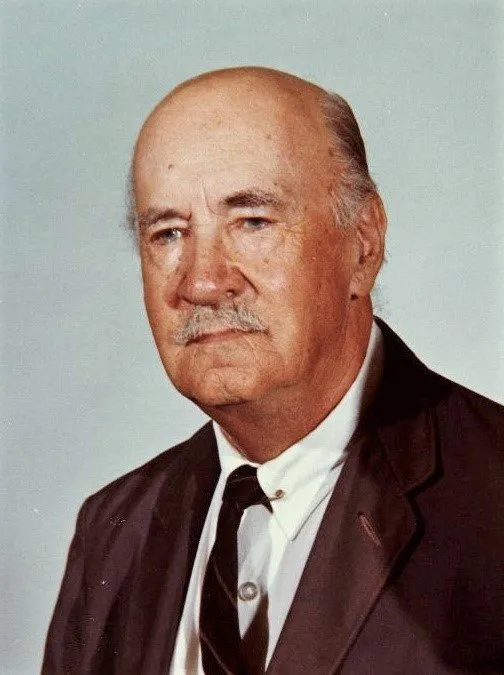
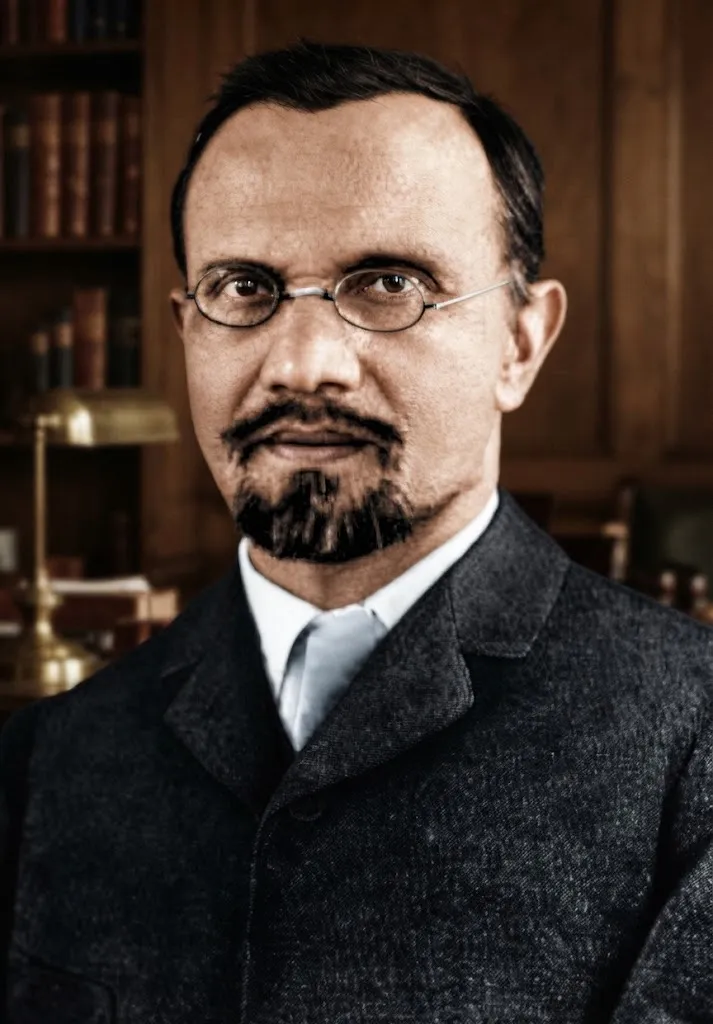
Yurii Kondratiuk
Spaceflight theorist
How do you reach the Moon without hauling the whole ship there? Oleksandr Sharhei of Poltava, who lived as Yurii Kondratiuk, worked it out in 1916–1919: leave the craft in orbit and send a small cabin down. Apollo used the idea.
Key accomplishments
- Derived the basic equation of rocket motion independently of Tsiolkovsky and described multistage rockets (manuscript of 1918–1919)
- Proposed reaching the Moon via lunar orbit with a separate landing cabin (“Kondratiuk’s route”), the scheme used in the Apollo program
- The book The Conquest of Interplanetary Space (Novosibirsk, 1929)
- Designed a large wind power station on Mount Ai-Petri in Crimea (1930s)
- A crater on the far side of the Moon bears his name; inducted into the International Space Hall of Fame (New Mexico, USA) in 2014
How do you get to the Moon without hauling the whole ship there and back?
A young man from Poltava wrote down the answer in his notebooks back in 1916–1919. The craft goes into orbit around the Moon, and only a small separate cabin goes down to the surface and comes back up. This “Kondratiuk route” was later used in America’s Apollo program, and NASA credits him with the first concept of lunar orbit rendezvous.
A man with a borrowed name
His real name was Oleksandr Sharhei. He was born in 1897 in Poltava, caught the space-travel bug as a schoolboy, and in 1916 was drafted into the Russian army. In 1918–1919 in Kyiv he wrote the manuscript “To Those Who Will Read in Order to Build”, setting out, independently of other scientists, his own theory of spaceflight and describing multistage rockets. As a former officer he risked arrest under Soviet rule, so in 1921 his stepmother obtained for him the papers of a dead student, Yurii Kondratiuk. He lived the rest of his life under that name. In 1929 his book The Conquest of Interplanetary Space came out in Novosibirsk.
A granary without a single nail
Kondratiuk built grain elevators in Siberia. In 1930 he was arrested for “sabotage”: his superiors decided that the wooden granary he had built without a single nail, the “Mastodon”, would not hold its load. It stood for more than 60 years. Instead of a labour camp, Kondratiuk was sent to a design bureau for imprisoned engineers, where he took on a project for a large wind power station on Mount Ai-Petri in Crimea. In 1933 in Moscow he met Serhii Korolov. In the summer of 1941 he volunteered for the people’s militia and was killed at the front.
Debates and assessments
How he died is still being investigated. The Internet Encyclopedia of Ukraine says he died in October 1941; the more recent Encyclopedia of Modern Ukraine says he was killed in battle between 22 and 25 February 1942 near the village of Krivtsovo (now Oryol Oblast, Russia).
Why it matters today
Kondratiuk’s idea made landing people on the Moon technically possible. A technical university and the aviation and space museum in Poltava bear his name, and so does a crater on the far side of the Moon.