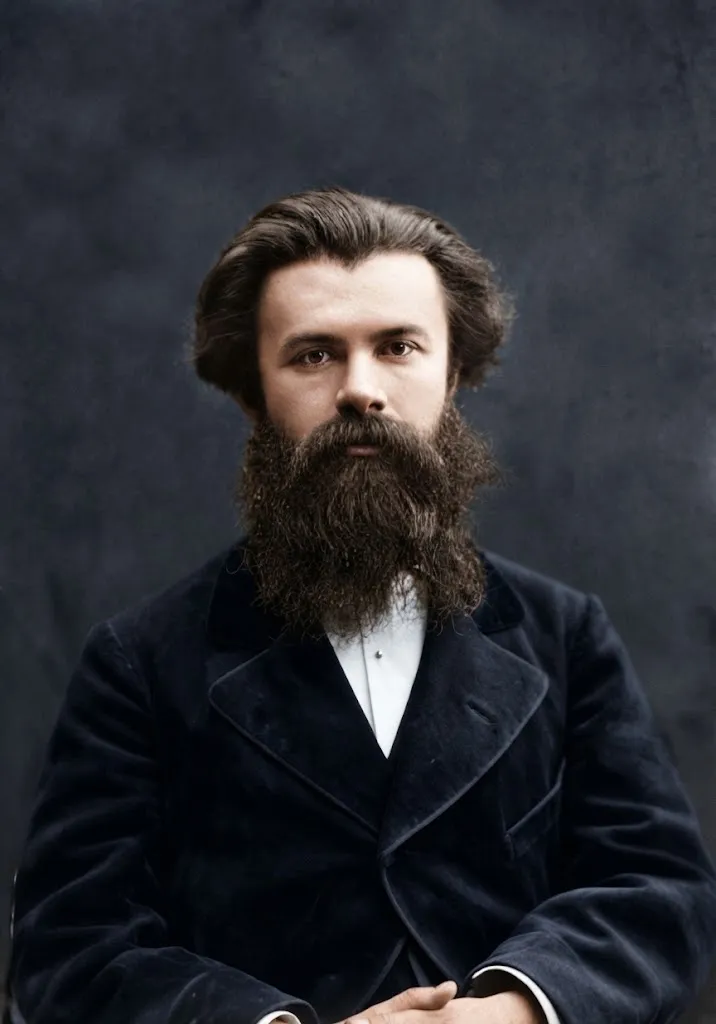
b. 1976
Oleh Sentsov
Film director, former political prisoner
145 days without food in a Russian penal colony, to demand freedom for others. Film director Oleh Sentsov from Simferopol was seized after the occupation of Crimea in 2014 and given 20 years. A Sakharov Prize laureate, freed in 2019, he joined the army.
Key accomplishments
- Feature debut Gamer (2011), screened at the Rotterdam International Film Festival
- Shevchenko National Prize of Ukraine (2016)
- 145-day hunger strike in a Russian penal colony (May–October 2018), demanding the release of all Ukrainian political prisoners in Russia
- European Parliament’s Sakharov Prize for Freedom of Thought (2018)
- After the full-scale invasion, joined the army: from 2023 an officer of the 47th Separate Mechanized Brigade, from September 2025 a battalion commander
145 days
That is how long Oleh Sentsov’s hunger strike lasted in a Russian penal colony in the Yamal region. On 14 May 2018 he declared it indefinite, with one condition: free all Ukrainian political prisoners in Russia. He lost 20 kilograms and ended the strike in early October, when he was facing force-feeding. That same month the European Parliament awarded him the Sakharov Prize for Freedom of Thought.
A director taken from Crimea
Sentsov (often spelled Oleg Sentsov, the Russian form) was born in 1976 in Simferopol, studied at the Kyiv National Economic University, and in 2008 co-founded the film company Krai Kinema. His first feature, Gamer, was screened at the Rotterdam film festival in 2012.
In May 2014, shortly after Russia annexed Crimea, Russian security forces detained him in Simferopol. He was charged with terrorism, and on 25 August 2015 a Russian court sentenced him to 20 years in a penal colony. The human rights centre Memorial recognised Sentsov as a political prisoner, and in 2016 he received Ukraine’s Shevchenko National Prize.
From a cell to the front
On 7 September 2019 Sentsov was freed in an exchange between Ukraine and Russia, and that November he received the Sakharov Prize in person in Strasbourg. He went back to filmmaking and made the drama Rhino (2021). After the full-scale invasion in 2022 he joined the territorial defence, fought for Kyiv and later served in the 47th Separate Mechanized Brigade as a junior lieutenant commanding an assault company. In 2023 he suffered a concussion. In September 2025, Interfax-Ukraine reported, Sentsov became a battalion commander (the latest information as of October 2026).
Why it matters today
Sentsov’s case drew the world’s attention to Ukrainians persecuted by Russia for resisting the occupation of Crimea. His path from debut director to political prisoner, Sakharov Prize laureate and soldier has become, for many, an example of how an artist answers a war.