1961–2021
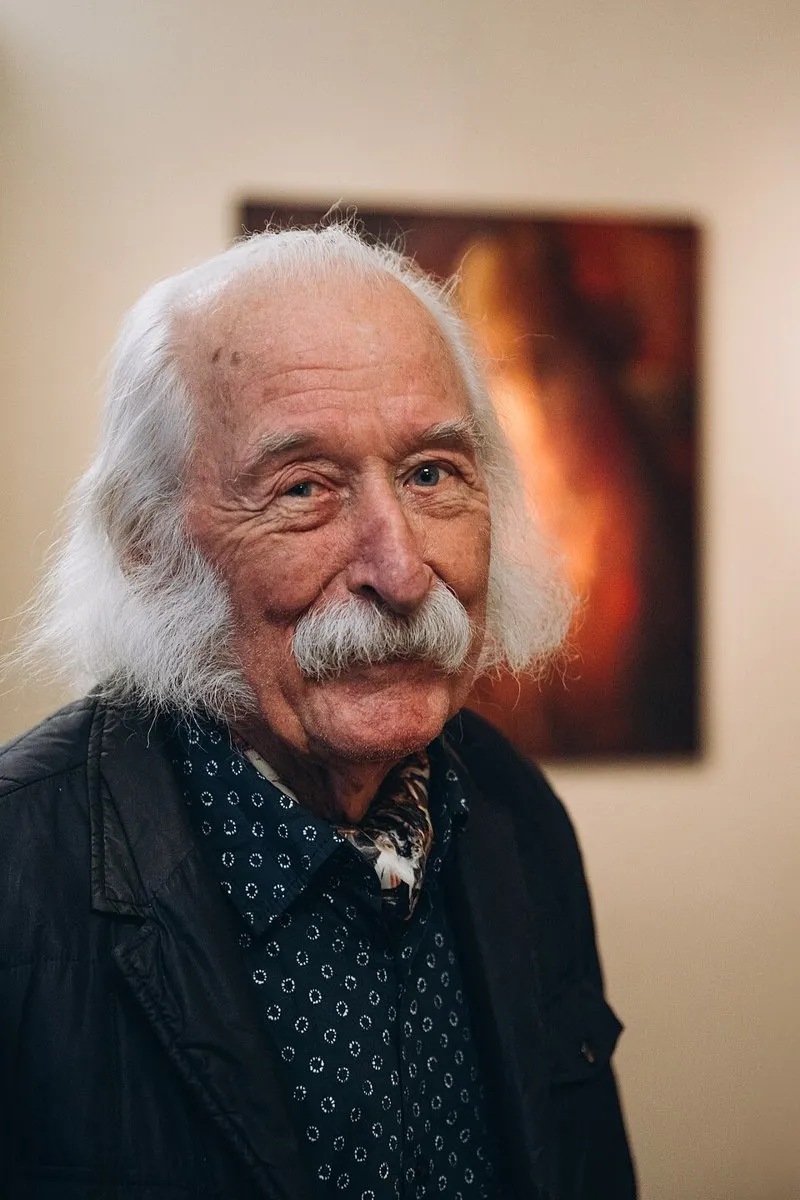
Oleksandr Roitburd
New Wave painter, museum director
His video about the battleship Potemkin was shown at the Venice Biennale and then bought by New York’s MoMA. Odesa-born Oleksandr Roitburd was a leading painter of the Ukrainian New Wave, and he turned Odesa’s old art museum into a lively place for the whole city.
Key accomplishments
- A leading painter of the Ukrainian New Wave of the 1980s and 1990s
- The video Psychedelic Invasion of the Battleship Potemkin into the Tautological Hallucinosis of Sergei Eisenstein (1998): Venice Biennale 2001, MoMA collection
- Co-founder of the New Art association in Odesa; worked on launching the Soros Center for Contemporary Art in Odesa and chaired its board
- Director of the Odesa Art Museum (2018–2021): founded the Marazli Club of patrons
The Odesa boy and the New Wave
Oleksandr Roitburd was born in Odesa in 1961 and graduated from the art and graphics faculty of the Odesa Pedagogical Institute. He used to say: “I took up art so I wouldn’t have to go to work every day.” A new stage in his art began in 1987 with the Kyiv exhibition Youth of the Country. This was the time of the Ukrainian New Wave, the painting of perestroika and the break-up of the USSR, and Roitburd became one of its leading artists.
A battleship at MoMA
In the 1990s Roitburd helped build contemporary art in Odesa: he co-founded the New Art association, worked on launching the Soros Center for Contemporary Art and chaired its board. He also took up video. His Psychedelic Invasion of the Battleship Potemkin into the Tautological Hallucinosis of Sergei Eisenstein reworks Eisenstein’s famous film Battleship Potemkin. It was shown at the Venice Biennale in 2001, and later bought by the Museum of Modern Art (MoMA) in New York. Roitburd went on to run the Gelman Gallery in Kyiv, and in the winter of 2013–2014 he was an active part of the Euromaidan protests in Odesa. After the revolution he curated The Mezhyhirya Code, an exhibition about Viktor Yanukovych’s residence.
The museum whose roof stopped leaking
In December 2017 Roitburd won the competition to become director of the Odesa Art Museum. He wanted to turn it into a “city forum”: concerts, film screenings, children’s camps, free-admission days. More than a hundred businesspeople, artists and public figures joined the Marazli Club to buy new works for the museum. The museum’s income grew from roughly 500,000 hryvnias in 2016 to about 3 million in 2020. And the fact that the old palace’s roof no longer leaked he jokingly counted among his achievements.
The fight for the museum
In September 2019 the Odesa regional council dismissed Roitburd early. People in Odesa rallied in his support, and in June 2021 the Supreme Court ruled the dismissal unlawful. Roitburd died on 8 August 2021 after a long illness, aged 59.
Why it matters today
Oleksandr Roitburd proved that an old state museum can become a lively place a city wants to visit. His idea of a “city forum” showed that a museum can rest not only on a budget but on people: businesspeople, artists and public figures ready to invest in something shared. When he was dismissed, people in Odesa rallied for him, showing that culture was a cause they would stand up for. And his paintings and videos, from the New Wave to a work at MoMA, show the world how bold Ukrainian art became as one era gave way to another.