1949–c. 1979
Volodymyr Ivasiuk
Composer of “Chervona Ruta”
The song “Chervona Ruta” was born from a book of folk kolomyikas and went on to be heard across the USSR. In 1979 its author, the Bukovynian composer Volodymyr Ivasiuk, was found hanged in a forest near Lviv; the circumstances of his death have never been explained.
Key accomplishments
- “Chervona Ruta” (Red Rue) and “Vodohrai” (Fountain), 1970: winners of the all-Union TV festivals Pisnia-71 and Pisnia-72
- Songs for the musical film Chervona Ruta (1971)
- 107 songs, among them “Pisnia Bude Pomizh Nas” (A Song Will Be Among Us), “Balada pro Malvy” (Ballad of the Hollyhocks), “Dva Persteni” (Two Rings) and “Klenovyi Vohon” (Maple Fire), and 53 instrumental works
- Shevchenko Prize (1994, posthumously); Hero of Ukraine (2009, posthumously, Decree No. 110/2009)
A song from a book of kolomyikas
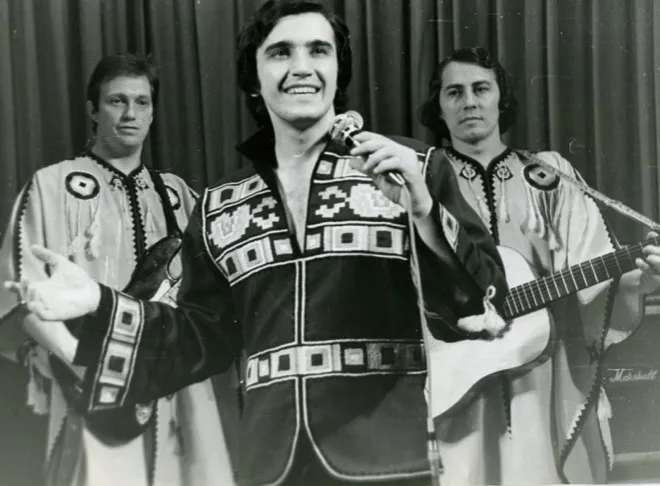
Where did “Chervona Ruta” come from? The idea for its words and music came to Volodymyr Ivasiuk under the influence of Kolomyiky, a collection of folk songs published by the ethnographer Volodymyr Hnatiuk in the early 20th century. In 1970 Ivasiuk wrote “Chervona Ruta” and “Vodohrai,” and on 13 September that year he first sang them with Olena Kuznetsova on Theatre Square in Chernivtsi, on live TV.
His best-known songs were performed by the band Smerichka and its soloists Vasyl Zinkevych and Nazarii Yaremchuk. Sung by them, his songs won the all-Union TV festivals of 1971 and 1972. Bands in many countries took up “Chervona Ruta,” and in 1974 Sofia Rotaru sang “Vodohrai” at the Sopot festival.
A doctor who wrote songs
Ivasiuk was born in 1949 in Kitsman in Bukovyna, the son of the writer Mykhailo Ivasiuk. At 15 he set up a girls’ vocal group at school, Bukovynka, and wrote songs for it. After moving to Lviv in 1972 he graduated from the medical institute and studied composition at the conservatory. He wrote songs to his own lyrics and to poems by Rostyslav Bratun, Bohdan Stelmakh and Dmytro Pavlychko: “Dva Persteni,” “Ya – Tvoie Krylo,” “Klenovyi Vohon,” “Pisnia Bude Pomizh Nas.” He composed the music for a stage version of The Standard-Bearers, a novel by Oles Honchar. In all he wrote 107 songs and 53 instrumental works.
On 24 April 1979 Ivasiuk disappeared. On 18 May his body was found hanged in the Briukhovychi forest near Lviv; the exact date of his death is unknown. On 22 May he was buried in Lychakiv Cemetery. Although the KGB tried to keep the farewell small, more than 10,000 people came to the funeral.
Debates and assessments
The Soviet investigation of 1979–1980 concluded that it was suicide. Few people believed it. The Internet Encyclopedia of Ukraine, published in the West in 1988, says the circumstantial evidence points to the KGB; the Encyclopedia of Modern Ukraine says he died in unexplained circumstances.
The investigation was reopened in 2009, and in November 2012 the case was closed again “for lack of a crime.” In June 2014 the Prosecutor General’s Office overturned that decision as unfounded. In 2019 the Kyiv Scientific Research Institute of Forensic Examinations carried out experiments and concluded that Ivasiuk could not have hanged himself unaided.
Why it matters today
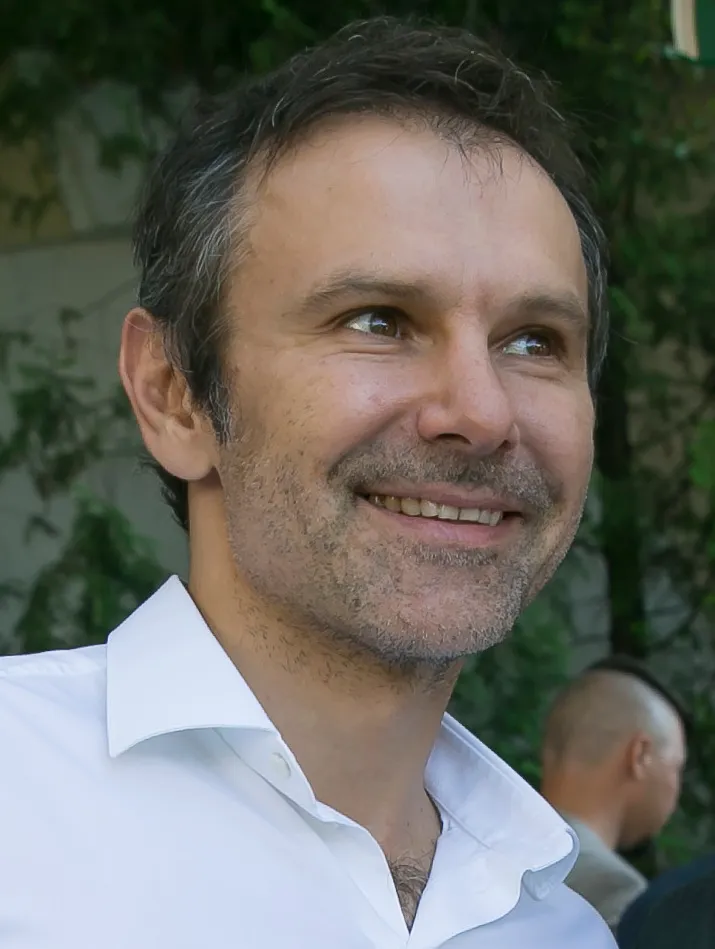
Ivasiuk’s songs blend Hutsul and Pokuttia folk music with beat-music rhythms, and he proved that a Ukrainian song could be modern and deeply national at the same time. The Chervona Ruta festival (since 1989) is dedicated to his memory; among others, the young Kuzma Skriabin performed there and the band Okean Elzy won it. Posthumously Ivasiuk received the Shevchenko Prize (1994) and the title Hero of Ukraine (2009). Monuments to him stand in Kitsman and Lviv; one of the Lviv monuments (2011) was paid for by Svyatoslav Vakarchuk.