1872–1952
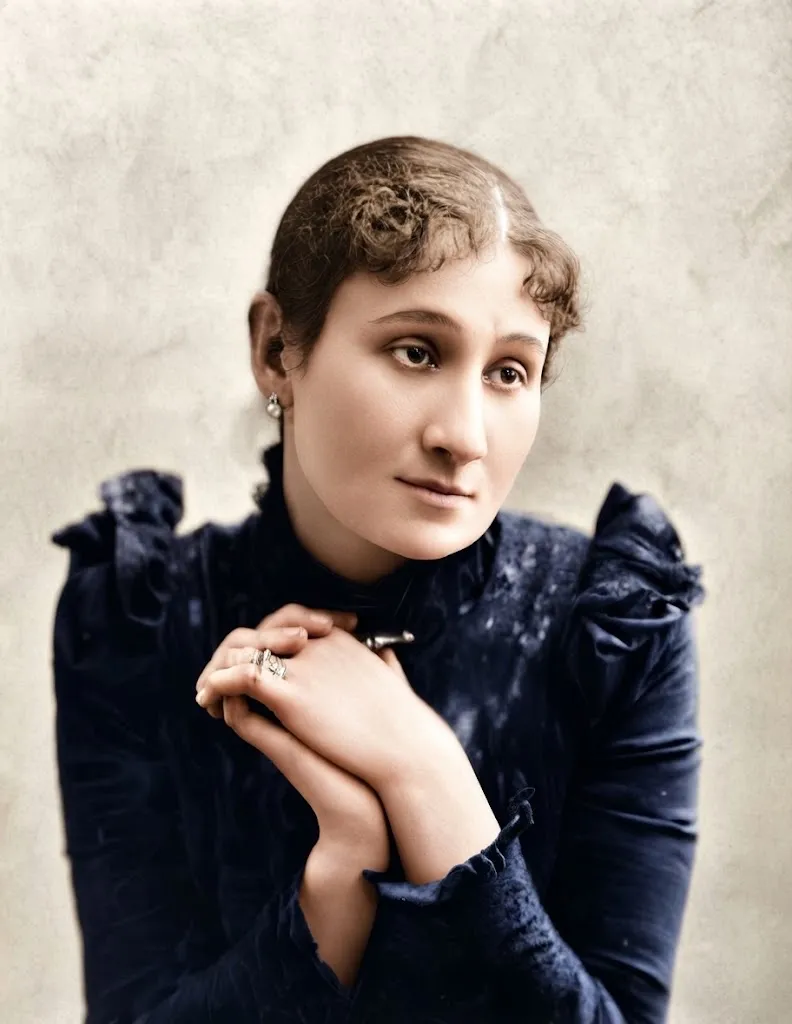
Solomiia Krushelnytska
Opera singer (soprano)
In 1904 Puccini’s Madama Butterfly flopped at La Scala. That same year, at the composer’s invitation, Solomiia Krushelnytska sang the title role brilliantly: a soprano from the Ternopil region known on stages across Europe and South America.
Key accomplishments
- Sang at La Scala in Milan, the Paris Opéra, the Teatro Colón in Buenos Aires and other leading stages
- In 1904, at Giacomo Puccini’s invitation, she brilliantly sang the role of Butterfly in his opera
- First performer of the title roles in the Italian productions of Richard Strauss’s Salome (1906) and Elektra (1909)
- Professor at the Lviv Conservatory (1944–1951)
How do you rescue an opera that flopped?
In 1904 Giacomo Puccini’s new opera Madama Butterfly failed loudly at its premiere at La Scala in Milan. That same year the composer invited Solomiia Krushelnytska to sing the title role. She sang Butterfly brilliantly at the Teatro Grande, and Puccini considered her “the most beautiful and most charming Butterfly.”
From Biliavyntsi to Buenos Aires
Krushelnytska was born in 1872 in the village of Biliavyntsi in the Ternopil region and grew up in the village of Bila. In 1893 she graduated from the Lviv Conservatory and made her debut in Lviv that same year in Gaetano Donizetti’s La Favorita. She went on to study in Milan and Vienna.
Her soprano was heard in Odesa, Warsaw, Saint Petersburg, Paris, Naples, at La Scala and at the Teatro Colón in Buenos Aires. Her voice spanned three octaves, and she sang every work in its original language. In Italy she was the first to sing the title roles in Richard Strauss’s Salome (1906) and Elektra (1909).
Ukrainian song on the world stage
She sang Ukrainian folk songs and works by Stanyslav Liudkevych, Denys Sichynskyi and Mykola Lysenko, who dedicated several pieces to her, including “Do Not Forget the Days of Youth.” In 1910 she married the Italian lawyer Cesare Riccioni and lived in Viareggio. In the mid-1920s she left the opera stage and gave chamber concerts in Western Europe, Canada and the United States. In 1939 she returned to Lviv, where she was a professor at the conservatory from 1944 to 1951. She died in Lviv in 1952.
Whose name the Lviv Opera bears
Krushelnytska won worldwide recognition alongside singers such as Enrico Caruso and Feodor Chaliapin, and she never forgot Ukrainian song. Since 2001 the Lviv Opera and Ballet Theater has borne her name, and memorial museums dedicated to her are open in Bila and Lviv.