1877–1938
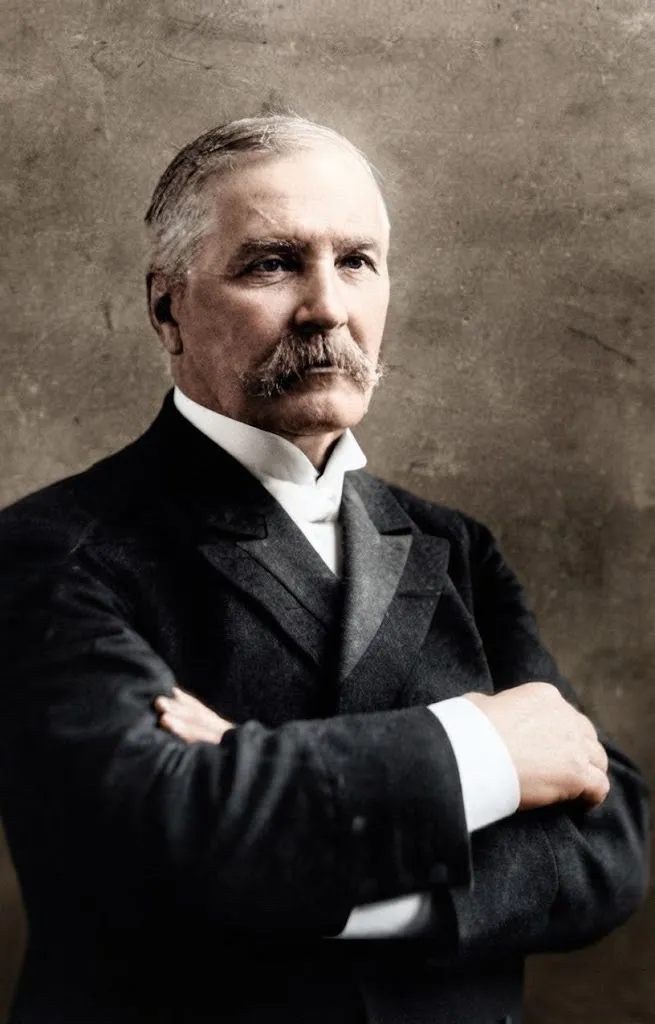
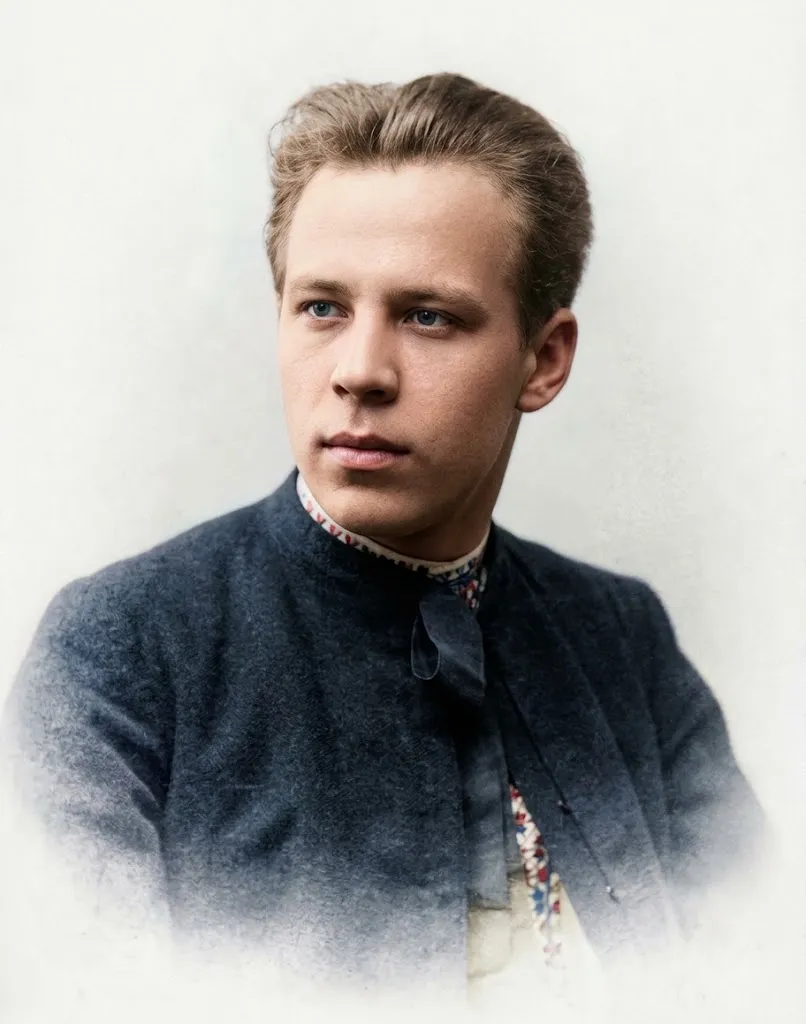
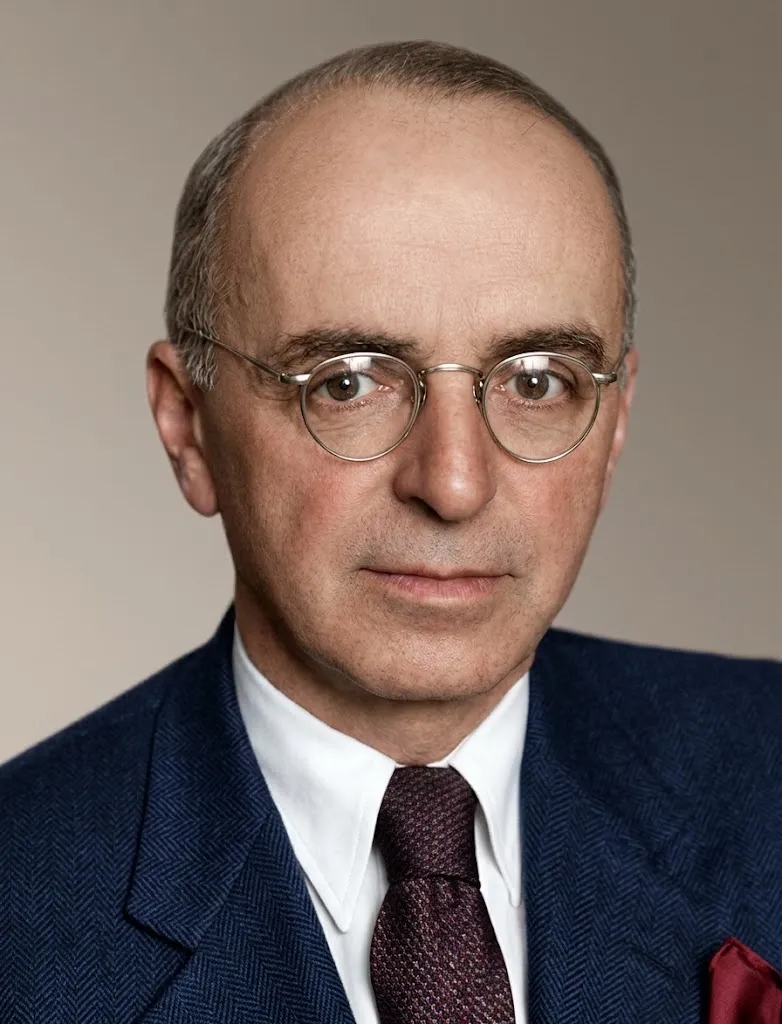
Hnat Khotkevych
Writer and bandurist
A railway engineer, bandura player and writer in one. Hnat Khotkevych built a theatre out of Hutsul villagers and wrote the novelette The Stone Soul and a manual on playing the bandura. In 1938 he was shot in Kharkiv.
Key accomplishments
- The novelette The Stone Soul (1911), about the Hutsuls, his greatest achievement in prose
- The Hutsul Theatre in Krasnoilia, made up of villagers
- A Manual on Playing the Bandura (1909, reissued 1930) and songs for the bandura
- The historical dramas Ihor’s Campaign and the tetralogy Bohdan Khmelnytskyi
- The study The Musical Instruments of the Ukrainian People (1930); translations of Shakespeare, Molière, Schiller and Hugo
An engineer with a bandura
Hnat Khotkevych was born at the end of 1877 in Kharkiv, to a cook and a housemaid. In 1900 he graduated from the Kharkiv Technological Institute and became a railway engineer. But already as a student, from 1896, he performed as a singer and bandura player, among other things with Mykola Lysenko’s choir. At an archaeological congress in Kharkiv he put on a performance by kobzars and lirnyks, the wandering folk minstrels.
A strike and an escape to Galicia
In 1905 Khotkevych was one of the leaders of a railway workers’ strike, and he was persecuted for it. In 1906 he fled to Galicia, then part of Austria-Hungary, and spent six years in the Hutsul village of Kryvorivnia. He toured Galicia and Bukovyna giving concerts of folk songs to the bandura, and in 1909 he published a manual on playing it.
A theatre of Hutsuls
Imagine a theatre where every actor is a Hutsul villager from the mountains. Khotkevych built one in the village of Krasnoilia and took it on tour to many places in Austria-Hungary. He wrote plays for it, such as Dovbush and The Hutsul Year. His finest prose was a romantic novelette about the Hutsuls, The Stone Soul (1911).
Kharkiv, Voronezh and Kharkiv again
In 1912 Khotkevych returned to Kharkiv: he gave lectures, ran a workers’ theatre and from 1913 edited the journal Visnyk kultury i zhyttia. In 1915 the tsarist authorities banished him from Ukraine to Voronezh as “unreliable”, and he came back only in 1917. In the 1920s he taught Ukrainian language and literature at the Derhachi zootechnical school, taught the bandura at the Kharkiv Music and Drama Institute and led a bandura ensemble in Poltava. He wrote historical dramas, a study of Hryhorii Skovoroda and articles on Taras Shevchenko, and translated Shakespeare, Molière, Schiller and Hugo. By his own account, the Skovoroda book (1920) began with villagers from Pan-Ivanivka, where the philosopher is buried: they came to Kharkiv and asked for the 125th anniversary of his death to be marked. In Pereiaslav, the last part of his tetralogy Bohdan Khmelnytskyi, Khotkevych portrayed the Pereiaslav agreement of 1654 as a tool for russia to subjugate Ukraine. In the late 1920s and early 1930s his works came out in eight volumes.
Arrest and execution
In the 1930s Khotkevych came under growing suspicion of “nationalism”. His novel Dovbush was never printed, and he did not live to finish his tetralogy about Shevchenko. He asked various institutions for protection and even wrote to Stalin, but it was no use. On 21 February 1938 he was arrested, accused of belonging to a “nationalist terrorist organization” and of spying for Germany. A special NKVD troika sentenced him to death, and on 8 October 1938 Khotkevych was executed in the basement of the NKVD’s internal prison in Kharkiv. He was rehabilitated in 1956.
Why it matters today
Hnat Khotkevych showed that folk art, from the kobzars’ songs and the bandura to Hutsul village life, could live on the big stage and not only in villages or museums. His manual, songs and concerts did much to develop the art of the bandura, so anyone learning it today follows in his footsteps. His theatre of Hutsul villagers showed that the life of the mountains deserved a real stage. And in Pereiaslav, written in Soviet times, he portrayed the 1654 agreement as a tool for russia to subjugate Ukraine.