1888–1934
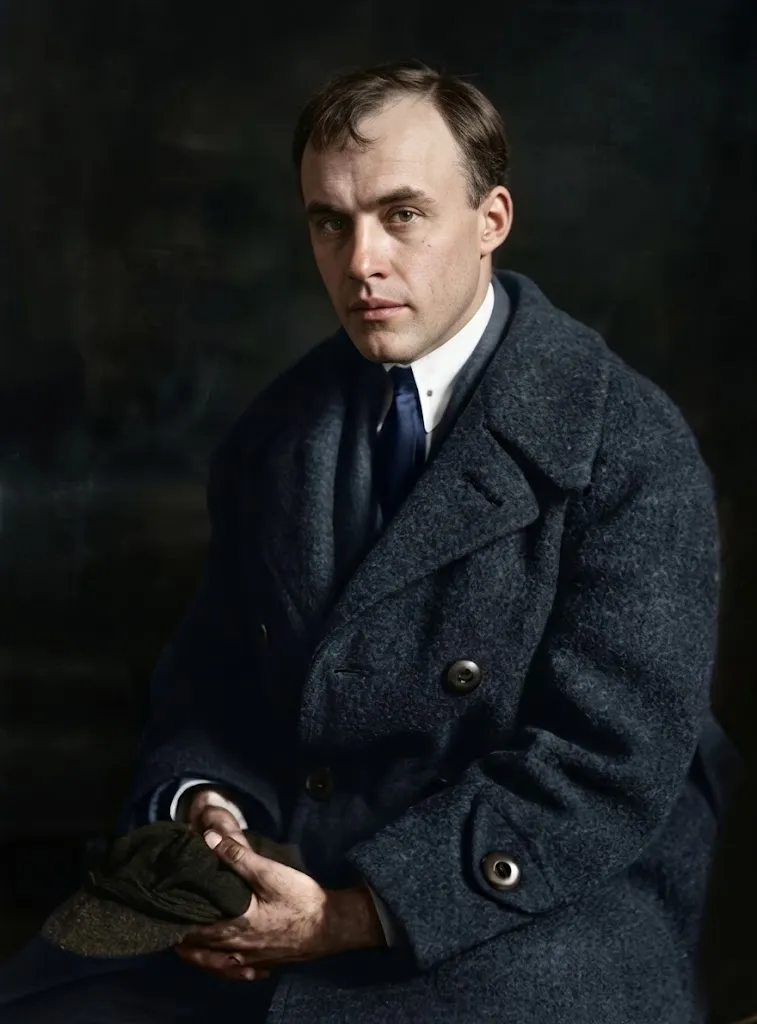
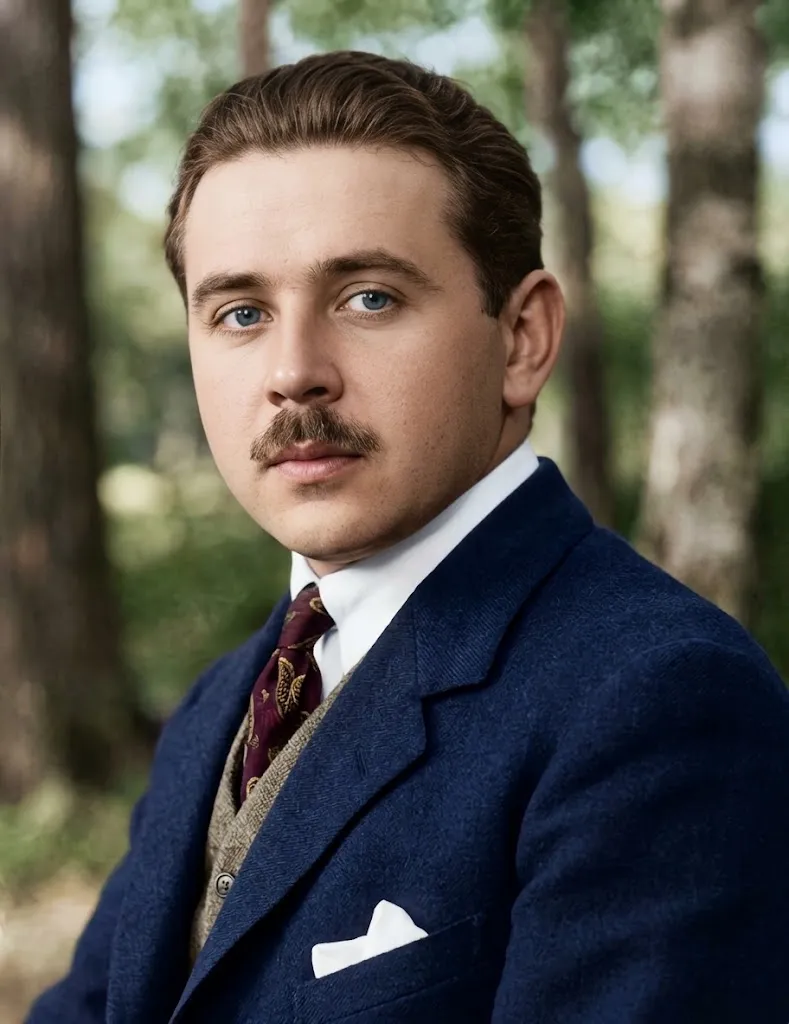
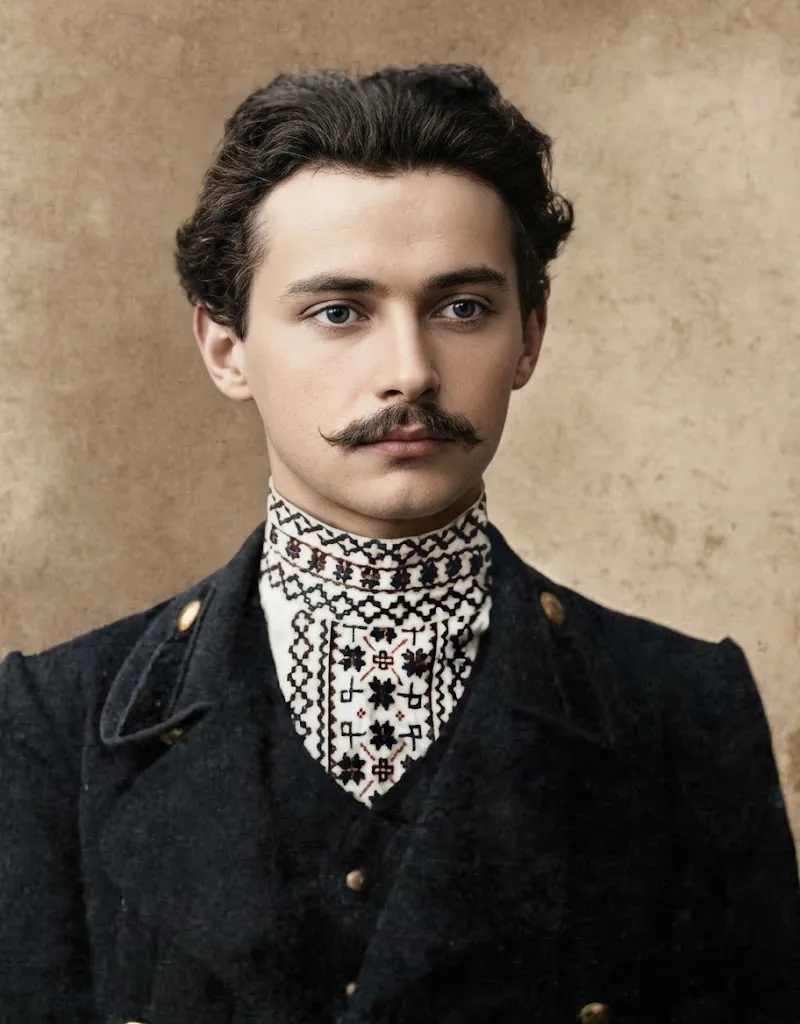
Kost Burevii
Writer and master of literary hoaxes
The Futurist Edvard Strikha wrote loud ultra-left poems, and the Futurists’ own magazine took him seriously. But Strikha never existed: he was invented by Kost Burevii, a former Socialist Revolutionary who became a champion of Ukrainian culture. He was shot in Kyiv in December 1934.
Key accomplishments
- The parody poem Zozendropiia (1930), written as the invented Futurist Edvard Strikha
- The satirical revues Opportunia (1930) and Four Chamberlains (1931)
- The historical drama Pavlo Polubotok, published abroad after his death
- A co-founder of a Ukrainian theatre studio and of the publisher Selo i Misto in Moscow
- The studies Three Poems (1931) and Amvrosii Buchma (1933)
The poet who never existed
In 1930 a parody poem called Zozendropiia appeared under the name of the Futurist Edvard Strikha. Strikha, a Futurist and diplomatic courier, wrote loud ultra-left poems, and the Futurist magazine Nova Generatsiia took his work at face value. Except that there was no Strikha. Kost Burevii made him up to mock the official “proletarian” literature and Socialist Realism. Zozendropiia has been called a masterpiece of parody. Yet the author himself lived half his life under an invented name too: his real surname was Sopliakov.
A Ukrainian from the Voronezh region
Kost was born in 1888 into a poor peasant family in the Voronezh region (now in russia), in the village of Yevstrativka, which Ukrainian peasants had once founded under the name Mezhenka. He called himself the son of “a Ukrainian peasant”. At school the children were told to speak “only Russian”, and the teacher even explained to the boy that his name wasn’t Kost but Konstantin. Yet it was at that school that he first heard a Ukrainian book read aloud. Later he bought a copy of Shevchenko’s Kobzar with a whole month’s money and read Kotliarevskyi, Kulish and Marko Vovchok.
The revolutionary
As a teenager Kost joined the Socialist Revolutionary Party (the SRs), a russian revolutionary party. He was arrested again and again and exiled to Karelia and Siberia. In December 1917 he was elected to the SR Central Committee; in 1918 he sat in the Central Rada in Kyiv for the peasants of Voronezh, and then became one of the leaders of an anti-Bolshevik uprising on the Volga. In 1922 the Cheka arrested him, and from 1923 Burevii gave up politics.
A champion of Ukrainian culture
From then on he worked for Ukrainian culture. In Moscow he helped set up a Ukrainian theatre studio and the publishing house Selo i Misto, and organized exhibitions of Ukrainian artists, among them Mykhailo Boichuk. In his pamphlet Europe or russia (1926) he argued against Mykola Khvylovy, but later came round to his side. He feuded with the Futurists of Mykhail Semenko, and then hoaxed them with Strikha. His satirical revues were staged by the Berezil and Veselyi Proletar theatres. He also wrote a historical drama, Pavlo Polubotok, about a hetman who died in a St Petersburg prison.
December 1934
In 1929 Burevii moved to Kharkiv, and that same year official critics began to hound him. In 1934 he defended a candidate’s dissertation, the Soviet equivalent of a doctorate, in Moscow on the drama of Romain Rolland. That same year, fleeing the repressions in Ukraine, he left for Moscow, but in the autumn he was arrested there too. Investigators accused him of plotting to kill Stalin. Together with other Ukrainian cultural figures, among them Oleksa Vlyzko, Dmytro Falkivskyi and Hryhorii Kosynka, he was condemned as a “terrorist”, and on 17 December 1934 Kost Burevii was shot in Kyiv. His prison memoir, Dead Loops (1903–1917), was lost in the NKVD, but his wife and daughter took part of his archive abroad, and his daughter Oksana published the works they had saved.
Debates and assessments
Burevii spent most of his life in russian revolutionary politics: he sat on the SR Central Committee and fought the Bolsheviks until 1922. He gave himself fully to Ukrainian culture only after 1923, which is why he has been called “a Ukrainian nationalist in the person of a Russian SR”. His polemics were harsh: he attacked both Khvylovy and the Futurists, and researchers mention his quarrelsome nature. It is also written that he was the one who made the equation of Futurism with fascism stick.
Why it matters today
Kost Burevii travelled from russian revolutionary to Ukrainian writer: a boy who was barred from his own language at school ended up devoting himself to Ukrainian culture. His Edvard Strikha showed that laughter can be a weapon: one invented figure made fun of a whole official “proletarian” literature. He stood up for Ukrainian culture even far from Ukraine, in Moscow. Anyone who sees through a sham and isn’t afraid to laugh at it carries on his work.