c. 1744–1797
Anton Holovatyi
Black Sea Cossack otaman and poet
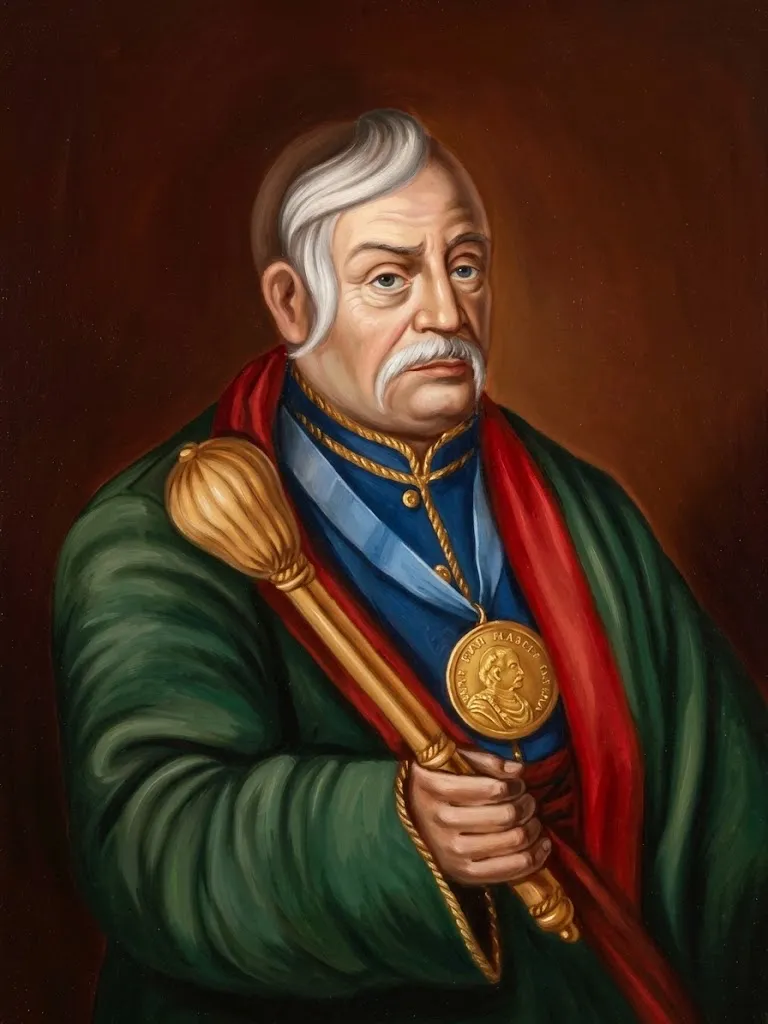
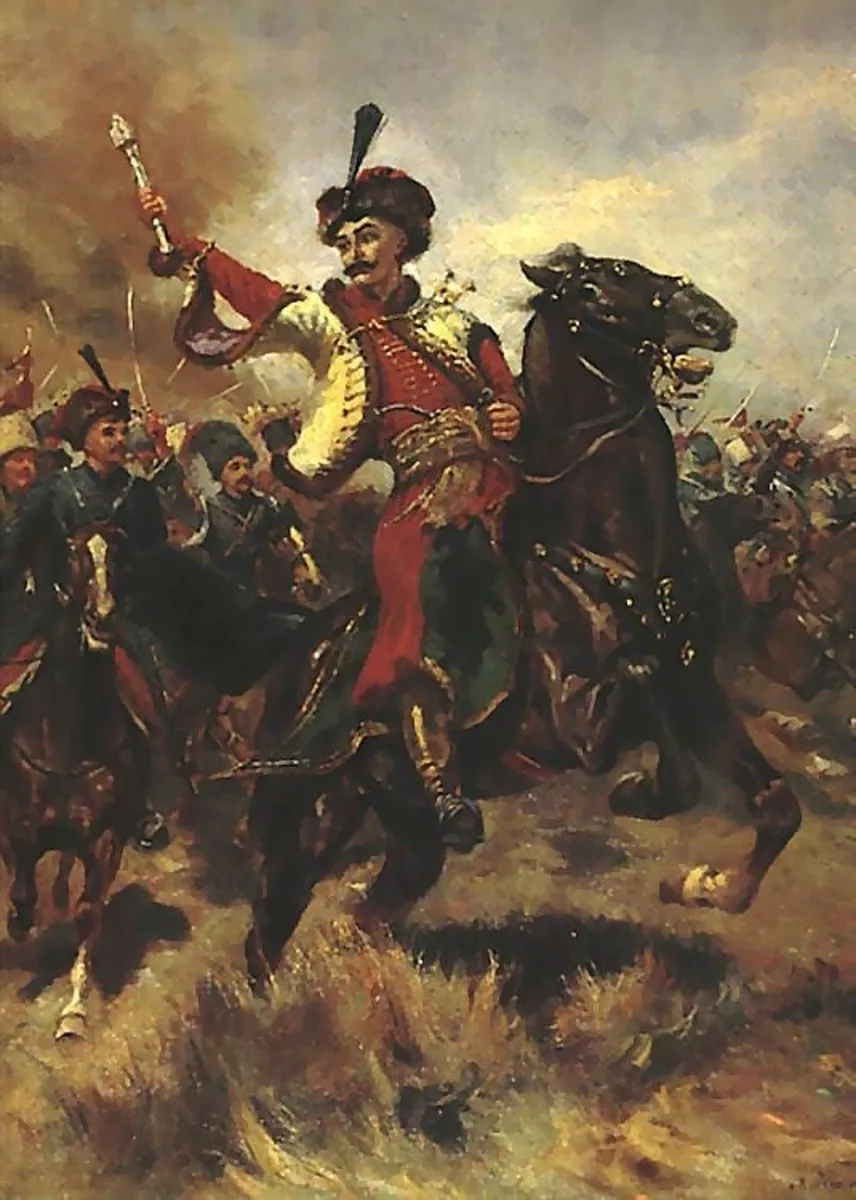
When the Zaporozhian Sich was destroyed in 1775, Anton Holovatyi helped gather former Zaporozhians into a new Black Sea Cossack Host, and in 1792 he won it land in the Kuban. Host scribe, flotilla commander and songwriter, he is also one of the most debated figures of his age.
Key accomplishments
- Chancellor (military scribe) of the Zaporozhian Host; aide to Kish otaman Petro Kalnyshevskyi
- One of the founders of the Host of Loyal Cossacks (1787), later the Black Sea Cossack Host
- His Cossack flotilla took Berezan Island (1788)
- The 1792 charter granting land in the Kuban, and the resettlement of the Black Sea Cossacks there
- Kish otaman of the Black Sea Cossack Host from 1796
- The song-poems “Oh God, Our Merciful God!” and “Enough of Grieving, It’s Time to Stop!”
The scribe from Novi Sanzhary
Anton (also Antin) Holovatyi was born in 1744 in the small town of Novi Sanzhary in the Poltava region, into a family of Cossack officers. He studied at the Kyiv Academy and then went to the Zaporozhian Sich. There he was elected to several officer posts, among them military scribe, the Host’s chancellor. With a Zaporozhian delegation he attended the coronation of Empress Catherine II, and later he became an aide to the last Kish otaman, Petro Kalnyshevskyi, travelling with him on embassies to Saint Petersburg.
The Sich is gone. What now?
In 1775 russian troops destroyed the Sich while Holovatyi was in Saint Petersburg. Kalnyshevskyi was exiled; Holovatyi was given the rank of captain by the tsarist government and later served as a colonel of the Boh Cossack Host. In 1787, together with other former Zaporozhian officers, he helped create the Host of Loyal Cossacks, soon renamed the Black Sea Cossack Host.
An island taken from the boats
In the Russo-Turkish War of 1787–1791 Holovatyi was the Host’s military judge and commanded its Cossack flotilla. In 1788 his men (about 800 of them, according to ArmyInform) captured the Turkish fortress on Berezan Island near Ochakiv. The flotilla went on to take part in capturing Tulcea, Isaccea, Kiliia and Izmail. Holovatyi’s awards included the Order of Saint George, 4th class, the Order of Saint Volodymyr, 3rd class, and a named sabre “For Bravery”.
The road to the Kuban
After the war the Black Sea Cossacks had no secure land. Holovatyi led a Cossack embassy to Saint Petersburg, and in 1792 the Host received a charter granting it land in the Kuban. He directed the move himself: the first Cossacks sailed to Taman, while Holovatyi led the last group overland. In 1796 he was elected Kish otaman of the Black Sea Host.
The otaman’s songs
Holovatyi wrote verses that became songs: “Oh God, Our Merciful God!” and “Enough of Grieving, It’s Time to Stop!”. They carry the mood of the former Zaporozhians after the Sich was destroyed. People copied them by hand, and they were printed many times in songbooks of the late 18th and 19th centuries. Taras Shevchenko mentioned Holovatyi in his works, including the poems “The Blind Man” and “To Osnovianenko”.
The Persian campaign
In 1796 Holovatyi led Cossack regiments in the russian army’s Persian campaign. Hundreds of Cossacks died there of disease. The otaman himself fell ill with malaria and died early in 1797.
Debates and assessments
Holovatyi is judged in different ways. For many Ukrainian writers he is the man who kept the Zaporozhian traditions alive after 1775: the Black Sea Cossacks settled the Kuban in kurins, as at the Sich, and Ukrainian settlers kept moving there until the early 20th century. Others stress that the Black Sea Host served the russian empire: its Cossacks fought the empire’s wars against Turkey and Persia, and Holovatyi himself received ranks, orders and estates from it. Researchers describe him as a complex, contradictory figure who combined bravery and servility, selflessness and a wish to grow rich. The Persian campaign remains a dark chapter: the heavy losses to disease and the otaman’s death helped spark a Cossack revolt.
Why it matters today
When the Sich was gone, Holovatyi helped keep its people from scattering: he gathered former Zaporozhians into a new Host and won it land. That is why his story explains where the Ukrainian Cossack villages of the Kuban came from, settled in kurins just as at the Sich. His verses, which became songs, kept the mood of the Zaporozhians after the Sich fell, and people went on copying and printing them through the 19th century. His life shows how Ukrainians held on to their traditions even without a state of their own, though the price of his service to the empire is still judged in different ways. In 2019 the 73rd Naval Special Purpose Centre of Ukraine’s Special Operations Forces was named after him.