1887–1919
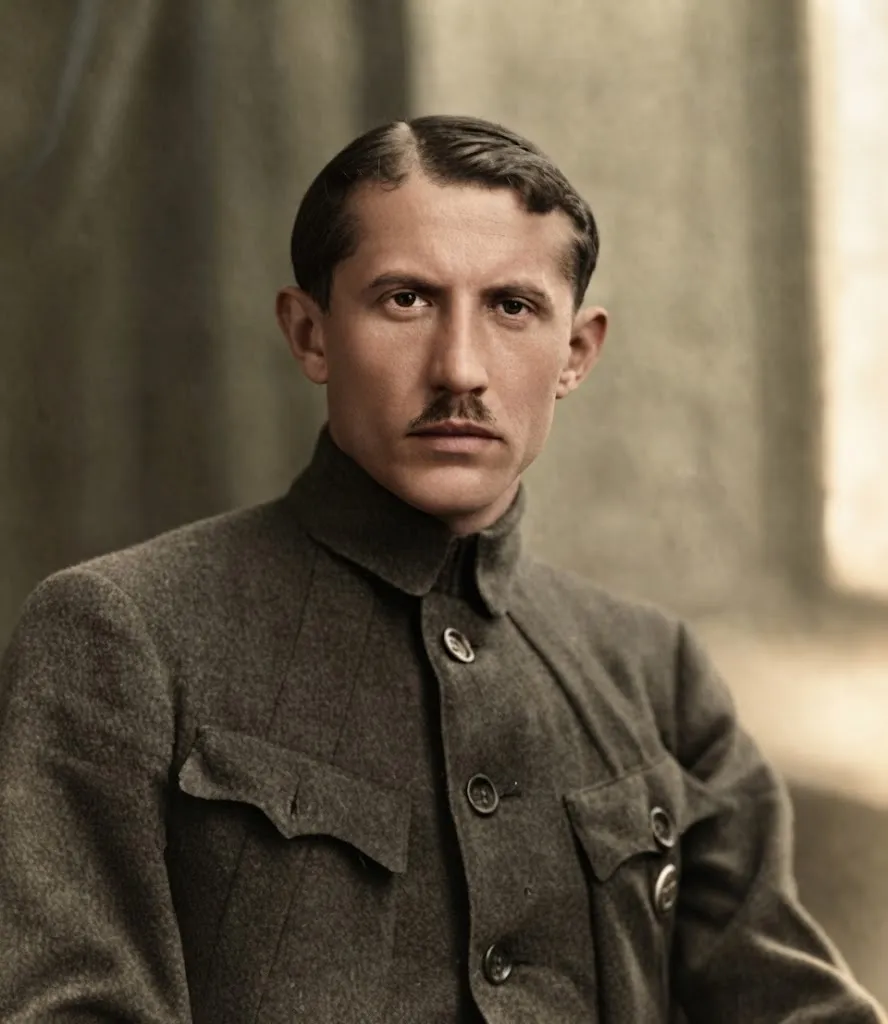
Dmytro Vitovskyi
Led the November Act in Lviv, 1918
At 31, in one night and without bloodshed, his men took Lviv and raised the blue-and-yellow flag over the town hall. Dmytro Vitovskyi, a captain of the Ukrainian Sich Riflemen, led the November Act of 1918 and became the first military minister of the Western Ukrainian People’s Republic.
Key accomplishments
- Headed the Ukrainian General Military Committee and led the November Act in Lviv (1 November 1918)
- First State Secretary of Military Affairs of the Western Ukrainian People’s Republic (from 9 November 1918); colonel
- Commanded a company and a battalion of the Ukrainian Sich Riflemen; founded the riflemen’s journal Shliakhy
- Sich Riflemen commissar in Volhynia (1916–1917), setting up Ukrainian schools
- Member of the Western Ukrainian delegation to the Paris Peace Conference (1919)
The student expelled for a Ukrainian university
Dmytro Vitovskyi was born in 1887 in the village of Medukha near Halych, into a peasant family. After school in Stanyslaviv he studied law at Lviv University, but he was arrested and expelled for taking part in the students’ campaign for a Ukrainian university. He finished his law degree in Kraków, and from 1911 he worked as a lawyer in Stanyslaviv and set up branches of the Sich and Prosvita societies across Pokuttia.
A captain of the Sich Riflemen
In 1914 Vitovskyi volunteered for the Ukrainian Sich Riflemen and commanded first a company, then a battalion. In the spring of 1915 he fought on Mount Makivka, and that summer his company marched through his home village, and he became commandant of Halych after it was retaken. He founded the riflemen’s journal Shliakhy, and in 1916–1917, as the riflemen’s commissar in Volhynia, he opened Ukrainian schools.
One night that changed Lviv
In the autumn of 1918 Austria-Hungary was falling apart, and Vitovskyi headed the Ukrainian General Military Committee. When the politicians hesitated, he persuaded them to act at once: either Ukrainians took Lviv that night, or the Poles would take it the next day. On the night of 1 November a few dozen officers and a few hundred soldiers took control of the city without bloodshed, and the blue-and-yellow flag went up over the town hall. That was the start of the Western Ukrainian People’s Republic. On 9 November Vitovskyi became its first State Secretary of Military Affairs in Kost Levytskyi’s government, and later a colonel. On 22 January 1919 he was in Kyiv for the proclamation of the Act of Union.
The flight he never came back from
In the spring of 1919 Vitovskyi joined the Western Ukrainian delegation to the Paris Peace Conference as its military expert. With Mykhailo Lozynskyi he pressed for a truce between Ukrainians and Poles, but in vain. On 4 August 1919 the plane taking him from Breslau to Kamianets-Podilskyi crashed near Ratibor in Silesia. His adjutant Yulian Chuchman died with him. The likely cause was a technical failure; rumours of an assassination were never proven. They were buried in Berlin, and on 1 November 2002 they were reburied at Lychakiv Cemetery in Lviv.
Why it matters today
Dmytro Vitovskyi showed that at a turning point, resolve decides everything: while others hesitated, he returned Lviv to Ukrainians in a single night and set the Western Ukrainian People’s Republic in motion. His November Act was the first step to the Act of Union, when Ukrainians from east and west first joined in one state. He was a lawyer who took up arms, and a soldier who opened schools. Anyone defending Ukraine today carries on what a 31-year-old captain began on that November night.