1878–1952
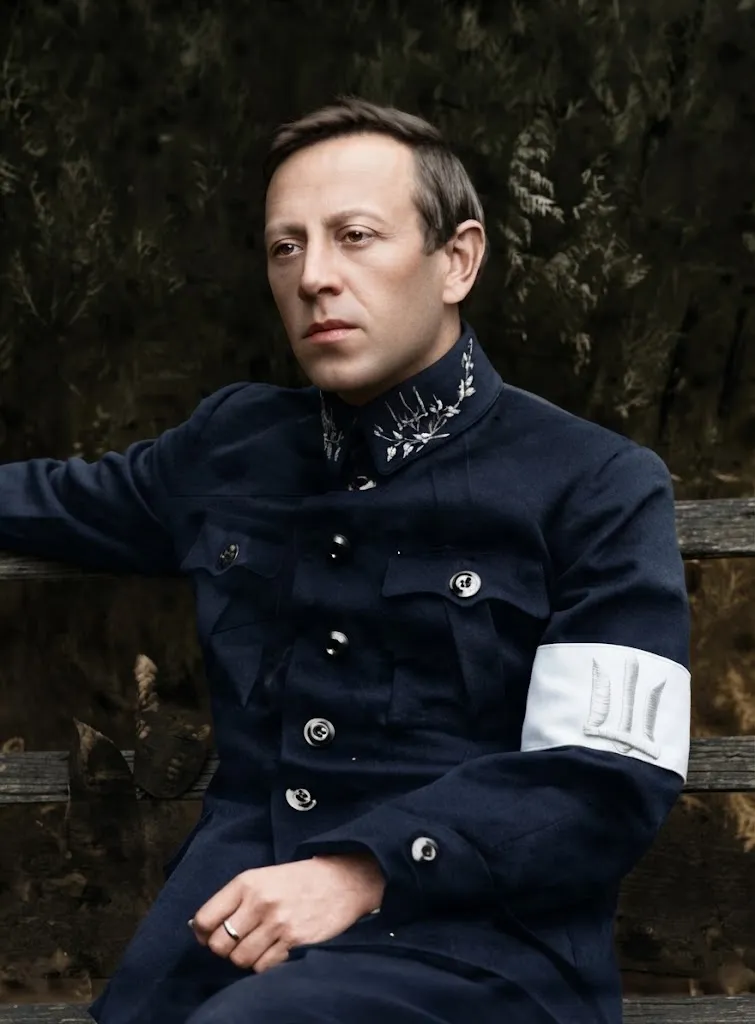
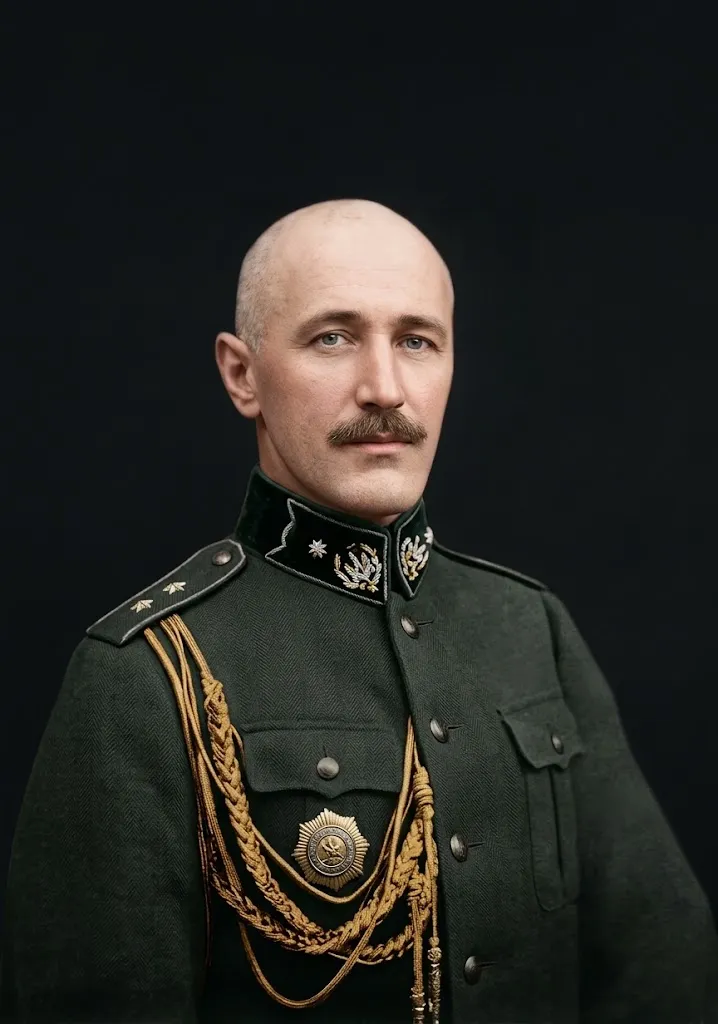
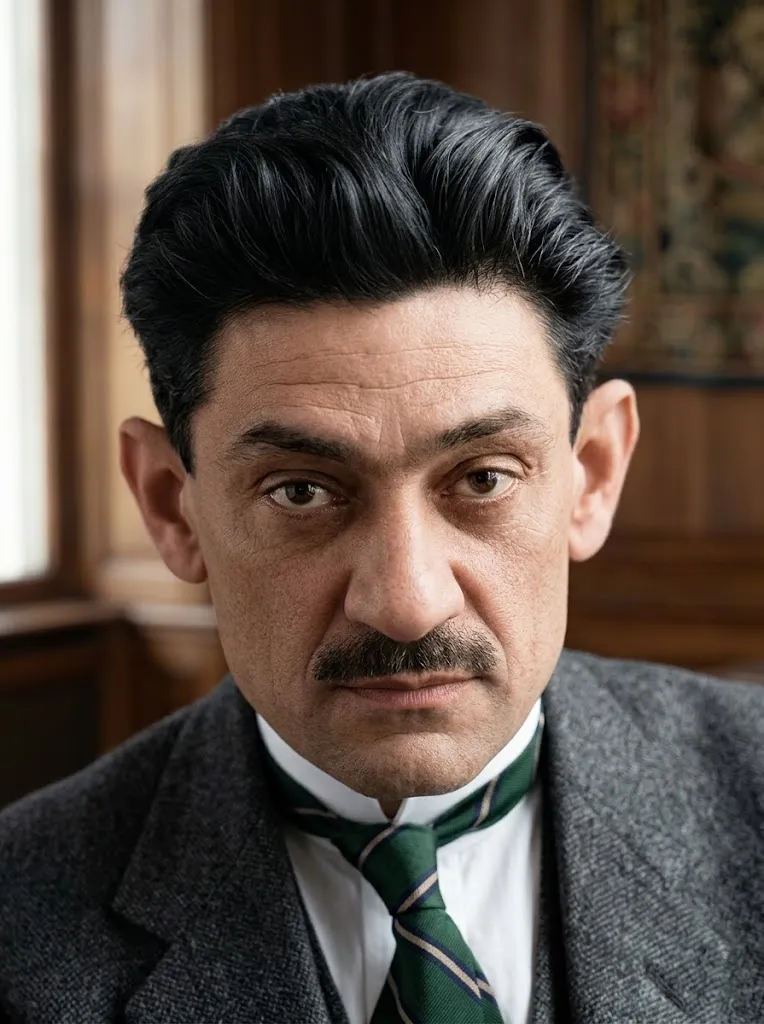
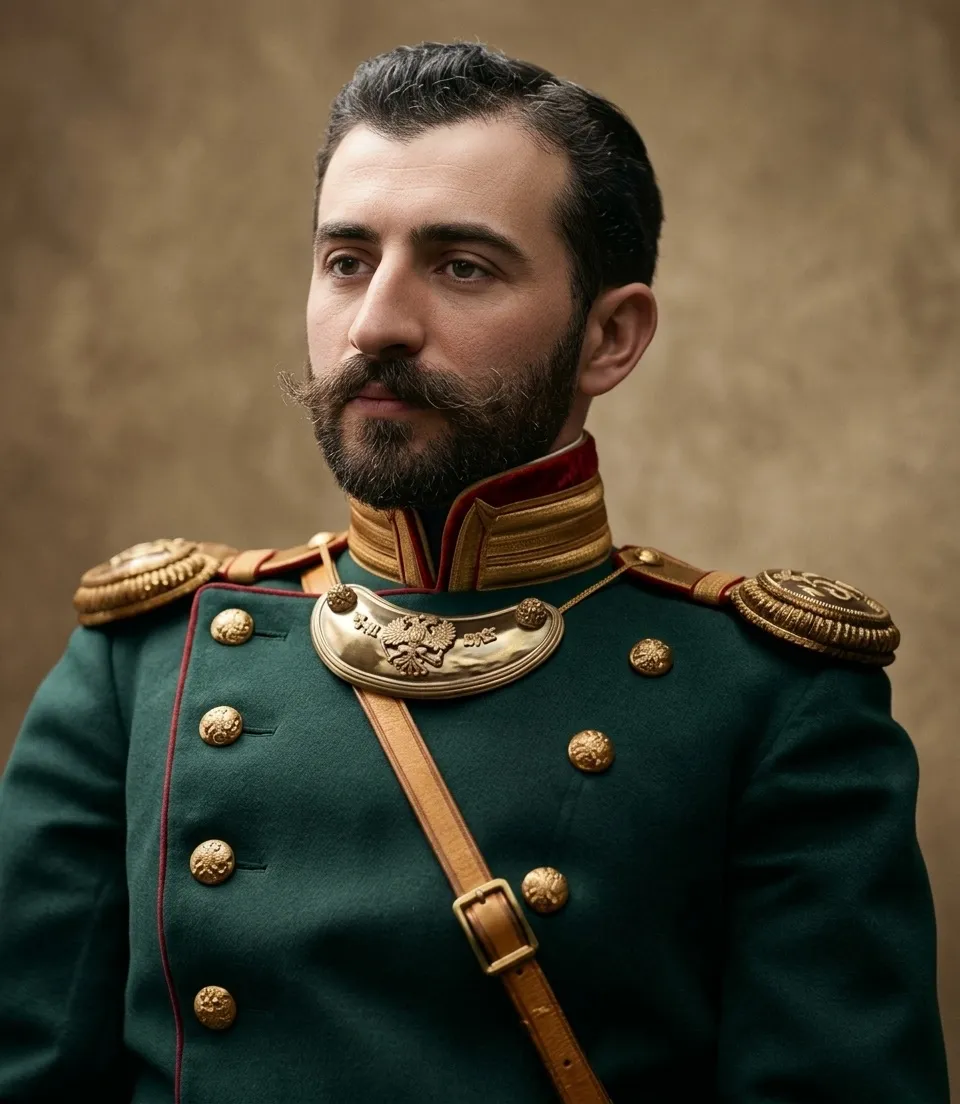
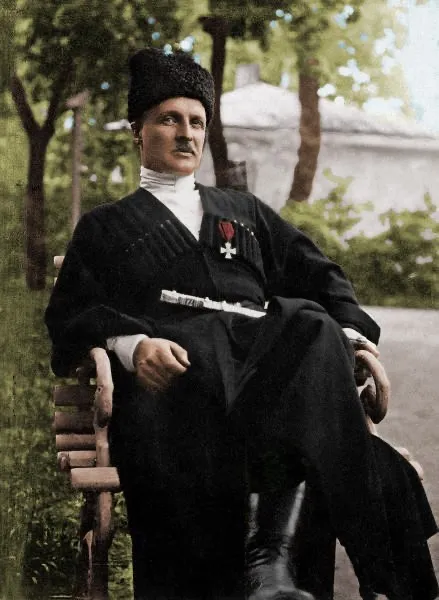
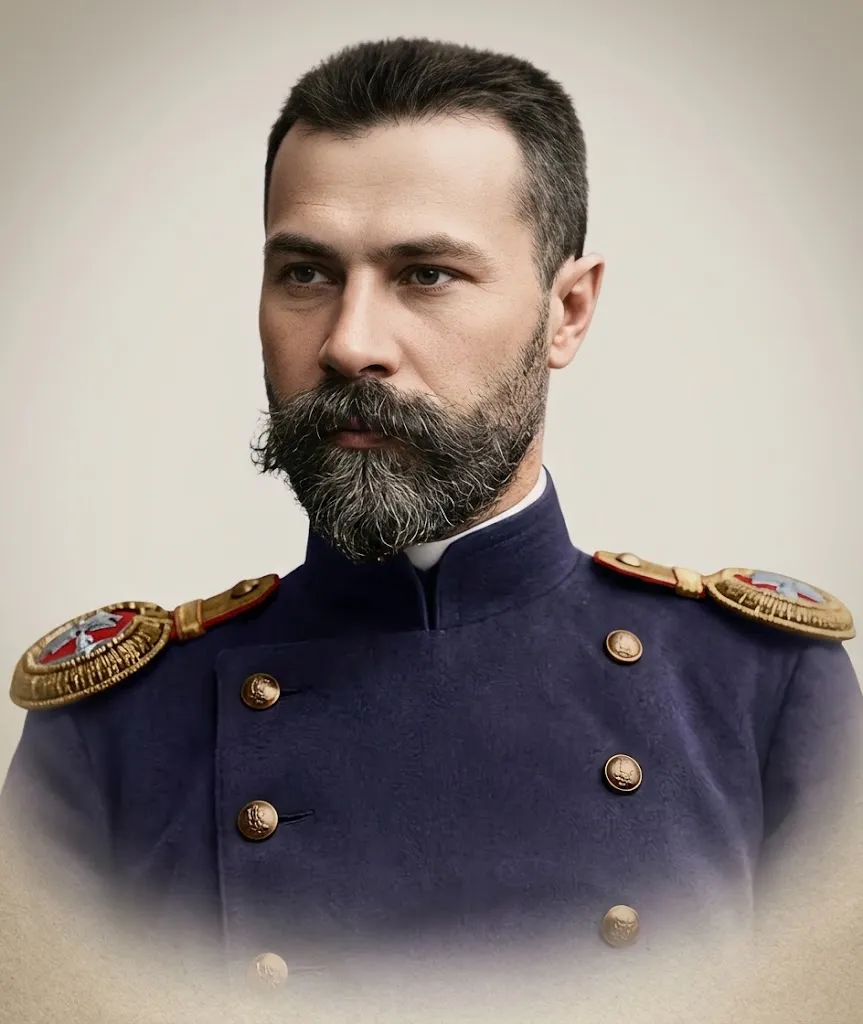
Mykhailo Omelianovych-Pavlenko
UNR Army commander, Winter Campaign
By some estimates, of the 17,000–20,000 soldiers trapped in the “triangle of death”, only about 4,000 could still fight. General Mykhailo Omelianovych-Pavlenko led them out on the First Winter Campaign: five months of fighting behind enemy lines. Earlier he had commanded the Ukrainian Galician Army.
Key accomplishments
- Commander of the Ukrainian Galician Army (December 1918 – June 1919), which he reorganized and made fit for battle
- Commander of the UNR Army on the First Winter Campaign (6 December 1919 – 6 May 1920)
- Commanded the UNR Army in the Polish-Soviet War of 1920
- Co-founded the Museum of Ukraine’s Liberation Struggle in Prague (1925)
- Author of The Ukrainian-Polish War of 1918–1919 (1929) and The Winter Campaign (1934)
An army in the “triangle of death”
By the end of 1919 the UNR Army was in a trap. It was squeezed into a small patch of Volhynia between Liubar, Ostropil and Chortoriia, and typhus was cutting down its soldiers. Historians call the place the “triangle of death”. By some estimates, of 17,000–20,000 men, only about 4,000 could still fight.
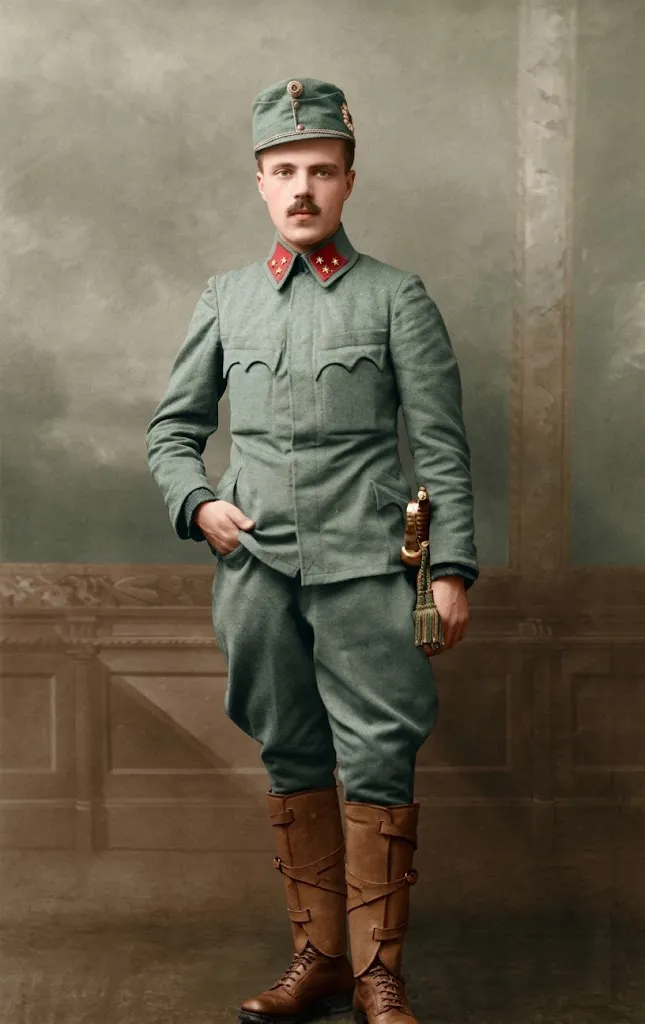
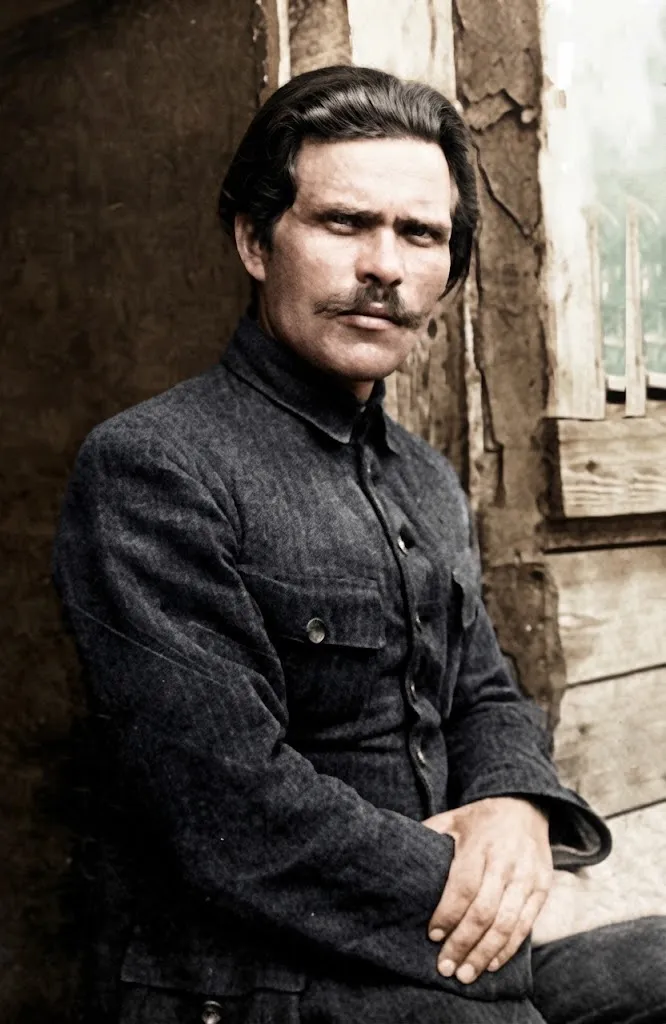
On 5 December 1919 General Mykhailo Omelianovych-Pavlenko took command of the army, by order of Symon Petliura. The next day, 6 December, the army set out on the First Winter Campaign. The commander’s deputy, and one of the men behind the plan, was Yurii Tiutiunnyk.
A Cossack family in Tiflis
Mykhailo Pavlenko was born in 1878 in Tiflis (now Tbilisi, Georgia), into an old Cossack family. In 1912 he added the family name “Omelianovych” to his surname. He graduated from a military school in Saint Petersburg, fought in the Russo-Japanese War and the First World War, where he was wounded twice, and rose to colonel of the Guards.
At the end of 1916 he took over the school for ensigns in Odesa. From the first days of the 1917 revolution he backed the Ukrainian movement, though at the time he did not speak Ukrainian: he had grown up and served outside Ukraine. In spring 1917, at a rally in honour of the Central Rada, the colonel led his school under the blue-and-yellow flag. He helped Ukrainize army units, co-founded the Ukrainian military society in Odesa and later commanded the garrison of Katerynoslav. Under the Ukrainian State he commanded a division in Poltava and was made a major general.
Commander of the Galicians
In December 1918 the Directory’s insurgents arrested him as a “Hetman’s general”. He was freed after Lonhyn Tsehelskyi, head of the West Ukrainian People’s Republic’s mission, came to terms with Petliura, and the general was released to serve the West Ukrainian republic. From December 1918 to June 1919 he led the Ukrainian Galician Army, reorganizing it and making it fit for battle. After the UNR and West Ukrainian armies joined forces, he served as a general for special assignments on the staff of Supreme Otaman Petliura and commanded the Zaporozhian Corps.
Five months behind enemy lines
Instead of holding a front, the army went raiding through the enemy’s rear. The campaign lasted five months, until 6 May 1920. In the spring the Ukrainian units marched west to join the Polish front, and in 1920 they fought the Bolsheviks alongside the Polish army. Among the units under his command was Marko Bezruchko’s 6th Sich Rifle Division. It is considered that with the Winter Campaign the commander saved the army from final disaster.
The campaign’s veterans were awarded the Iron Cross for the Winter Campaign and Battles, the UNR Army’s only combat decoration. Badge No. 1 went to the commander, Omelianovych-Pavlenko, and No. 2 to Yurii Tiutiunnyk.
A general in exile
After the UNR Army was interned in Poland, the general lived in Kalisz and Tarnów, and from 1924 in Prague. There he taught, headed the Alliance of Ukrainian Veterans’ Organizations and in 1925 was among the founders of the Museum of Ukraine’s Liberation Struggle. Before the Second World War its collection numbered about a million items. After the Second World War he lived in Germany and France and served as defence minister of the UNR government in exile. Mykhailo Omelianovych-Pavlenko died in Paris on 29 May 1952 and is buried in Père Lachaise cemetery.
Why it matters today
The First Winter Campaign, led by Omelianovych-Pavlenko, showed that even a trapped army, with only a few thousand men fit to fight, can refuse to lay down its arms and fight on. The campaign is considered to have saved the UNR Army from final disaster, and in 1920 it was still fighting for Ukraine. He led both Galicians and Ukrainians from the Dnipro lands: he made the Ukrainian Galician Army fit for battle and commanded the UNR Army. In exile he made sure the struggle would not be forgotten, helping to found a museum in Prague and writing its history himself. His example shows that there is a way out of even the worst trap for those who don’t give up.