1905–1991
Oksana Meshko
Human rights activist, “Cossack Mother”
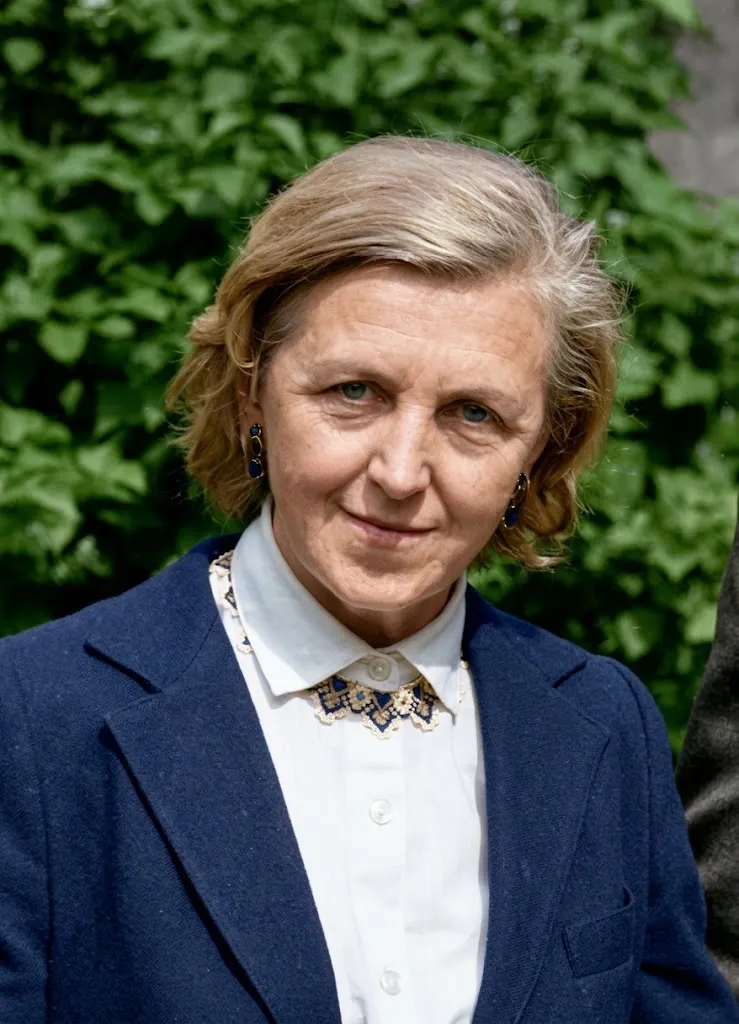
At 71 she became the second member of the Ukrainian Helsinki Group; at almost 76 she was sent into exile on the Sea of Okhotsk. Oksana Meshko, a chemist and Gulag survivor whom dissidents called the “Cossack Mother,” held the group together after the others were arrested.
Key accomplishments
- Founding member of the Ukrainian Helsinki Group (1976); after its leaders were arrested, she was in effect its coordinator
- Helped the families of political prisoners and brought new members into the group to replace those arrested
- Memoirs Between Death and Life (1979; in English 1981) and I Testify (1996)
- Spoke in the Australian parliament about the situation in Ukraine (1988) and opened the congress that founded the Ukrainian Republican Party (1990)
- Order for Courage, 1st class (2006, posthumously)
Why was she called the “Cossack Mother”?
Among dissidents she was known, with deep respect, as “Granny Oksana” or the “Cossack Mother.” Oksana Meshko was born in 1905 in Stari Sanzhary in the Poltava region, into a Cossack family. In 1920 the Bolsheviks took her father hostage and shot him in Kharkiv. She was expelled from her institute several times for her “social origin,” got back in every time, and qualified as a chemist in 1931.
Ten years for an invented plot
In 1947 Meshko and her sister were arrested and accused of plotting to kill the party leader Nikita Khrushchev. For three weeks she was interrogated without sleep, but she never signed a confession. She was given 10 years in the camps and sent to Ukhta, where she broke stone in a quarry. Sources give 1954 or 1955 for her release from the camp as an invalid, but she was kept in exile. She came back to Kyiv in 1956 and was rehabilitated that year.
When her son Oles Serhiienko was arrested in 1972, she began writing appeals to the authorities and helping the families of other political prisoners.
“I became the second”
In the autumn of 1976 the writer Mykola Rudenko asked her to join the Ukrainian Helsinki Group. “There’s me, and you’ll be the second,” he told her. Meshko was sure they would all be arrested, but she agreed. On the evening the group was announced, bricks came through the windows of the flat where she was staying, and she was hit in the shoulder.
When the group’s founders, among them Oleksa Tykhyi and Levko Lukianenko, were jailed, it was Meshko who in effect kept it running. In two years her home was searched nine times. In 1980 she was locked in a psychiatric hospital for two and a half months, but the doctors would not declare her ill. In January 1981, at almost 76, she was sentenced to six months in prison and five years of exile; the journey under guard to the settlement of Ayan on the Sea of Okhotsk took 108 days.
Coming back
Meshko returned in 1985. In 1988, on a trip to Australia for eye surgery, she spoke in the country’s parliament about the situation in Ukraine and campaigned for the release of Lukianenko and other political prisoners. She travelled home by way of North America and got back only in early 1989. In 1990 she opened the congress that founded the Ukrainian Republican Party, and that autumn she joined a hunger strike in support of students. She died on 2 January 1991, the year Ukraine became independent.
Why it matters today
Meshko had been through the Gulag and lost her father, and at 71, when she could have lived out her years quietly, she chose to fight. When the men who founded the Helsinki Group were locked up, she did not let it disappear. Her life shows that courage has no age limit, and that caring for your own can become resistance to an entire system.