1908–2002
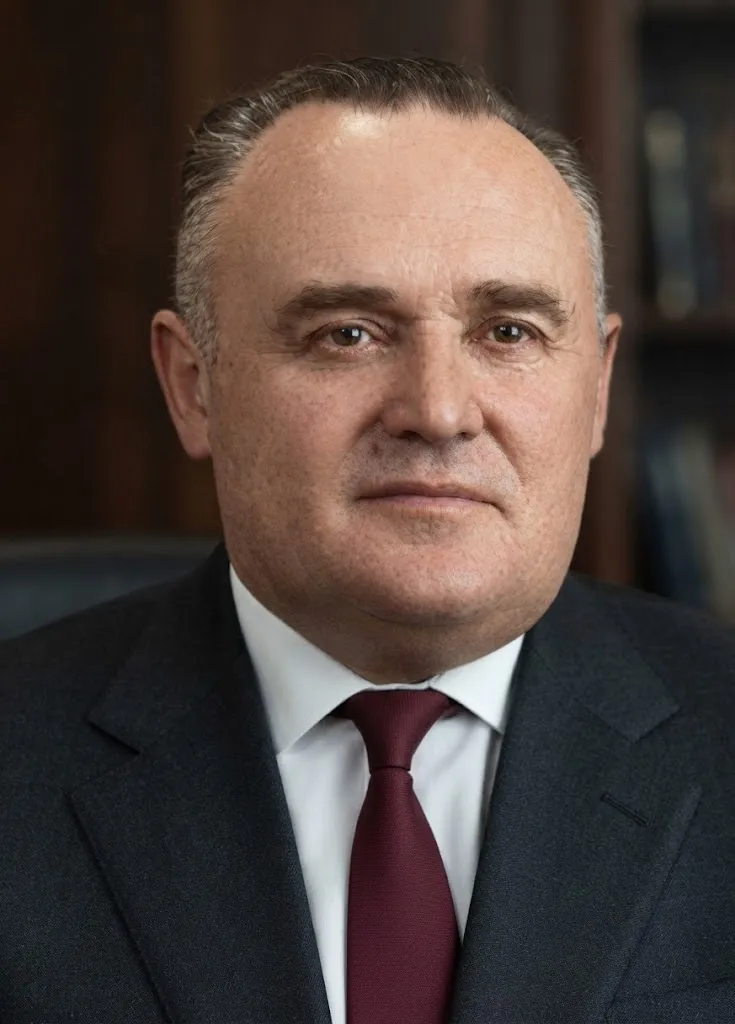
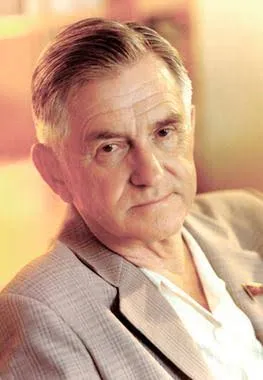
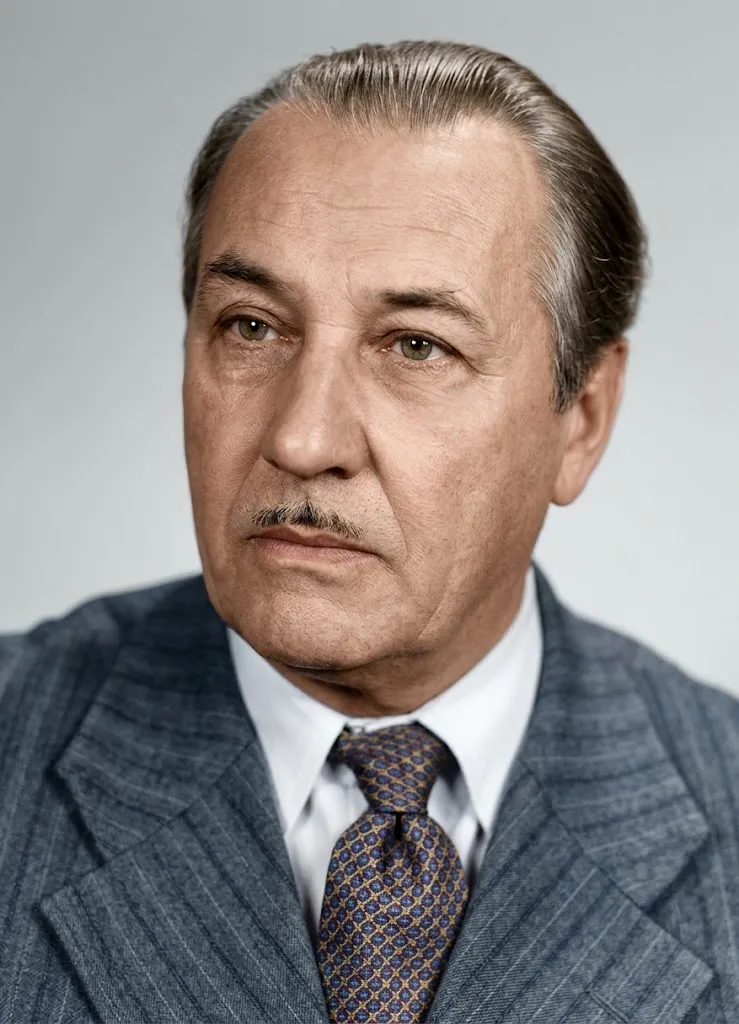
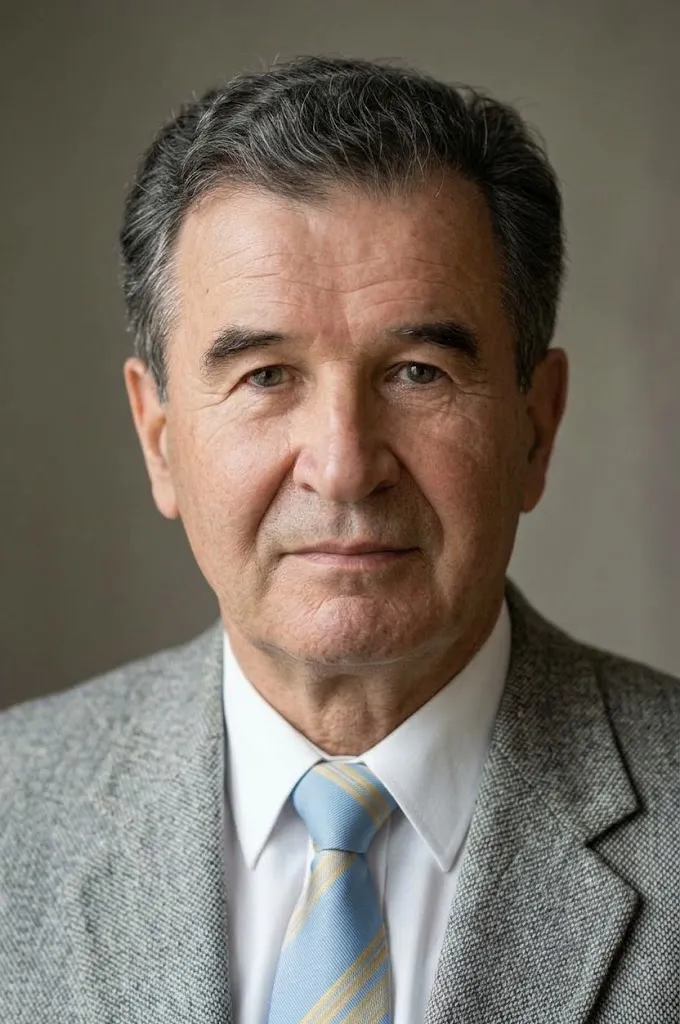
Yurii Shevelov
Linguist, Slavist, essayist
He was born a Schneider, into a German family, and didn’t speak Ukrainian as a child. He grew up to prove that Ukrainian is no offshoot of a “common Rus’” tongue. Yurii Shevelov, also the critic Yurii Sherekh, became a Columbia professor and one of the world’s leading Slavists.
Key accomplishments
- A Historical Phonology of the Ukrainian Language (1979): Ukrainian grew directly out of Common Slavic
- The Ukrainian Language in the First Half of the Twentieth Century (1900–1941): Its State and Status (1987 in Ukrainian, 1989 in English)
- A monograph on Galicia’s part in shaping the Ukrainian literary language
- Professor of Slavic philology at Columbia University (1958–1977)
- Initiator and deputy head of the Ukrainian Artistic Movement (MUR) in Germany
- Editor-in-chief of the journal Suchasnist (1978–1981), president of the Ukrainian Academy of Arts and Sciences in the US
- Shevchenko National Prize of Ukraine (2000)
How a Schneider became Shevelov, and then Ukrainian
Yurii Shevelov was born in Kharkiv in 1908, the son of a general in the tsar’s army. His father, and partly his mother, were ethnic Germans, and the boy was born with a German surname: Schneider. During the First World War his father changed it to Shevelov. The boy knew russian, French and German, but not Ukrainian. Yet in Kharkiv he became a linguist: he studied under Leonid Bulakhovskyi at Kharkiv University, earned his candidate degree in 1939, studied the language of Ivan Kotliarevskyi, and became Ukrainian by his own choice.
Twenty-seven days and a hospital ward
To the Soviet authorities, the son of a White general was an outsider from birth, and he was denounced more than once. In his memoirs he tells how, in September 1941, with the front closing in on Kharkiv, he was summoned by the secret police (NKVD). The talk lasted nine hours, and he was made to agree to inform on people. On the twenty-seventh day he told himself “enough” and announced he was leaving for the east. Instead he slipped out of the city for a week, then hid for 12 days in a hospital ward until the Germans arrived. A doctor helped him; he never even learned her surname.
A pistol to the temple
Like many Kharkiv intellectuals, Shevelov at first hoped the Germans would let Ukrainians build a state of their own. Then one day a German soldier came to take his warm clothes. Shevelov began talking to him about German culture, and the soldier put a pistol to his temple. The illusions were gone. He wrote for the newspaper Nova Ukraina, but in a starving city he refused to register as a Volksdeutscher, an ethnic German, which would have brought food rations. In 1943 he left for Lviv and wrote a book there on Galicia’s part in the literary language: he argued that the language should draw on many dialects, not just those of Poltava and Kyiv.
Yurii Sherekh of the camps
After the war Shevelov spent several years in camps for displaced persons in Germany. There he initiated the Ukrainian Artistic Movement (MUR), which brought émigré writers together, and became its deputy head. As Yurii Sherekh he wrote sharp essays and criticism, and he even studied the language of the refugees themselves. In 1949 he earned his doctorate at the Ukrainian Free University in Munich.
A language that didn’t come from a “cradle”
Imagine a man who didn’t speak Ukrainian as a child writing about it in six languages, with a list of works that runs to 872 items. In the United States Shevelov taught at Harvard and then, for more than twenty years, at Columbia University. In A Historical Phonology of the Ukrainian Language (1979) he used a vast body of evidence to show that Ukrainian grew directly out of Common Slavic. This refuted the popular idea of a shared Old Rus’ language as the “cradle” of Ukrainian, russian and Belarusian. He compared his contribution to what Mykhailo Hrushevskyi had done for the history of Ukraine.
After the Soviet Union collapsed, Shevelov came back to Kharkiv. In 1991 he was elected a foreign member of the National Academy of Sciences of Ukraine, in 2000 he received the Shevchenko Prize, in 2001 his two-volume memoirs came out in Kharkiv, and in 2002 he died in New York.
Debates and assessments
The fiercest debate is about the occupation years. For decades the Soviet authorities called Shevelov a traitor and a Nazi collaborator: he wrote for the occupation paper Nova Ukraina, was active in the Prosvita society, and left Kharkiv together with the Germans. His defenders note that the paper’s censorship left few topics open and that Shevelov steered clear of the ones he was pushed to write on; a colleague recalls that he sidestepped demands to praise the German authorities. In 2013 a memorial plaque was unveiled on the house where he had lived. The local Antifascist Committee claimed the scholar had collaborated with the Nazis, the city council revoked its permission, and half an hour after the vote the plaque was smashed. Ukrainian PEN condemned this, and in response a Shevelov Prize for the best book of essays was founded. In 2014 a court ruled the council’s decision unlawful, and in January 2022 the restored plaque was unveiled again. Views of his war years still differ.
Why it matters today
Shevelov proved with scholarship what the empire had long denied: Ukrainian has roots of its own and did not branch off a “common Rus’” language. His work is still a scholarly answer to imperial myths about the language. His life shows that being Ukrainian can be a choice: born into a German family, he gave his whole life to the Ukrainian language. Anyone who chooses Ukrainian today walks a path that one of the world’s leading Slavists walked too.