1911–1945
Dmytro Kliachkivskyi
First commander of UPA-North
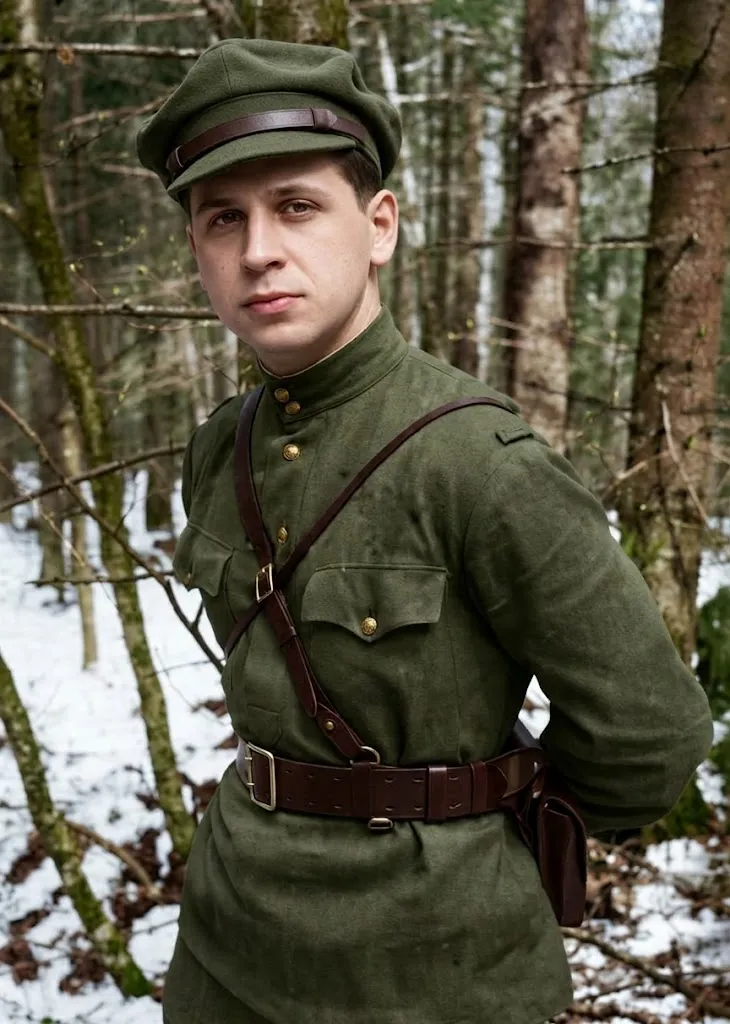
Klym Savur, Okhrim, Panas Mosur: all one man. Dmytro Kliachkivskyi was one of the organizers of the UPA in Volhynia and the first commander of UPA-North. Historians link his decisions to the mass killings of Poles in Volhynia in 1943, and he is at the centre of the Ukrainian-Polish debate.
Key accomplishments
- Head of the OUN(b) regional leadership for the north-western Ukrainian lands (Volhynia and Polissia) from 1942
- One of the organizers of the UPA; its commander-in-chief from May to November 1943
- Commander of UPA-North (1944–1945)
A man with a dozen names
Klym Savur, Okhrim, Panas Mosur, Balash, Blondyn: every one of these pseudonyms was Dmytro Kliachkivskyi. An OUN underground member couldn’t do without them, since both the Polish and the Soviet authorities arrested him.
From Zbarazh to the underground
Kliachkivskyi was born in 1911 in Zbarazh, in the Ternopil region. He finished school in Stanislaviv (now Ivano-Frankivsk) and studied law at Lviv University. He served in the Polish army and worked for cooperatives. In 1937 the Polish authorities arrested him but soon let him go for lack of evidence. In 1940 the NKVD seized him, and at the “Trial of the 59” in Lviv he was sentenced to death; the sentence was commuted to 10 years in prison.
Who built the UPA
From January 1942 Kliachkivskyi led the OUN(b), the faction of the OUN headed by Stepan Bandera, in Volhynia and Polissia. He was one of the organizers of the Ukrainian Insurgent Army, and from May to November 1943 its commander-in-chief. He is credited with building up the UPA’s structure, tactics and discipline, and with land, school and other reforms in the territory it controlled. At the end of 1943 Roman Shukhevych brought the insurgent forces under his own command, and from January 1944 Kliachkivskyi led UPA-North.
On 12 February 1945 he was killed in a fight with NKVD troops near the village of Susk in the Rivne region. Where he is buried is not known for certain. In 1952 the Ukrainian Supreme Liberation Council posthumously made him a colonel of the UPA.
Debates and assessments
Kliachkivskyi is one of the most contested figures in Ukrainian-Polish history. In 1943, in Volhynia, where he was in command, UPA units began mass killings of Polish civilians; tens of thousands of people died. Polish historians, such as Mirosław Szumiło of Poland’s Institute of National Remembrance (IPN), hold Kliachkivskyi chiefly responsible for these killings and classify them as genocide. According to them, on 11 July 1943 UPA units attacked almost a hundred Polish villages at once, and in all about 60,000 Poles were killed in Volhynia.
The Ukrainian historian Ihor Iliushyn also writes that the decision to rid Volhynia of its Polish population at any cost was taken by the OUN(b) regional leadership headed by Kliachkivskyi. By his estimate several tens of thousands of Poles died, and several thousand Ukrainians, including in Polish reprisals. Historians have not found a written order to kill the Poles, so their conclusions rest on testimony and reports. Some OUN leaders, among them Mykola Lebed, did not share this policy. Scholars also write that Kliachkivskyi was involved in unjustified repressions against UPA soldiers and against civilians, both Ukrainian and Polish.
In Ukraine there is a monument to him in Zbarazh and a cross where he was killed; Polish historians see him as one of the main perpetrators of the Volhynia massacres.
Why it matters today
Dmytro Kliachkivskyi was one of the organizers of the Ukrainian Insurgent Army, which fought for a state of its own, and he is credited with building up its structure, tactics and discipline. At the same time, historians link the mass killings of Polish civilians in Volhynia in 1943 to decisions of the leadership he headed there. His story shows that the fight for one’s own state and crimes against neighbours can be tied to the same people, and that both deserve an honest look. The shared work of Ukrainian and Polish historians, drawing on testimony and reports, helps the two nations understand each other.