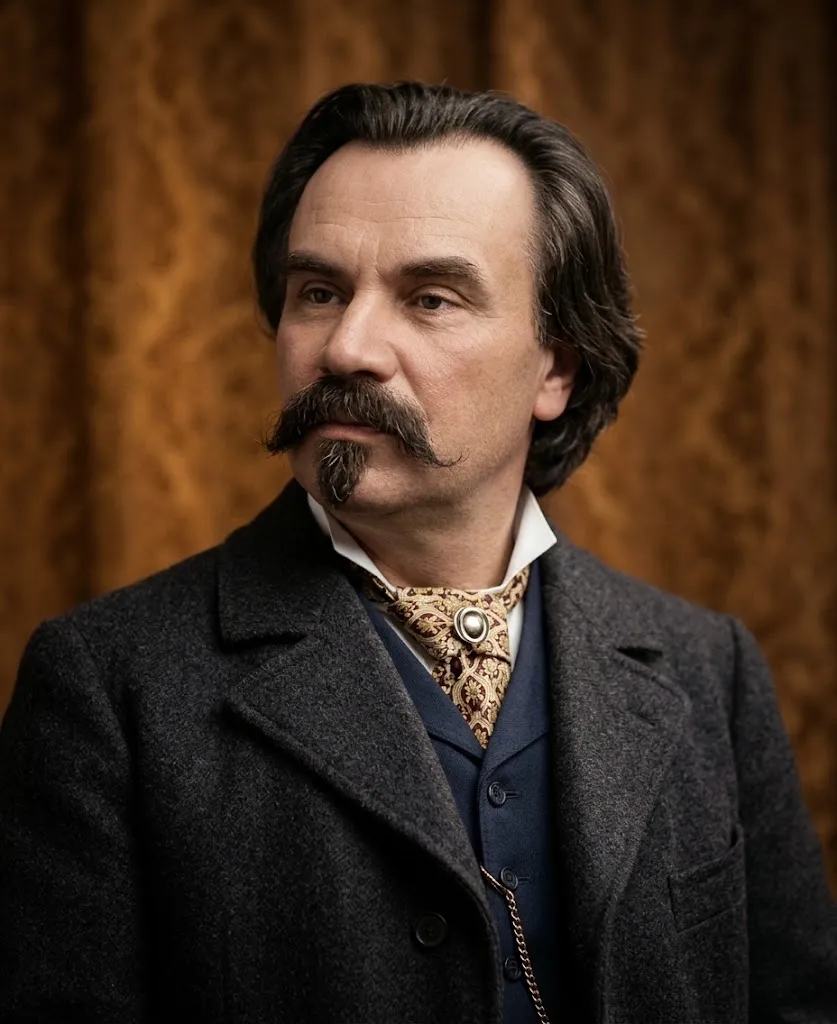
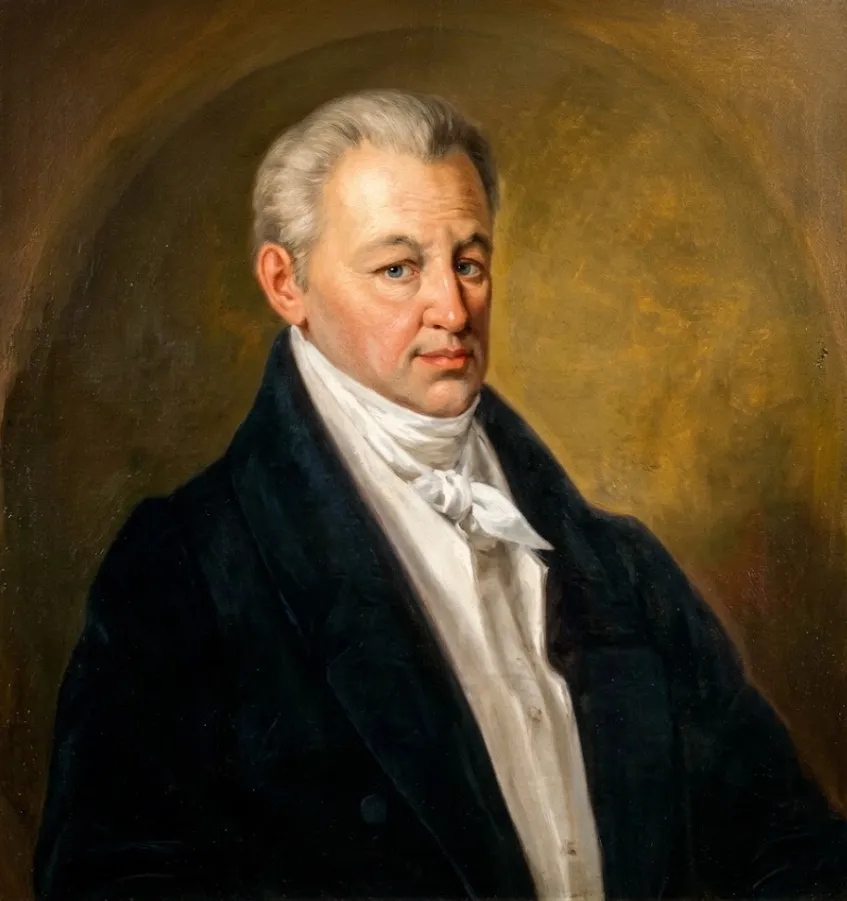
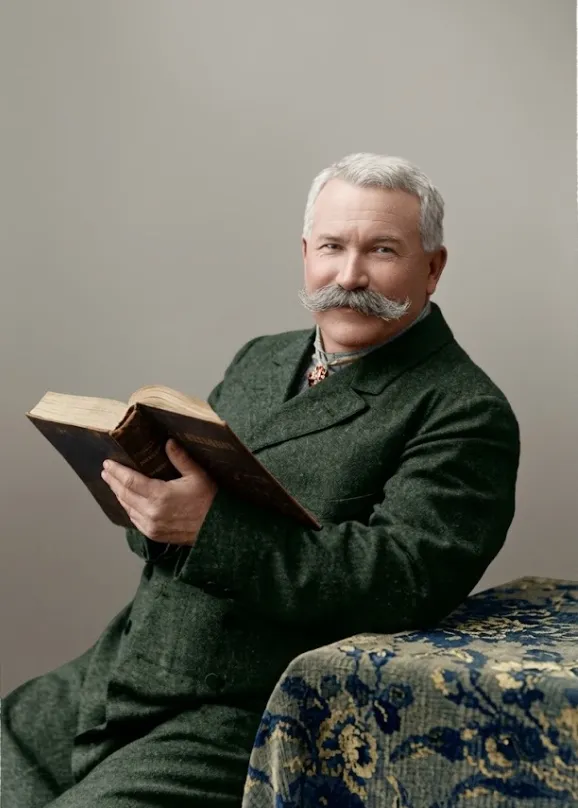
1806–1879
Pylyp Morachevskyi
Poet, translator of the Gospels
He was the first to translate the whole New Testament into living Ukrainian, and the authorities called it dangerous. Pylyp Morachevskyi, a school inspector from Nizhyn, never saw it printed: his Gospels came out 27 years after his death, without his name.
Key accomplishments
- The first complete translation of the New Testament and the Psalter into modern literary Ukrainian (1860–1865)
- His Gospels were printed in 1906–1911; churches in the diaspora still read from them
- A dictionary of Ukrainian based on the Poltava dialects, submitted to the Academy of Sciences (1853)
- The poem Chumaky, about the 1768 Koliivshchyna uprising, under the pen name Khvylymon Haluzenko
- Poems in the Ukrainian Almanac (1831), the first Ukrainian literary almanac
A Gospel with no name on it
In the spring of 1906 a Gospel in Ukrainian was finally printed in the russian empire. The first five thousand copies sold out at once, and within two years 129,000 had been sold. Yet the translator’s name was nowhere on the book. Pylyp Morachevskyi had died 27 years earlier.
A mathematician who wrote poems
Morachevskyi was born in 1806 in Shestovytsia near Chernihiv, to a nobleman of modest means, and spoke Ukrainian from childhood. At Kharkiv University he studied mathematics, but he started writing poetry. In 1849 he became inspector of the Nizhyn Lyceum, where his students held him in deep respect. In 1853 he submitted his own Ukrainian dictionary to the Academy of Sciences.
Who was Khvylymon Haluzenko?
Morachevskyi passed off his poem Chumaky as someone else’s. The manuscript says it was sung by a chumak, a travelling salt trader, named Ivan Chupryna, and written down by one Khvylymon Haluzenko. In fact, Haluzenko was Morachevskyi himself. The poem, about the Koliivshchyna uprising of 1768, is often set beside Taras Shevchenko’s Haidamaky. As late as 1916, scholars were still working out who Haluzenko really was.
A translation called dangerous
In 1859 Morachevskyi settled on his estate at Shniakivka near Nizhyn and took up the Gospels. He wrote that twelve million people spoke Ukrainian, yet did not have even the Gospels in their own language.
In 1860 the Synod refused to let it be printed. The manuscript came back on the day his wife died. Still, by the end of 1861 all four Gospels were done, and academicians wrote that the translation was bound to mark an epoch.
Imagine: in 1862 the New Testament came out in russian, while the Ukrainian one was banned. An anonymous denunciation reached the secret police, the chief of the gendarmes called the translation a dangerous and harmful book, and the Synod refused again. In 1863 the Valuev Circular banned religious and educational books in Ukrainian. Some historians see Morachevskyi’s translation as one of the causes of the circular; others argue that the main cause was the Polish uprising.
The manuscript that vanished for 150 years
Morachevskyi kept going. By 1865 he had translated the whole New Testament and the Psalter, and he is considered the first to do so in modern literary Ukrainian. He left the manuscripts with the Academy of Sciences to wait for better times. But the final text of the New Testament never reached its library: it turned up only a century and a half later, among the books of one of the academicians. Morachevskyi died at Shniakivka in 1879.
Printed on Shevchenko’s birthday
The ban was lifted only in 1905, as revolution swept the empire. The tsar approved the decision on 25 February, Shevchenko’s birthday in the old calendar. Morachevskyi’s translation was chosen as the basis: it was judged closer to the needs of scholarship and everyday speech than the one by Panteleimon Kulish. Diaspora churches still read the Gospel from it. Ivan Ohiienko believed Morachevskyi laid one of the most important cornerstones of the Ukrainian literary language.
Why it matters today
Morachevskyi showed that Ukrainian could carry the highest things: the living speech of villagers proved worthy of Scripture. The authorities saw a threat in that and banned the book, but the translation outlived both the ban and its author. Anyone who prays or reads the Bible in their own language today walks a road he paved in spite of the bans.