1909–1937
Bohdan-Ihor Antonych
Poet of interwar Lviv
“Antonych grows, and the grass grows,” he wrote of himself. Bohdan-Ihor Antonych, a poet from the Lemko region, lived only 27 years, yet in Lviv he published three collections that shaped whole generations of Ukrainian poets.
Key accomplishments
- The poetry collections Welcoming Life (1931), Three Rings (1934) and The Book of the Lion (1936)
- Award of the Ivan Franko Society of Writers and Journalists in Lviv for Three Rings (1935)
- The collections The Green Gospel and Rotations, published in 1938, after the poet’s death
- Edited the Lviv journal Dazhboh (1934); a member of the Association of Independent Ukrainian Artists
- A libretto for an opera about Dovbush, essays on literature and art, fragments of the novel On the Other Shore
- Influenced the Kyiv school of poets of the 1960s and the poets of the 1980s; his work has been translated into many languages
The poet who wrote himself into his poems
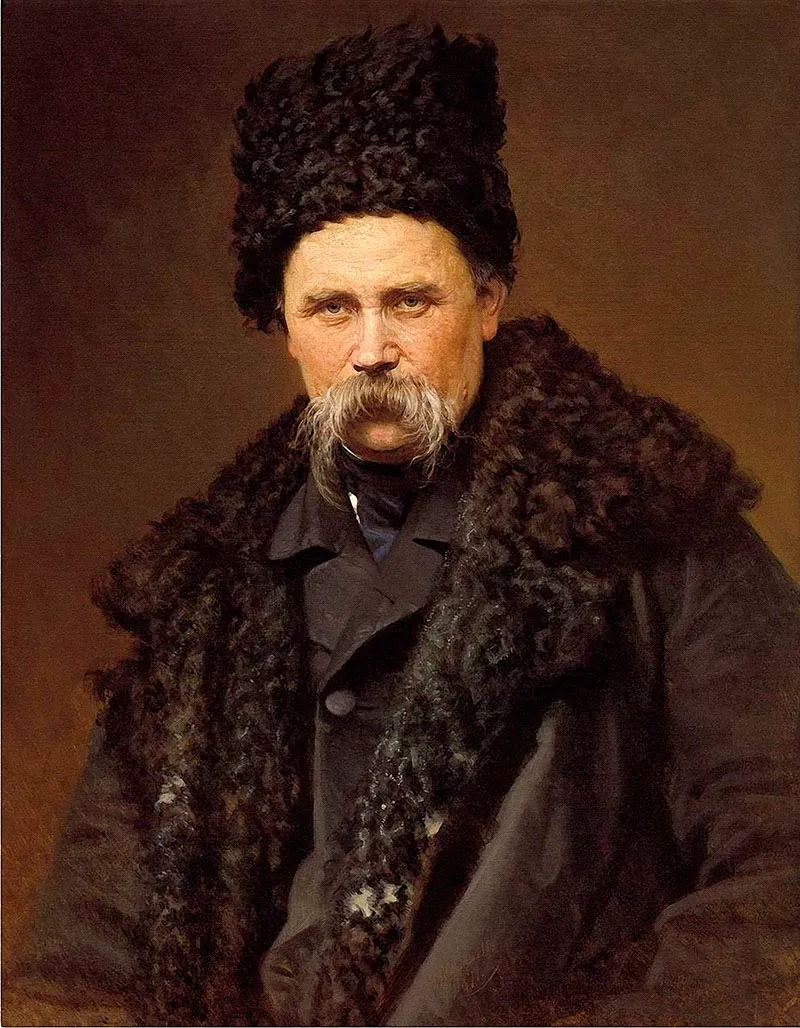
“Antonych grows, and the grass grows”: that is how his poem “Spring” begins. Bohdan-Ihor Antonych often put his own name into his verse, as if he were part of the nature he wrote about. In another poem he called himself a beetle who once lived “among the very cherry trees that Shevchenko sang of”. With that line a poet from the Lemko region declared that his bold new poetry grew from the same root as the work of Taras Shevchenko.
A boy from a Lemko village
Bohdan-Ihor Antonych was born on 5 October 1909 in the village of Nowica in the Lemko region, now in Poland. His nanny, a village girl, gave him a love of poems, songs and legends. He went to a Polish classical gymnasium in Sanok, where Ukrainian was taught for just two hours a week.
A language he taught himself
In 1928 Antonych entered Lviv University, then a Polish university. Ukrainian students met outside its walls in a circle where they gave talks on language, literature and art. That was where Antonych worked hard to master literary Ukrainian and first read his poems in public. He mastered it so well that Galicians took him for a native of Dnipro Ukraine. He graduated in 1933 with a master’s degree in philosophy.
Three books in five years
His first collection, Welcoming Life, came out in 1931. It even has a cycle called Bronze Muscles, inspired by The Olympic Laurel, a book by the Polish poet Kazimierz Wierzyński. Three Rings followed in 1934 and The Book of the Lion in 1936. In 1935 Three Rings won him the award of the Ivan Franko Society of Writers and Journalists in Lviv. Antonych called himself a pagan in love with life. His poems bring to life Lemko villages and their landscapes, old folk beliefs and biblical motifs, in images so unexpected that he is ranked alongside Federico García Lorca and Pablo Neruda. He lived by his pen, publishing poems and essays and editing the journal Dazhboh. He also wrote, at the request of the composer Antin Rudnytskyi, the libretto for an opera about the outlaw hero Oleksa Dovbush, built on one idea: “you cannot walk through evil to reach good”. The opera itself was never composed.
An early death
In the summer of 1937, after an operation for appendicitis, Antonych came down with pneumonia, and he died in Lviv on 6 July. He was 27. He was buried in the Yaniv Cemetery. The collections The Green Gospel and Rotations came out in 1938, after his death. In the unfinished Rotations, the poet of nature turns, unexpectedly, to the modern city and its contrasts.
The return
Under Soviet rule Antonych was barely mentioned for decades. He was rediscovered only in the 1960s, and in 1967 a selection of his poems, Song of the Indestructibility of Matter, came out in Kyiv. The poet Ihor Kalynets, who called Antonych his teacher in poetry, tracked down his grave in Lviv together with his wife Iryna. The Kyiv school of the 1960s and the poets of the 1980s learned from Antonych, and his poems have been translated into many languages.
Why it matters today
Antonych showed that Ukrainian poetry could be deeply its own and modern at the same time: a Lemko village, Shevchenko’s cherry trees and the boldest images of the 20th century fit into the same poems. He taught himself a language he had barely been taught at school, and wrote poems in it that kept pace with the newest poetry in the world. In six years he gave Ukrainian literature a voice that whole generations of poets went on to build on. His story is for anyone who thinks there isn’t enough time or opportunity for something great.