1903–1937
Heo Shkurupii
Futurist, “king of the futuro-prairies”
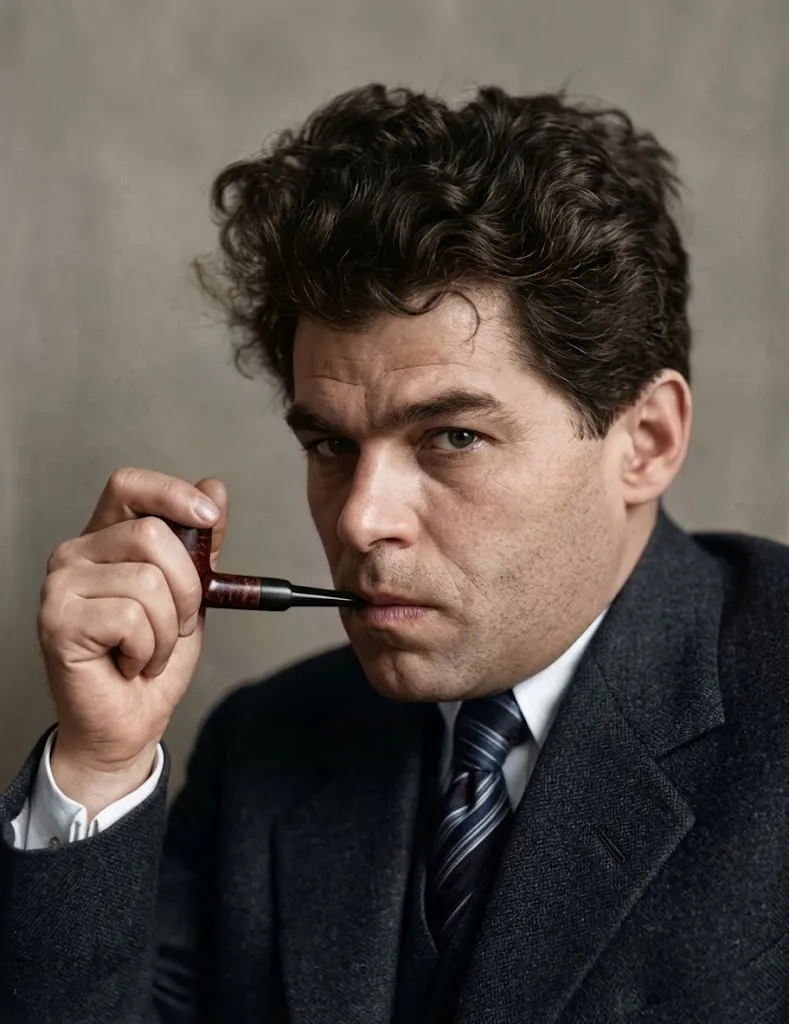
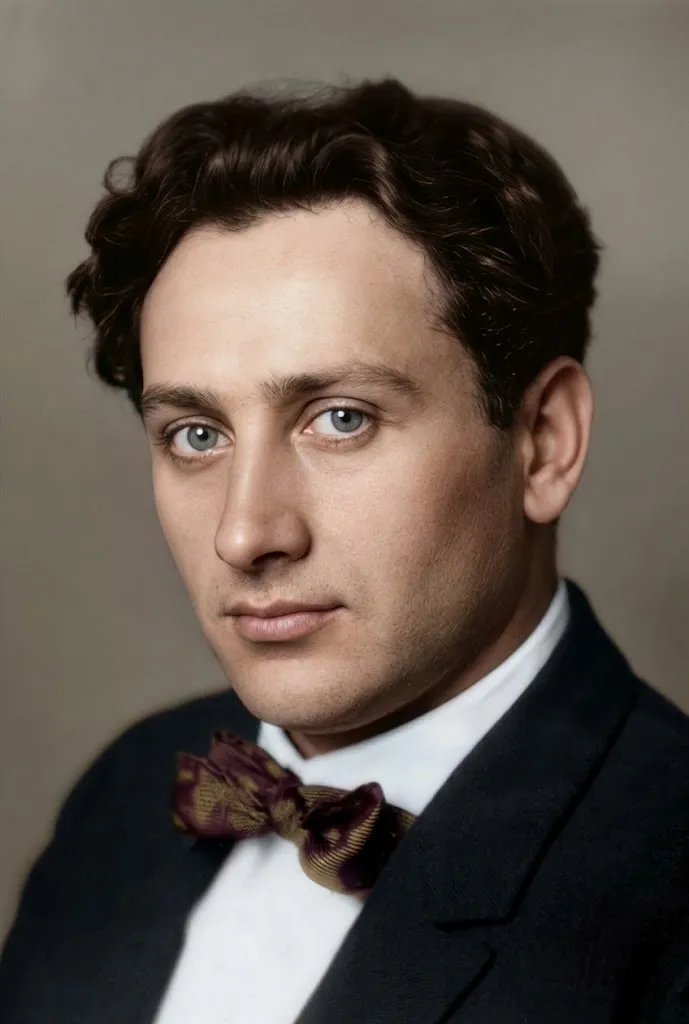
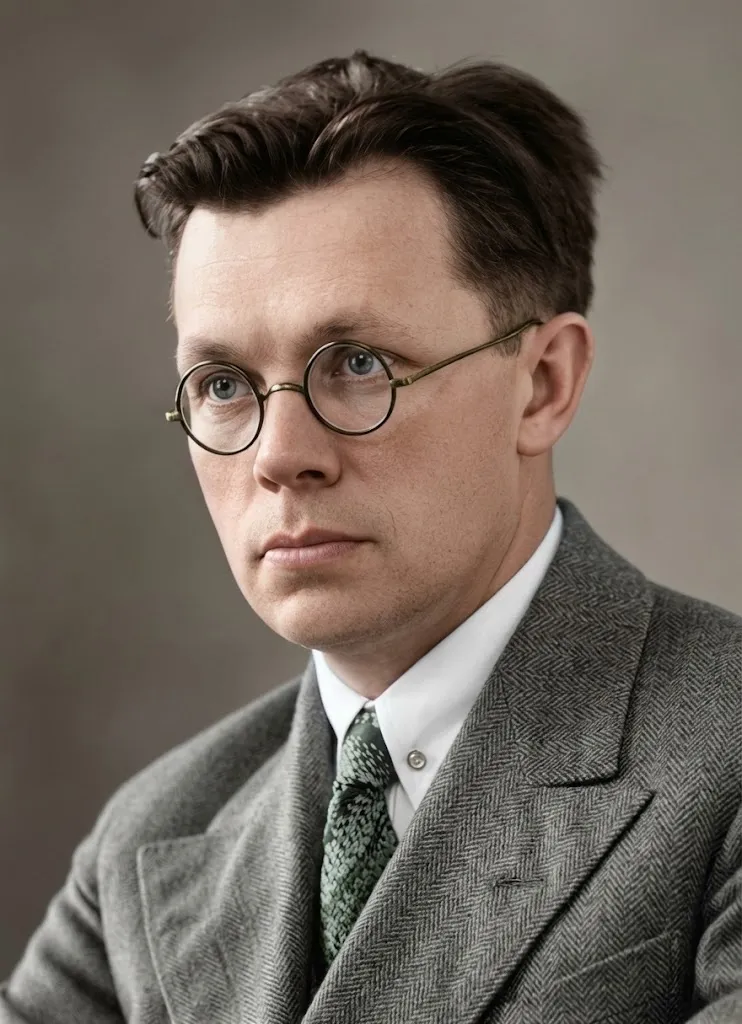
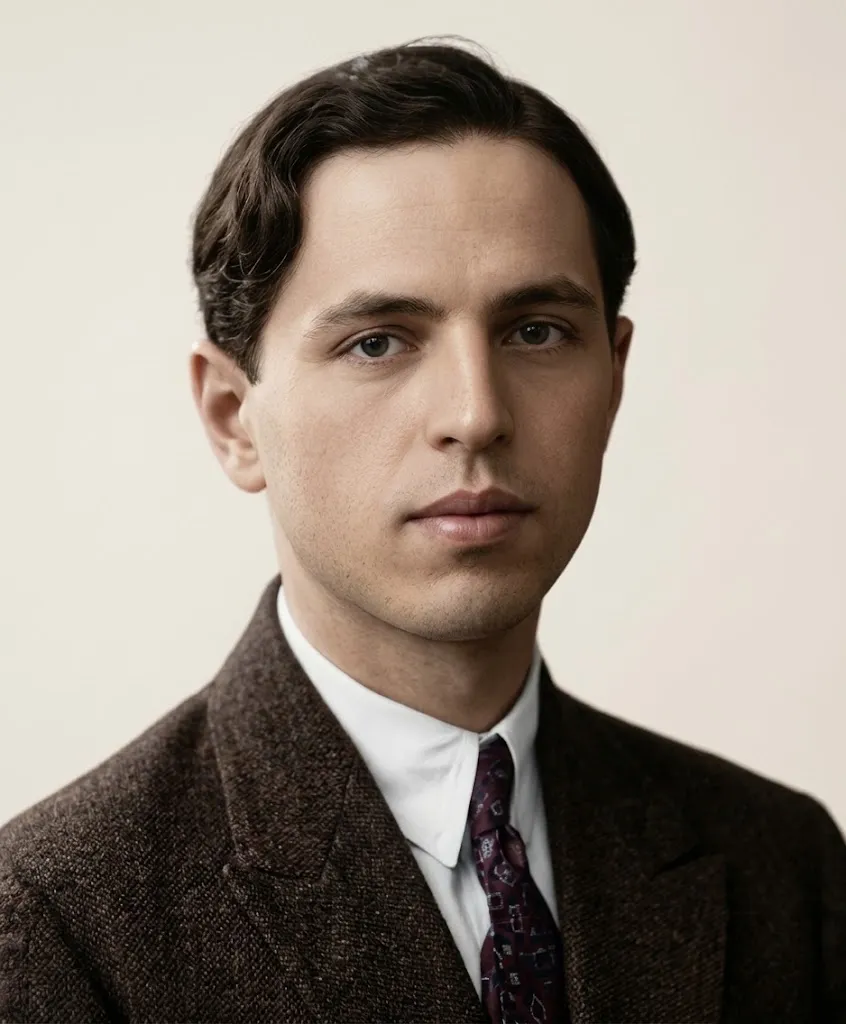
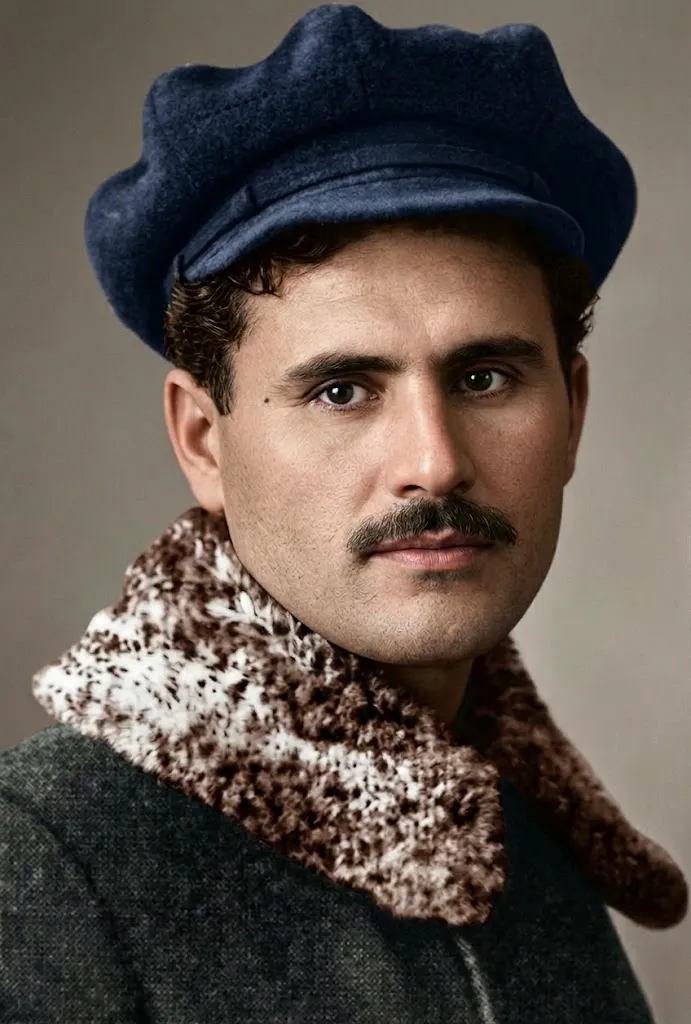
Who called himself “the king of the futuro-prairies”? Heo Shkurupii, a 19-year-old futurist from Kyiv who wrote about cities, trains and machines rather than the village. He is credited with the first Ukrainian detective story. In 1937 the Soviet regime had him shot.
Key accomplishments
- The poetry collections Psykhetozy (1922), The Drum (1923), Embers of Words (1925), The Sea (1927)
- The novel The Door to the Day (1929), called the first experimental novel in Ukrainian literature
- The detective story “The Provocateur”, considered the first in Ukrainian literature
- Screenplays for the films The Blue Packet (1926) and Spartacus (1927)
- Editor of Avanhard, the almanac of the Kyiv branch of Nova Generatsiia
The king of the futuro-prairies
In 1922 a slim book of poems called Psykhetozy came out. Its cover proudly announced “the king of the futuro-prairies Heo Shkurupii”, and also “Window Three”, though it was his first book. The next one, The Drum, came out as “Window Two”. An advertisement offered “words of iron and porcelain”, wholesale and retail, in the world’s biggest cities, and warned: “Beware of imitations!” The author was nineteen. This is how one of the boldest futurists burst into Ukrainian poetry.
A train driver’s son
Heorhii (Yurii) Shkurupii was born on 20 April 1903 in Bendery, then in the Bessarabia governorate. His father was a train driver and his mother a teacher, and the boy grew up at railway stations. In 1913 the family settled in Kyiv. After school Heorhii spent a year at the university’s medical faculty but chose literature instead. At the offices of the newspaper Bilshovyk, aged seventeen, he met Valerian Polishchuk and joined his group Hrono. He signed his first poems “Heorhii” and later took the French-sounding “Heo”.
Semenko’s right hand
In the autumn of 1921 Mykhail Semenko, the leader of Ukrainian futurism, came to Kyiv, and Shkurupii became his closest ally. He came up with the word “panfuturism”, to show that Ukrainian futurism was broader than the russian kind, and was active in the groups Aspanfut and Komunkult and later Nova Generatsiia. He wrote about cities, factories, trains and railway signals, and in literary quarrels he sharply attacked the Neoclassicists, above all Mykola Zerov. Three poetry collections came out in three years, and at 22 Shkurupii was called the child prodigy of Ukrainian literature.
Cinema on paper
Shkurupii worked as an editor and screenwriter at film studios: The Blue Packet (1926) and Spartacus (1927) were made from his scripts. His prose was compared to film, with quick cuts and montage. He is credited with the first Ukrainian detective story, “The Provocateur”, and The Door to the Day (1929) is called the first experimental novel in Ukrainian literature. As head of the Kyiv branch of Nova Generatsiia he edited the almanac Avanhard, where the screenplay of Oleksandr Dovzhenko’s film Earth was first published.
1934–1937
In 1930 Shkurupii travelled through Ukrainian villages with brigades of “collectivizers”. Then came his book Winter of ’30, a mix of verse and prose that mocked the heads of the new collective farms. The poet Yar Slavutych believed this was what led to his arrest. On 3 December 1934 Shkurupii was arrested in Kyiv and accused of belonging to a “Kyiv terrorist organization of the OUN”. He denied everything and complained about illegal interrogation methods, but in April 1935 a military tribunal sentenced him to ten years in the camps. His wife and son were expelled from Kyiv. He served his sentence on the Solovetsky Islands. In 1937 a special NKVD troika sentenced him to death together with 509 other prisoners, and on 8 December 1937 Heo Shkurupii was shot, at the age of 34. Sources give the place as near Leningrad or the Sandarmokh forest in Karelia; where he is buried is not known. After Stalin’s death his wife won a review of the case, and the poet was rehabilitated.
Why it matters today
Heo Shkurupii proved that Ukrainian literature could be modern, urban and daring. He brought trains, factories and the rhythm of the big city into it, and gave its prose the tricks of cinema, the detective story and experiment. For decades the regime struck out his name, yet his poems are heard again, even as today’s pop songs. Anyone looking for new forms for Ukrainian culture carries on what the futurists of the 1920s began.