1815–1870
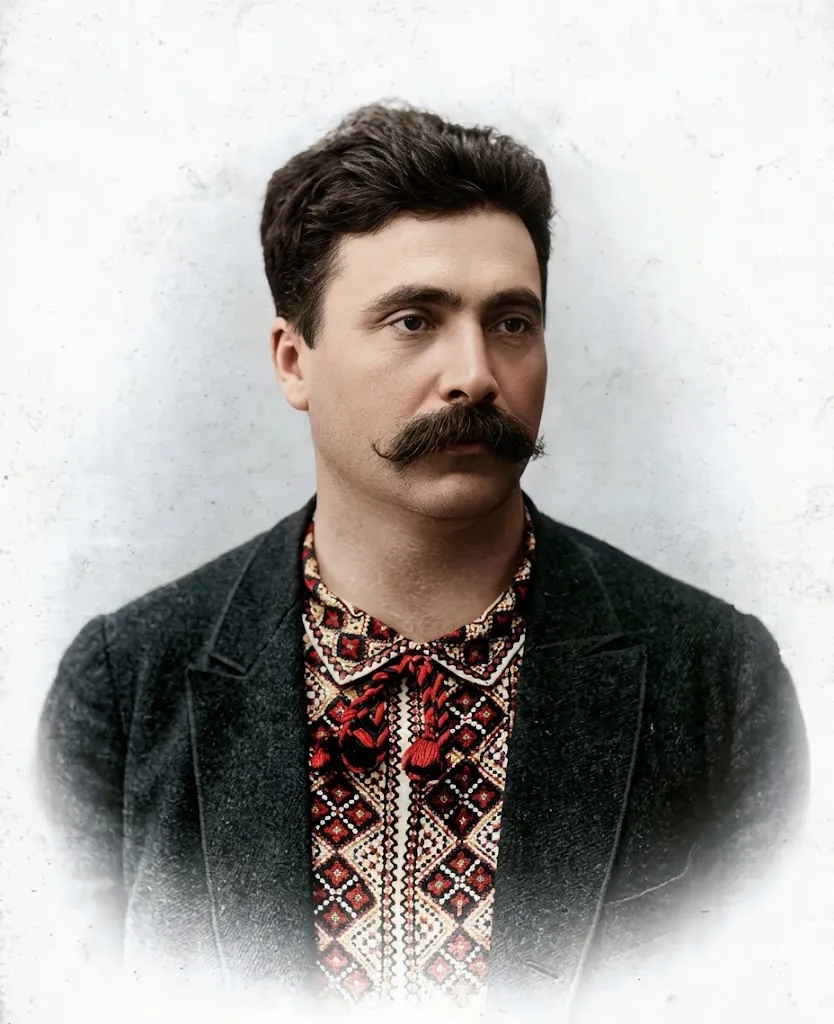
Mykhailo Verbytskyi
Composer of Ukraine’s national anthem
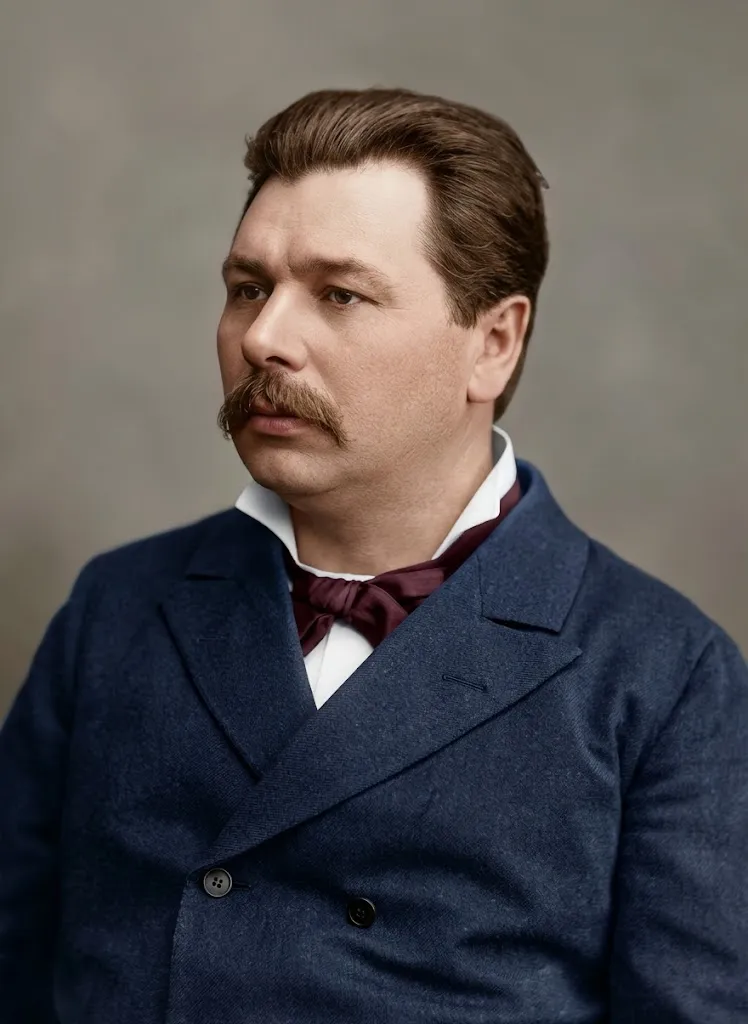
Ukraine’s anthem was first sung to a guitar. Mykhailo Verbytskyi, a Greek Catholic priest from the village of Mlyny near Przemyśl, a composer and guitarist, set the poem Shche ne vmerla Ukraina to music in the spring of 1863. Since 1992 his tune has been the music of the state anthem.
Key accomplishments
- The melody of Shche ne vmerla Ukraina (1863), the music of Ukraine’s state anthem since 15 January 1992
- The music for Galicia’s anthem Myr vam, brattia, to words by Ivan Hushalevych
- Choral works to poems by Taras Shevchenko (Zapovit), Yurii Fedkovych and Markiian Shashkevych
- Music for the Divine Liturgy (1847) and many church hymns
- Music for about twenty stage productions, including for the Ruthenian People’s Theatre in Lviv
The boy from the cathedral choir
Mykhailo Verbytskyi was born in 1815 in the village of Yavornyk Ruskyi near Przemyśl (now in Poland), into the family of a Greek Catholic priest. His father died early, and the boy was raised by a distant relative, Bishop Ivan Snihurskyi of Przemyśl. Mykhailo studied at the singing school of Przemyśl cathedral and sang in its choir. His music is counted in the “Przemyśl school” of composers, who were shaped by the choral concertos of Dmytro Bortnianskyi.
A priest with a guitar
In Lviv, where he studied at the seminary, Verbytskyi took up the guitar. After a bad injury he spent 15 weeks in bed, and seminarians were allowed no books except textbooks, so a friend brought him a guitar. Later Verbytskyi taught it himself and put together a collection of pieces for guitarists. He is remembered as a virtuoso who made guitar music fashionable in Galicia. He was ordained in 1850, and from 1856 he served as the parish priest of Mlyny, a village near Przemyśl.
A song from a magazine
The poem Shche ne vmerla Ukraina (“Ukraine Has Not Yet Perished”) appeared in the Lviv magazine Meta in 1863. It carried no signature, so people took it for Shevchenko’s. In fact the words were by Pavlo Chubynskyi of Kyiv. In the spring of 1863, in Mlyny, Verbytskyi set the poem to music: first as a song for voice and guitar, later for choir and orchestra. That same year the composer himself first sang it in the hall of the Przemyśl seminary, and the seminarians spread it from there. In 1864 its tune was heard on stage in Lviv, as the Cossack chorus Shche ne zhyblo Zaporozhzhia in Karl Heinch’s historical drama The Zaporozhians at the Ruska Besida theatre. It was first performed as a work in its own right on 10 March 1865, at a Shevchenko evening in Przemyśl.
Music for the stage and the church
Verbytskyi wrote music for plays, including The Soldier-Sorcerer after Ivan Kotliarevskyi, and from 1864 for the Ruthenian People’s Theatre in Lviv. In 1868, on commission from the Shevchenko Committee, he set Taras Shevchenko’s Zapovit (“Testament”) for baritone, male and mixed choirs and orchestra. Verbytskyi dreamed of setting all of Shevchenko’s poems to music. He also wrote music for the Divine Liturgy and other church hymns. He died in Mlyny in 1870 and is buried near the village church.
Why it matters today
A song a village priest wrote for the guitar became the music of Ukraine’s state anthem. He wrote it when there was no Ukrainian state. In 1917–1920 the song became one of the anthems of the West Ukrainian People’s Republic and the Ukrainian People’s Republic, in 1939 the anthem of Carpatho-Ukraine, and since 1992 an independent Ukraine has sung it. Verbytskyi showed that something made in a small village can bring a whole country together. Every time Ukrainians sing their anthem, it is his music they hear.