1859–1940
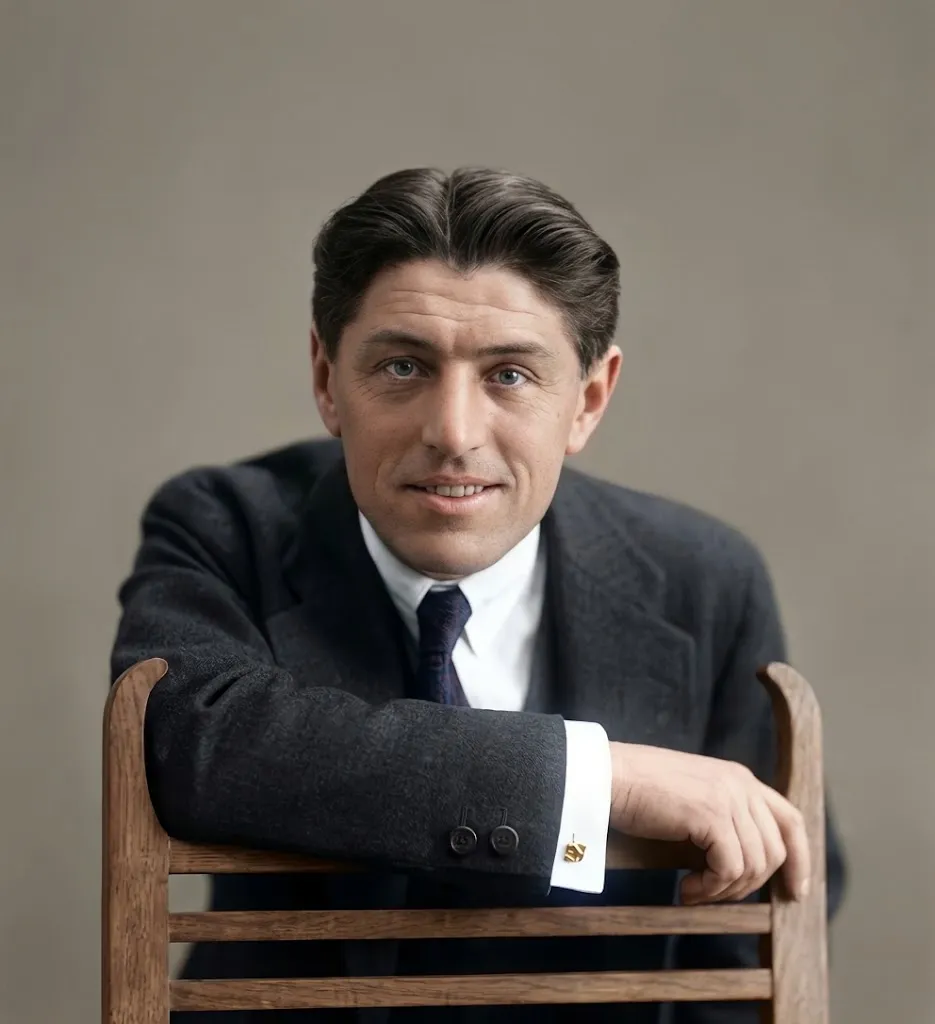
Panas Saksahanskyi
Actor and director, Theatre of Coryphaei
Vozny in Natalka from Poltava was his first role on the professional stage - and, half a century later, his last. Panas Saksahanskyi, the youngest of the Tobilevych brothers, played some hundred roles and was the first in Ukrainian theatre to write out scores of roles and productions.
Key accomplishments
- In 1890 took charge of his own troupe, founded together with his brother Ivan Karpenko-Karyi
- Some hundred leading roles: Vozny in Natalka from Poltava, Kopach in One Hundred Thousand, Holokhvostyi in Chasing Two Hares
- The first in Ukrainian theatre to prepare written scores of roles and productions
- In 1897 read out the memorandum on the persecution of Ukrainian theatre at the congress of stage workers in Moscow
- In 1918–1922 led the People’s Theatre in Kyiv, the basis of the later Mariia Zankovetska Theatre
- The comedies Hypocrites (1908) and Rabble, and books of memoirs
The play their mother knew by heart
Imagine a family where the mother knows a whole play by heart. Yevdokiia Tobilevych, of serf origin, knew every line of Ivan Kotliarevskyi’s Natalka from Poltava, and all her children learned it from her. The youngest, Panas, was born in 1859 in the village of Kamiano-Kostuvate in the Kherson region (now Mykolaiv Oblast). His older brothers became the playwright Ivan Karpenko-Karyi and the actor Mykola Sadovskyi. While still at school, Panas and Mykola started their own drama group, and at secondary school in Yelysavethrad Panas shared a desk with Yevhen Chykalenko.
The officer who chose the stage
After school Panas went through cadet school in Odesa and served in an infantry regiment in Mykolaiv. But in 1883, on the stage of the Mykolaiv theatre, in the troupe of Marko Kropyvnytskyi and Mykhailo Starytskyi, he made his debut as a professional actor. His first role was Vozny, from that same Natalka from Poltava.
One brother writes, the other acts
In 1890 Saksahanskyi took charge of his own troupe, which he had founded together with Ivan. Under his direction it became the finest Ukrainian theatre company. His brother wrote and Panas acted: Kopach in One Hundred Thousand, Penionzhka in Martyn Borulia. In 1897, at the congress of stage workers in Moscow, it was Panas who read out from the platform Ivan’s memorandum on how the authorities were stifling Ukrainian theatre. In 1900 his troupe merged with Kropyvnytskyi’s, and the combined company, run by Saksahanskyi and Sadovskyi, had Mariia Zankovetska in its cast.
Tongue twisters, Homer and a score for every role
Saksahanskyi belonged to the realistic-psychological school and was famous for his gesture and facial expression. To build a character, he spent a long time watching ordinary people. He held that voice and diction made an actor, and to train them he recommended tongue twisters and the hexameters of the Iliad and the Odyssey. He shone above all in satirical comedy: Holokhvostyi in Starytskyi’s Chasing Two Hares, Stetsko in Hryhorii Kvitka-Osnovianenko’s Matchmaking at Honcharivka. In all he played some hundred leading roles. As a director he was the first on the Ukrainian stage to write out scores of roles and productions, working out each role in detail in advance.
The comedian who dreamed of Othello
In 1918 Saksahanskyi was invited to head the state People’s Theatre in Kyiv. There he staged Schiller’s The Robbers in Ukrainian, and in 1922 the People’s Theatre became the basis of the Mariia Zankovetska Theatre, which now works in Lviv. A brilliant comic actor, he dreamed of the tragic role of Othello, translated Shakespeare’s play into Ukrainian himself for it, and in 1926 staged Othello. The Soviet authorities named him People’s Artist of the Ukrainian SSR (1925) and later of the USSR.
Vozny, one last time
From 1927 he toured with Mykola, with whom he had made peace after years of estrangement: the brothers once again played together in Natalka from Poltava. On 12 May 1935, at a celebration in Kyiv of his fifty years on stage, he went before an audience for the last time. Once again he played Vozny: his first role on the professional stage was also his last. Saksahanskyi died in Kyiv in 1940.
Why it matters today
Saksahanskyi showed that acting is work, not only talent: he was the first in Ukrainian theatre to prepare each role in advance, step by step. His stage characters became classic models of the actor’s craft, and he trained new actors and directors himself. With his brother he made a Ukrainian troupe the best of its time, and from a platform in Moscow he named out loud the pressure Ukrainian theatre was under. The theatre that grew out of his People’s Theatre still plays in Lviv today. Any actor who searches for the exact gesture and word for a role walks his path.