1819–1903
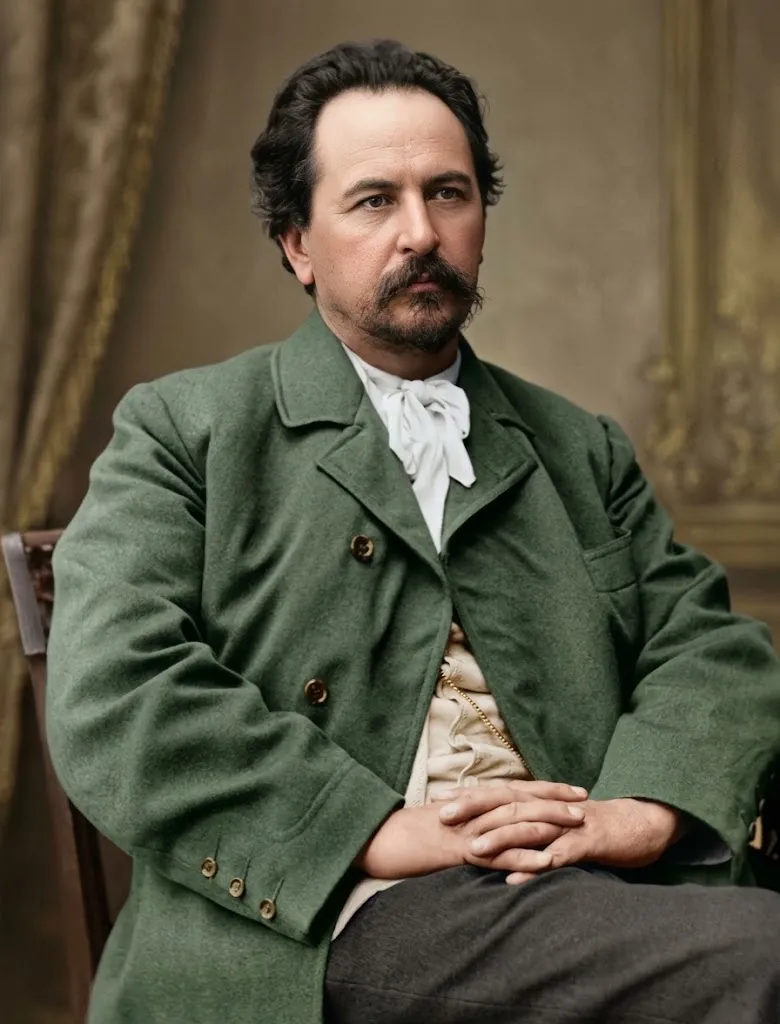
Nikola Tereshchenko
Sugar industrialist and patron
“Striving for the public good” was the motto on the Tereshchenko coat of arms. Nikola Tereshchenko, a merchant from Hlukhiv, became one of the empire’s biggest sugar producers and gave more than 5 million roubles to schools, hospitals, churches and museums in Kyiv and Hlukhiv.
Key accomplishments
- Founded the Tereshchenko Brothers’ Sugar and Refinery Company with his brother Fedir (1870)
- Mayor of Hlukhiv from 1860
- Gave more than 5 million roubles: 1.5 million to Hlukhiv and more than 2.5 million to Kyiv
- Built Kyiv’s 5th Gymnasium, a city school and a hospital for labourers (now Okhmatdyt)
- Gave large sums for the buildings of the Kyiv Polytechnic Institute and the City Museum (now the National Art Museum of Ukraine)
The boy who traded grain
Nikola (Mykola) Tereshchenko was born in 1819 in Hlukhiv in the Chernihiv region (now the Sumy region), into a family of Cossack and townspeople stock. His only schooling was a three-year district school. As a teenager he was already trading grain, and later he brought salt and fish from Crimea. During the Crimean War of 1853–1856 he supplied the army on state contracts, which greatly increased his capital.
A sugar empire
After serfdom was abolished in 1861, Tereshchenko, his father Artemii and his brother Fedir bought up large estates, sugar mills and distilleries. In 1870 the brothers founded the Tereshchenko Brothers’ Sugar and Refinery Company, at the time the largest in the sugar industry of the russian empire. The same year the family was granted hereditary nobility. Nikola personally owned three more sugar mills, flour mills, brickworks and about 60,000 desiatins of land.
Money given back to the cities
In Hlukhiv Tereshchenko was the senior burgomaster, and from 1860 the mayor. The family gave the town one and a half million roubles: it got gymnasiums for boys and girls, hospitals, an orphanage and a trade school. In 1875 Tereshchenko moved to Kyiv. There his money built the 5th Gymnasium, a city school, a commercial school for girls, a hospital for labourers and a night shelter for 500 people. He gave large sums to the Polytechnic Institute and to the City Museum of Antiquities and Arts, whose building was designed by Vladyslav Horodetskyi. In all, Tereshchenko gave away more than 5 million roubles in his lifetime. He was an honorary citizen of both Kyiv and Hlukhiv.
Nikola Tereshchenko died in Kyiv in 1903.
Why it matters today
Nikola Tereshchenko showed that a fortune earned by your own work can be given back to people in a way that keeps serving them long after you. Much of what his money built still serves people today: Okhmatdyt treats children in his old hospital for labourers, and the museum designed by Vladyslav Horodetskyi is now the National Art Museum of Ukraine, while his former mansion houses the National Museum of Taras Shevchenko. He started out trading grain with three years of schooling, proof that what you give your country doesn’t depend on where you start. The family motto, “Striving for the public good”, is still a fair measure for Ukrainian business today.