1894–1937
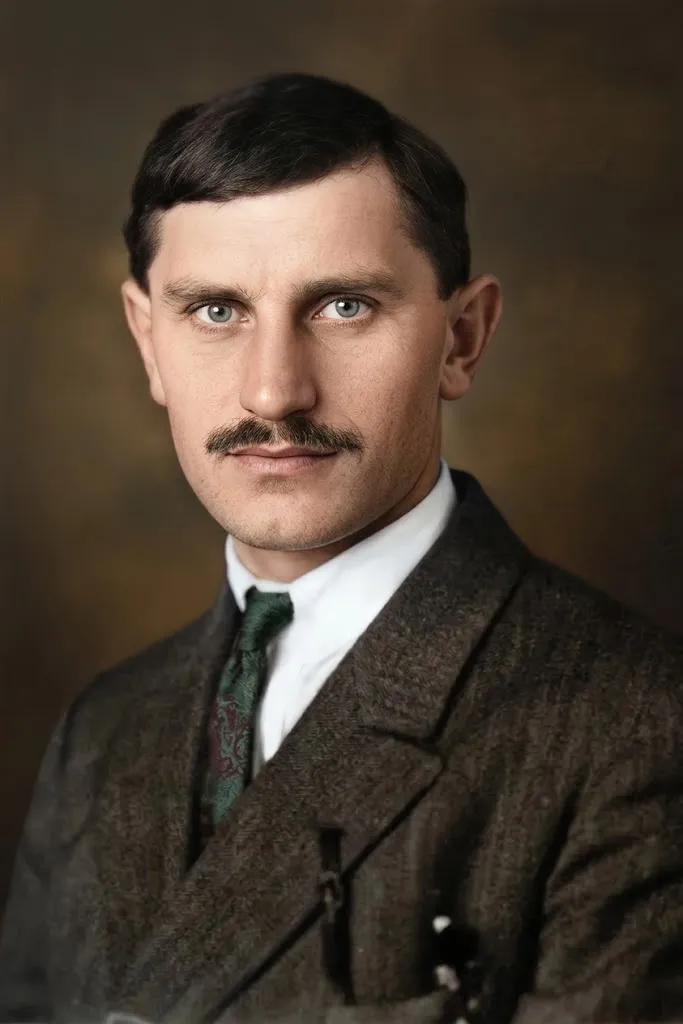
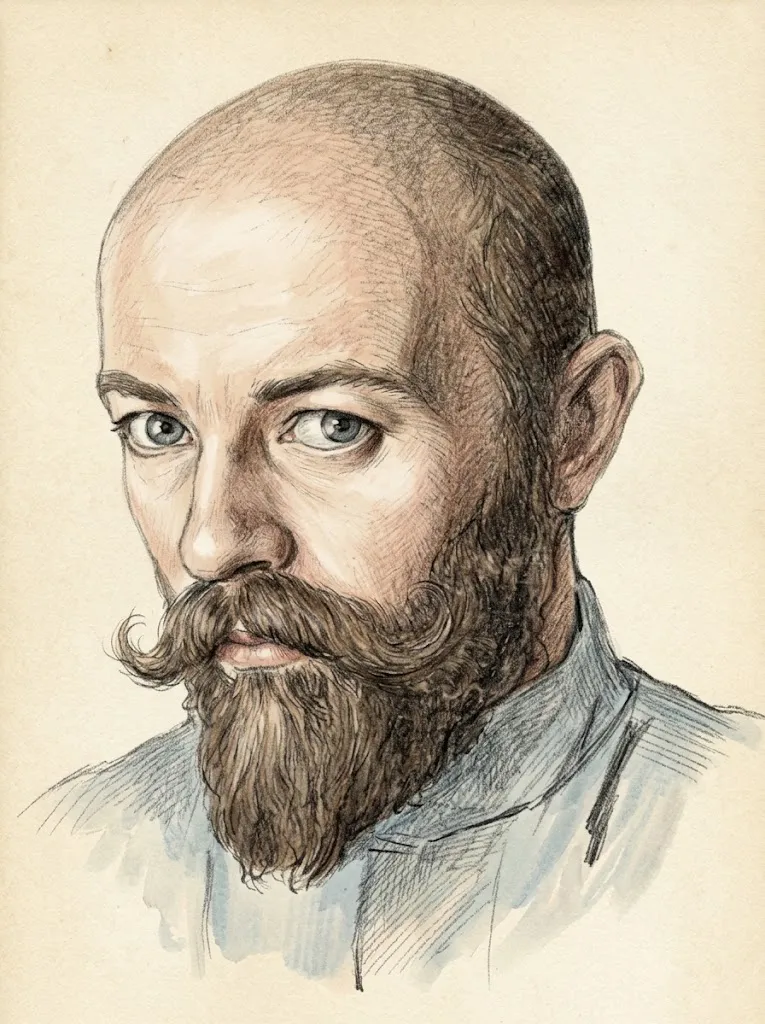
Ivan Padalka
Boichukist painter and printmaker
He dreamed of making pictures as beautiful as his mother’s carpets, and found the teacher for it in Mykhailo Boichuk. Ivan Padalka became one of the finest Boichukists: he painted murals, cut prints, illustrated the Kobzar and the Aeneid, and trained young artists in Kharkiv. He was shot in 1937.
Key accomplishments
- Studied in Mykhailo Boichuk’s workshop at the Ukrainian Academy of Arts; one of the leading Boichukists
- Murals for the Lutsk Barracks in Kyiv (1919) and the fresco Rest at the Chervonozavodskyi Theatre in Kharkiv (1933–1935)
- Paintings and prints: Photographer in the Village (1927), the series Dniprelstan (1928)
- Illustrations for The Tale of Ihor’s Campaign (1928), the Kobzar (1929) and the Aeneid (1931); book covers for Ukrainian writers
- Taught in Myrhorod and Mezhyhiria and at the Kharkiv (1925–1934) and Kyiv (1934–1936) art institutes
Pictures as beautiful as Mother’s carpets
What turns a village boy into an artist? For Ivan Padalka, it was his mother’s carpets. He was born in 1894 in the village of Zhornoklovy in the Poltava region (now the Cherkasy region), into a large peasant family. He studied at the Myrhorod school of applied art, but in 1912 he was expelled “for revolutionary activity”: he had led a student protest against the school’s management. So Ivan went to Poltava, where he copied old Ukrainian carpets in a workshop.
Boichuk’s student
In 1913 Padalka entered the Kyiv Art School, and in 1917 he joined the workshop of Mykhailo Boichuk at the newly founded Ukrainian Academy of Arts. He remembered their first meeting this way: “I had the happy thought that he was the very master who would teach me to make pictures as beautiful as my mother’s carpets.” Boichuk taught his students to look for modern art in icons and folk painting, and Padalka became one of the best of them. In 1919 the Boichukists painted 14 murals in the Lutsk Barracks in Kyiv; Padalka’s showed a peasant family coming home from mowing. That same year he and Tymko Boichuk illustrated the children’s book Barvinok. The barracks murals were destroyed as early as 1922.
Kharkiv: teacher and printmaker
Padalka taught ceramics students in Myrhorod and Mezhyhiria, and in 1925 he moved to Kharkiv. For almost ten years he taught at the Kharkiv Art Institute, and a whole generation of his students grew up there. He painted and cut prints about the new life around him: the painting Photographer in the Village (1927), the print series Dniprelstan (1928). He took up printmaking following the example of Sofiia Nalepynska-Boichuk. He illustrated The Tale of Ihor’s Campaign, the Kobzar of Taras Shevchenko and the Aeneid of Ivan Kotliarevskyi. He designed books for his contemporaries too: covers for Maik Yohansen and Valerian Polishchuk, a bookplate for Oleksa Slisarenko, illustrations for Diderot in Valerian Pidmohylnyi’s translation.
A fresco for a theatre
In 1933 the Boichukists began painting the Chervonozavodskyi Theatre in Kharkiv, and Padalka painted the fresco Rest there. In the middle of the work, in 1934, he was transferred to Kyiv as a professor at the Kyiv Art Institute.
1936–1937
On 29 September 1936 Padalka became the first of the Boichukists to be arrested. He was accused of belonging to a made-up “national-fascist terrorist organization”. On 13 July 1937 he was shot in Kyiv, on the same day as Mykhailo Boichuk and Vasyl Sedliar. He was rehabilitated on 1 February 1958.
Why it matters today
Ivan Padalka showed that modern art can speak the language of icons, folk painting and a mother’s carpet and grow stronger for it. His illustrations gave the Kobzar, the Aeneid and The Tale of Ihor’s Campaign a new look in which you can see the icon and the folk picture. In Kharkiv he trained a generation of artists, so Boichuk’s school lived on in his students. A village boy expelled from school came to be seen as one of Boichuk’s best students and became a professor himself. Anyone looking for their own voice can learn from him: your roots are nothing to be ashamed of; they are something to grow from.