1895–1937
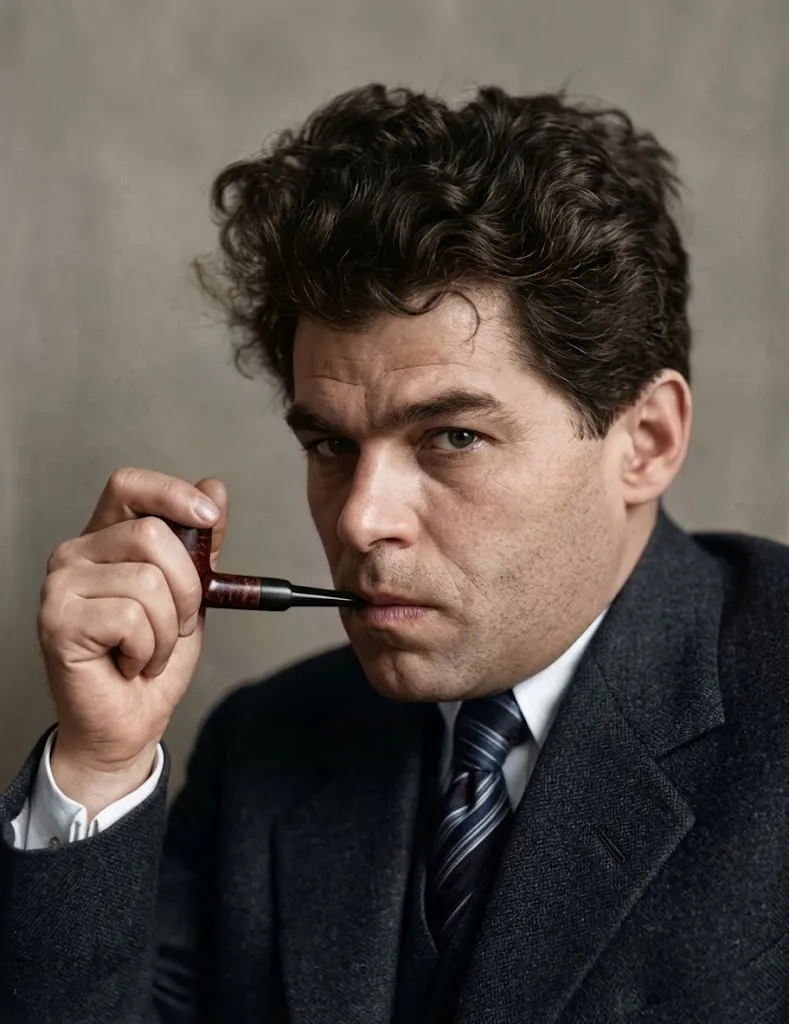
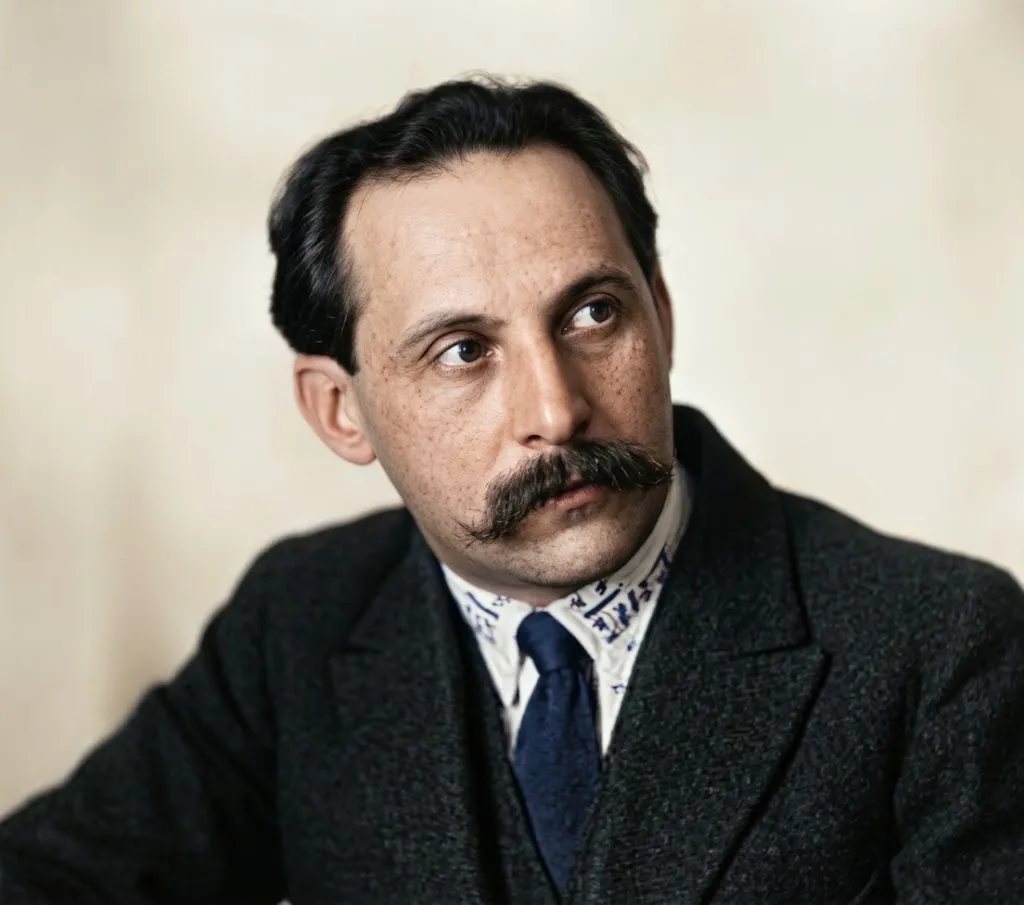
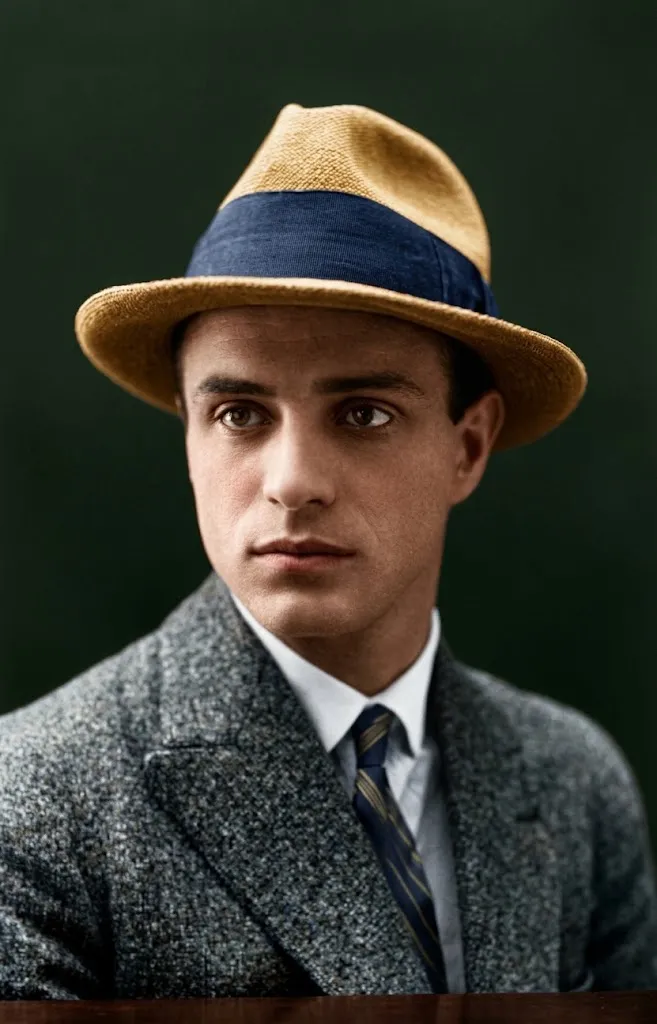
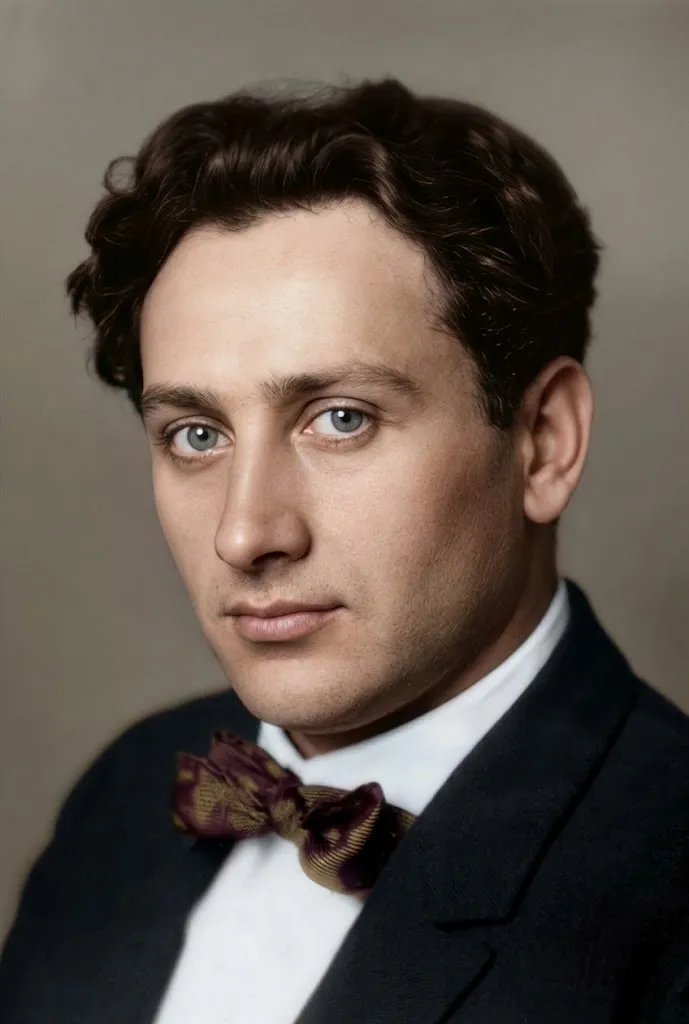
Maik Yohansen
Poet, author of Doctor Leonardo
His 1925 adventure novel came out in 100,000 copies. Maik Yohansen was a Kharkiv poet, prose writer and linguist, co-author of the script for Dovzhenko’s Zvenyhora and a founder of VAPLITE. He was shot in Kyiv in 1937.
Key accomplishments
- The novel Doctor Leonardo’s Travels through the Switzerland of Slobidska Ukraine (1928), whose main character is the landscape
- The poetry collections D’hori (To the Peak, 1921), Krokoveie kolo (The Dancing Circle, 1923) and Iasen (The Ash Tree, 1930)
- The script of Oleksandr Dovzhenko’s film Zvenyhora (with Yurii Tiutiunnyk)
- A founder of VAPLITE (1925) and of the Techno-Artistic Group A
- Co-compiler of a russian–Ukrainian dictionary (1926); worked on the 1928 Ukrainian orthography
A novel in 100,000 copies
Picture a Ukrainian adventure story that comes out in instalments, like a TV series. That is how Maik Yohansen’s The Adventures of MacLayston, Harry Rupert and Others appeared in 1925: ten instalments, 100,000 copies in all. The same year saw his first book of short stories, Seventeen Minutes.
A Kharkiv boy with a German surname
Mykhailo (Maik) Yohansen was born on 28 October 1895 in Kharkiv. His father, Hervasii Yohansen, taught German at Kharkiv gymnasiums. Some sources call him German; others, a Russified Swede. His mother, Hanna Kramarevska, was Ukrainian, from a Cossack family of the Starobilsk area. Maik went to a classical gymnasium and in 1917 graduated in history and philology from Kharkiv University with a master’s degree.
Burning the past: how Maik Yohansen began
As a schoolboy, Maik Yohansen wrote poems in russian and German, but he didn’t like them and later burned them all. He said he began writing in Ukrainian under the influence of teachers at Kharkiv’s Hrinchenko school. After 1917 he wrote only in Ukrainian, and his first collection, D’hori, came out in 1921.
A manifesto and VAPLITE
In 1921 Yohansen, Mykola Khvylovy and Volodymyr Sosiura wrote the manifesto “Our Universal to the Ukrainian Workers and Ukrainian Proletarian Artists”. He belonged to the proletarian writers’ union Hart, and in 1925 he was one of the founders of VAPLITE. When the authorities forced VAPLITE to dissolve, Yohansen was the only former member to object publicly to the founding of the new organization Prolitfront. He refused to join it and set up the apolitical Techno-Artistic Group A instead; it was banned in 1930.
Film, theater and language
With Yurii Tiutiunnyk, Yohansen wrote the script of Zvenyhora, the film made by Oleksandr Dovzhenko. With Mykola Khvylovy and Ostap Vyshnia he wrote the operetta Mikado and the revue Hello, on Wave 477! for Les Kurbas’s Berezil theater. In his novel Doctor Leonardo’s Travels through the Switzerland of Slobidska Ukraine (1928) he made the landscape the main character and pushed the people into supporting roles. He was a linguist too: he knew European and Scandinavian languages, helped compile a russian–Ukrainian dictionary (1926) and worked on the draft of the 1928 Ukrainian orthography. He even drafted a project to write Ukrainian in the Latin alphabet.
Books for children
By the early 1930s the authorities demanded “socialist realism” and nothing else. Rather than write to order, Yohansen turned to children’s books, such as Crabs and Kit-Chudylo (The Odd Cat), and to travel sketches.
Arrest and execution
On 18 August 1937 Yohansen was arrested in Kharkiv, in the writers’ apartment building Slovo. On 26 October the Military Collegium of the USSR Supreme Court sentenced him to death for membership in a made-up nationalist organization. On 27 October 1937 he was shot in Kyiv, in the Lukianivska prison, three days after Mykhail Semenko. Researchers believe he was secretly buried in the Bykivnia forest. In 1958 the sentence was quashed for lack of any crime.
Why it matters today
Maik Yohansen showed that Ukrainian literature could be anything: adventurous, experimental, funny, written for children or for the screen. His books reached a mass readership, and his writing lived on in film and theater alongside Dovzhenko and Kurbas. He chose Ukrainian on purpose, though he had written in other languages, and believed his homeland was “a diamond among the free nations of the world”. Even when the authorities demanded writing to order, he found a way to stay himself. For anyone writing in Ukrainian today, he is proof that the language can be modern, playful and gripping.