1896–1937
Mykola Liubchenko (Kost Kotko)
Satirist and columnist
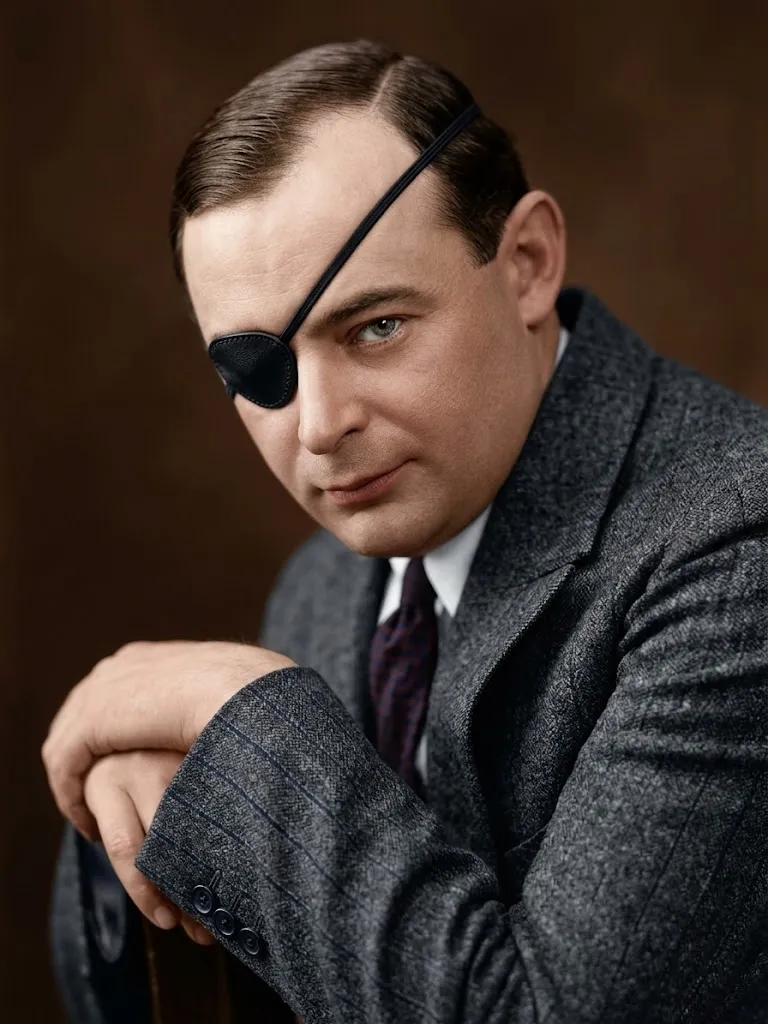
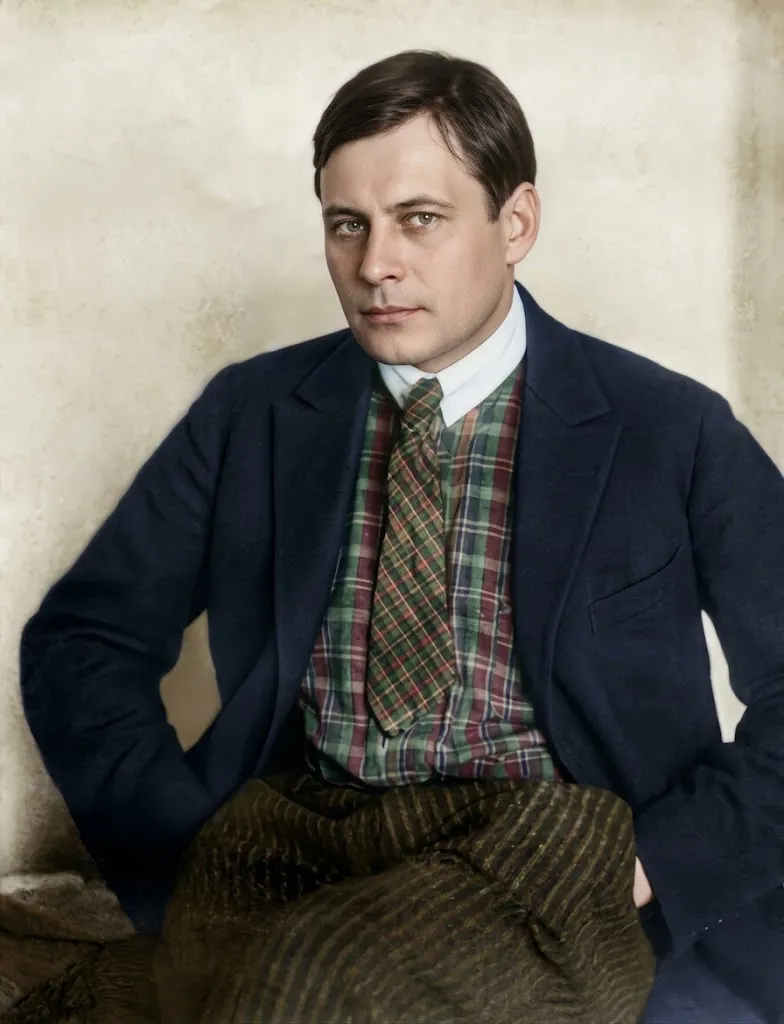
Did you know one of the satirists of the 1920s was a Soviet diplomat in Warsaw and Prague? Writing as Kost Kotko, Mykola Liubchenko published some twenty books of humor and satire. He was arrested in 1934 and, after several prison camps, shot in December 1937.
Key accomplishments
- Some twenty books of humor and satire, among them Without a Plug, Face to the Back, How Are Things Over There, Abroad (all 1927), A Hundred Hours a Day (1928), A Diary of Several Cities (1930) and Tragedy and Farce (1933)
- Early lyric poems in The Almanac of Three (1920)
- The book Istukrev (1928), reissued in 1934 as Istukriat: A Popular Textbook of the History of Ukraine
- Work for the newspaper Komunist and the humor magazine Chervonyi Perets
- Diplomatic service: first secretary of the Soviet mission in Warsaw, then at the mission in Prague
The diplomat who wrote satire
Did you know that one of the satirists of the 1920s was a diplomat? Mykola Liubchenko served as first secretary of the Soviet mission in Warsaw and also worked at the mission in Prague. Readers knew him as Kost Kotko, author of some twenty books of humor and satire, among them How Are Things Over There, Abroad (1927) and A Diary of Several Cities (1930).
From russian verse to Ukrainian satire
Mykola was born in Kyiv on 29 February 1896 (17 February in the Old Style calendar), the son of a police clerk. By the modern calendar his birthday falls only once every four years. In 1914 he finished secondary school and entered Kyiv University, but studied there for little more than a year. His first poems and columns, from 1911 on, were in russian; later he wrote in Ukrainian. In 1917 he moved to Berdychiv and started writing for the local paper. In 1918 he joined the underground Borotbists, the Ukrainian left Socialist Revolutionaries, and was arrested three times for his revolutionary work.
Papers, magazines, embassies
In 1920 his early lyric poems appeared in The Almanac of Three, and he was editing newspapers. In the early 1920s, when Ukraine had few humorists, he was already writing humorous sketches, mostly on political themes. At the same time he worked at the People’s Commissariat of Foreign Affairs, among other posts as first secretary of the Soviet mission in Warsaw. Later he worked for the paper Komunist and for the humor magazine Chervonyi Perets (Red Pepper), where he published satire in verse. For many years the magazine’s editorial secretary was the humorist Vasyl Chechvianskyi.
The road to execution
On 1 December 1934 the Bolshevik leader Sergei Kirov was killed in Leningrad, and suspicion fell on Kotko too. On 4 December the secret police arrested Liubchenko in Kyiv. Under interrogation he was made to “admit” belonging to a “Borotbist wing of a bloc of counter-revolutionary nationalist forces”. In 1935 he was sentenced to the prison camps (sources give seven or ten years). He went through several camps, Solovky among them. On 25 November 1937 an NKVD troika sentenced him to death, and Mykola Liubchenko was shot on 8 December 1937, the same day as another Solovky prisoner, the writer Vasyl Vrazhlyvyi. Soviet histories later claimed Kotko had “died in 1933”. He was rehabilitated in 1956.
Why it matters today
Kost Kotko made his own choice: a Kyiv boy who began with russian verse became a Ukrainian satirist. His books show the 1920s through the eyes of someone who saw both the revolution and Europe. The regime shot him and for decades hid even the truth about his death. Yet his laughter outlived the sentence: in 1961 his satire came out again in the collection Red Satire. Bringing back his name brings back a part of Ukrainian laughter that was meant to be erased.