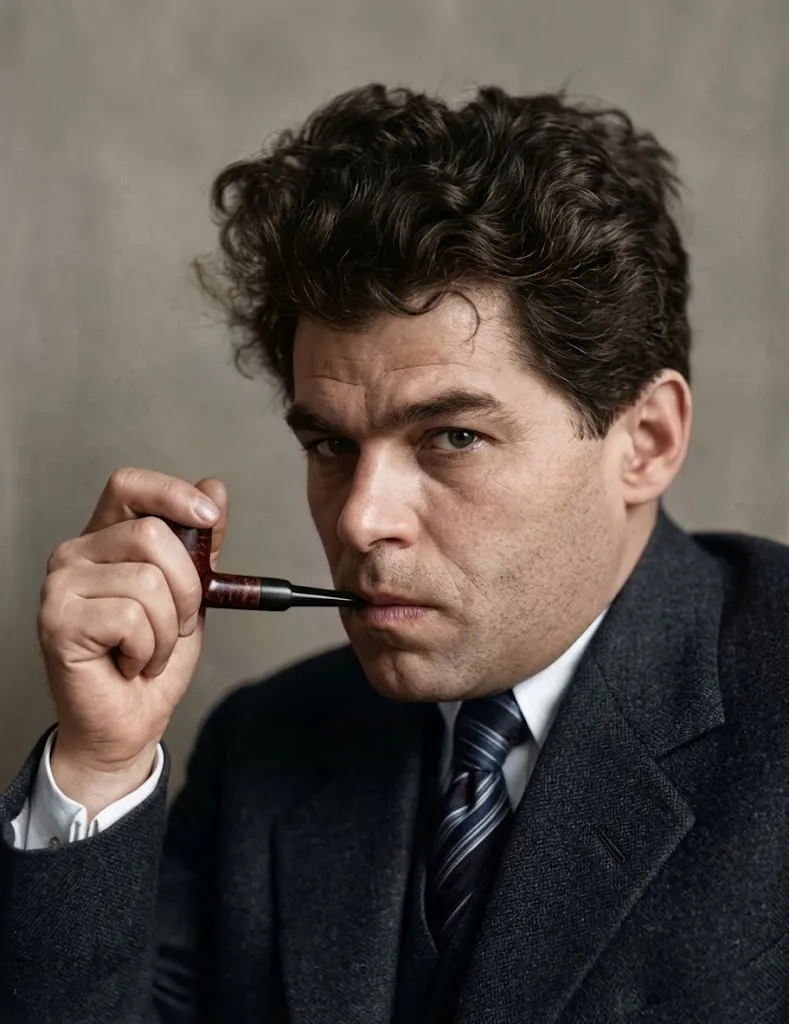
1895–1964
Maksym Rylskyi
Poet, translator of Pan Tadeusz
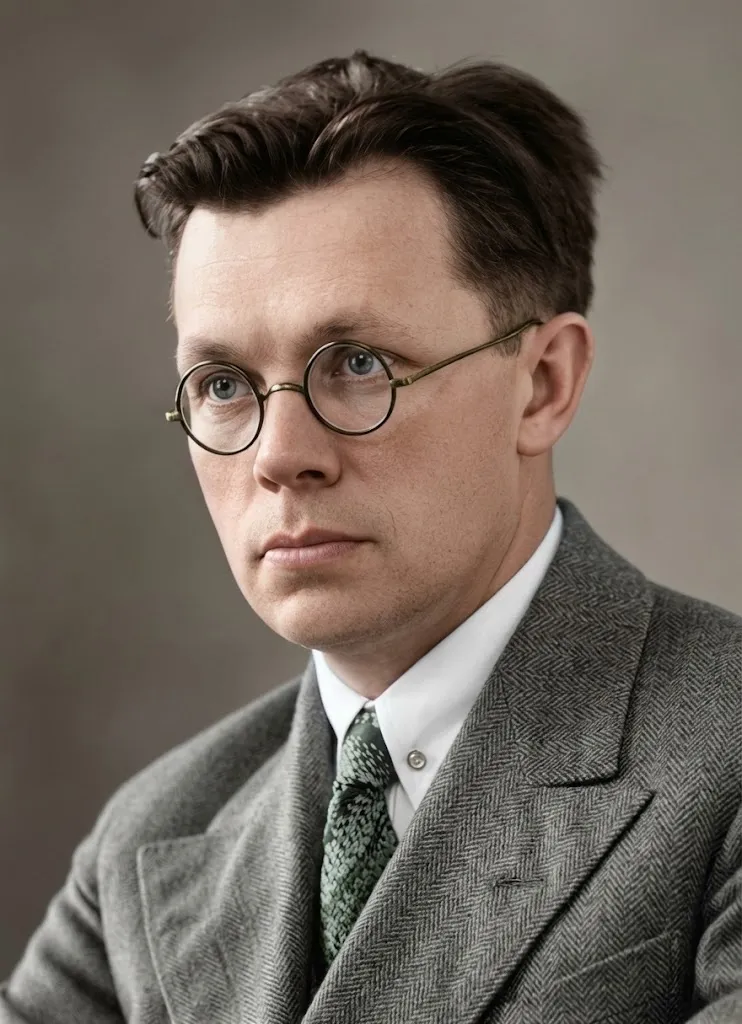
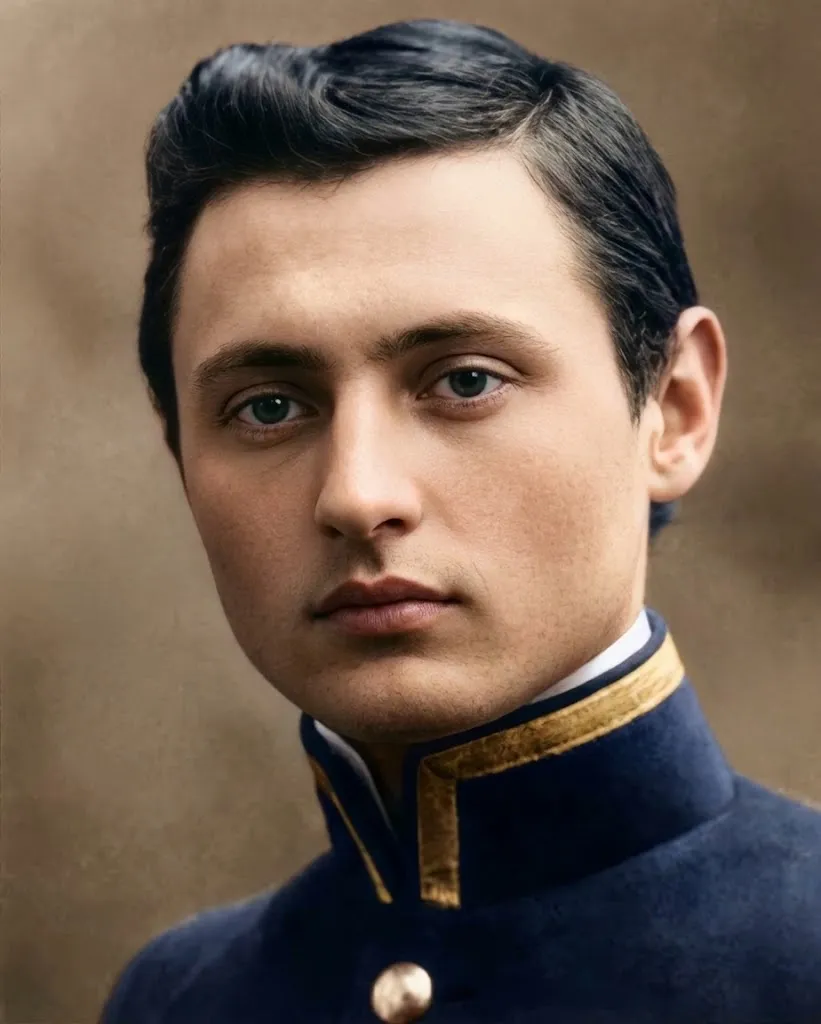
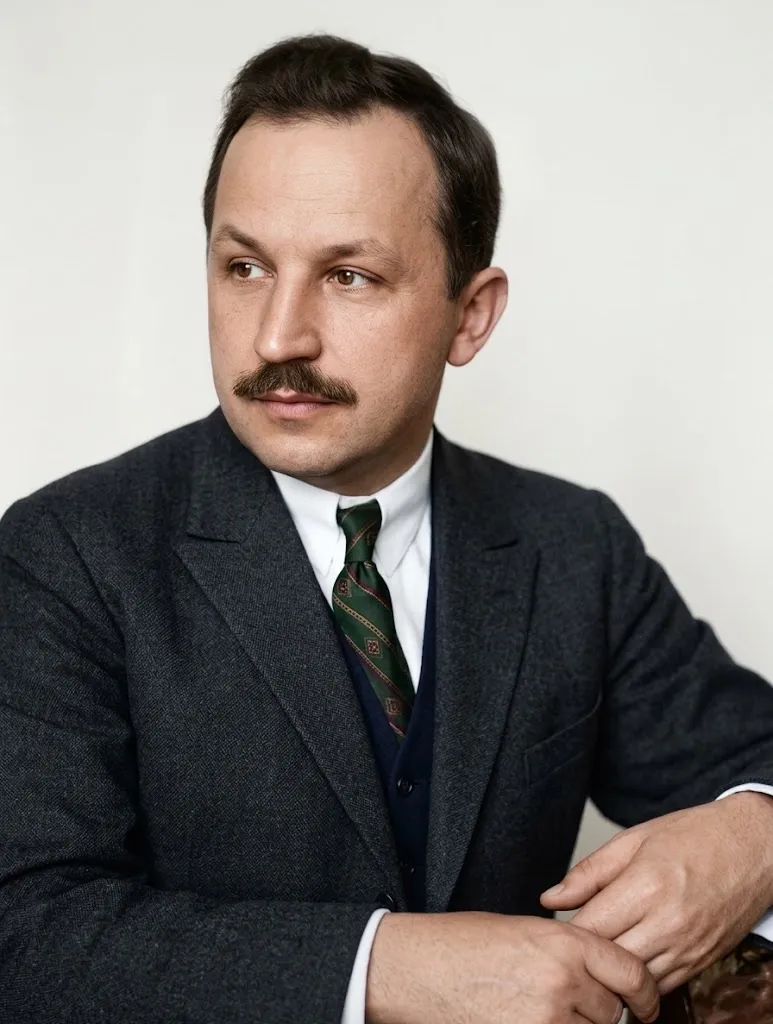
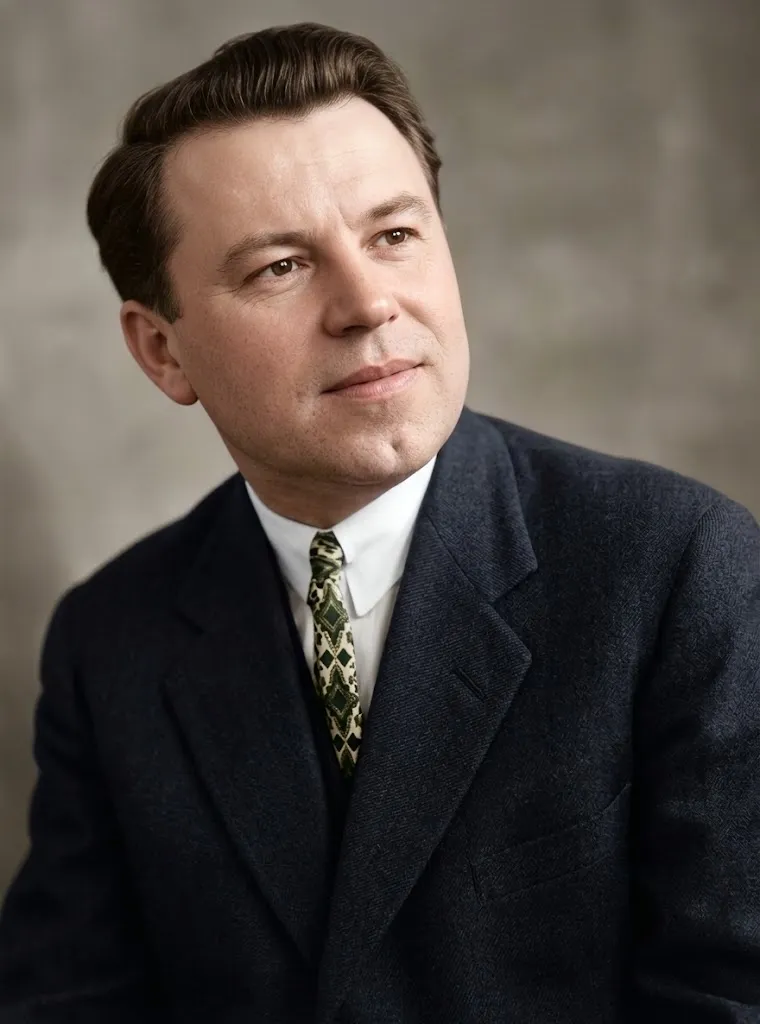
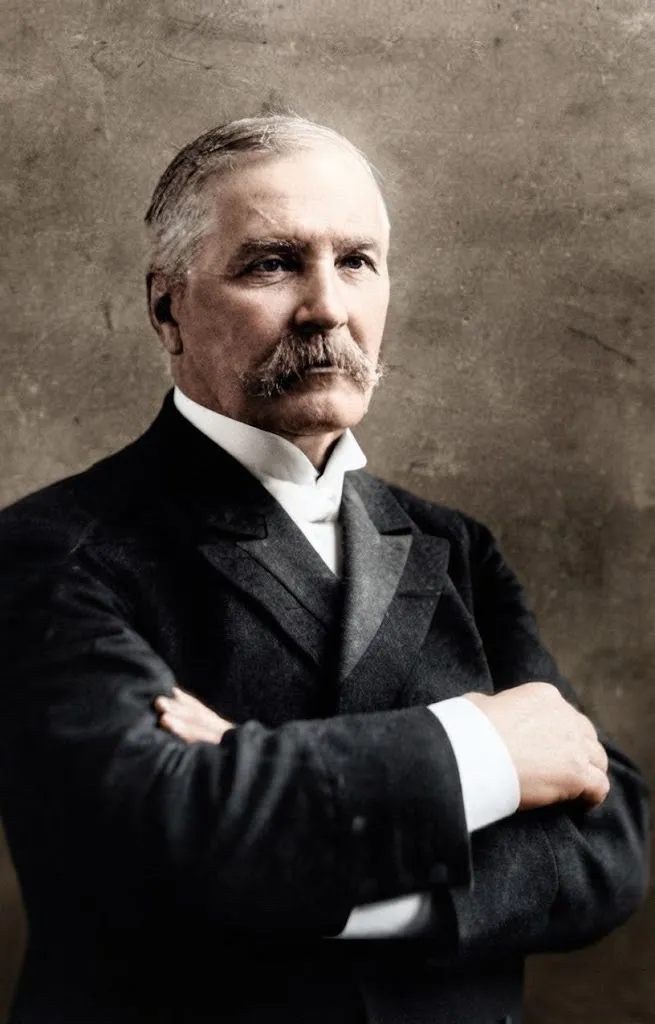
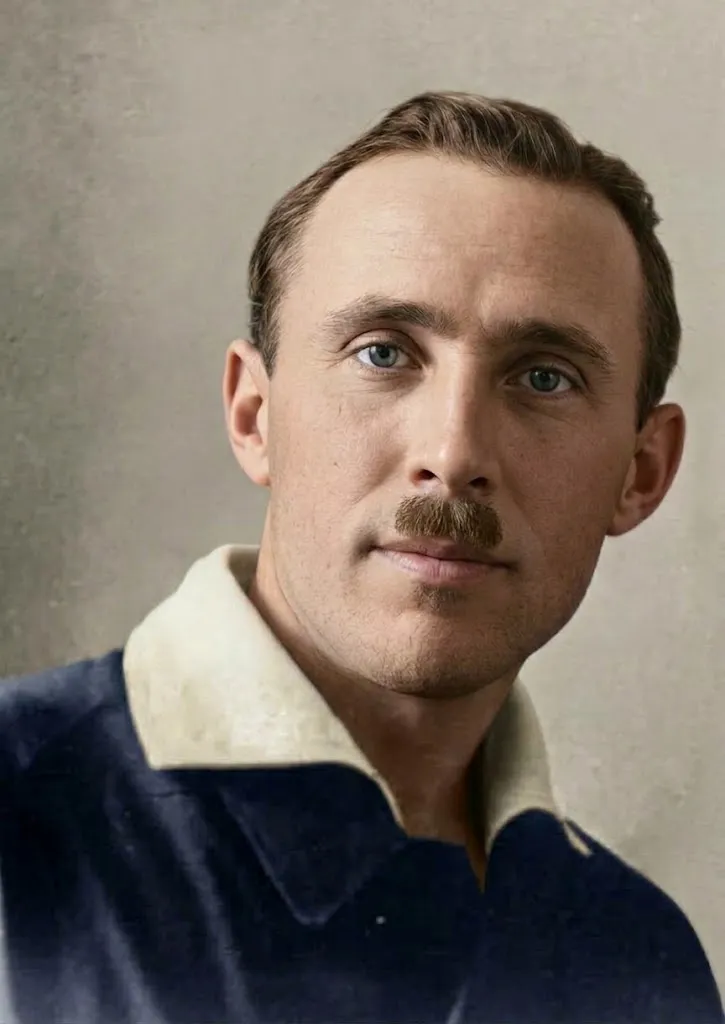
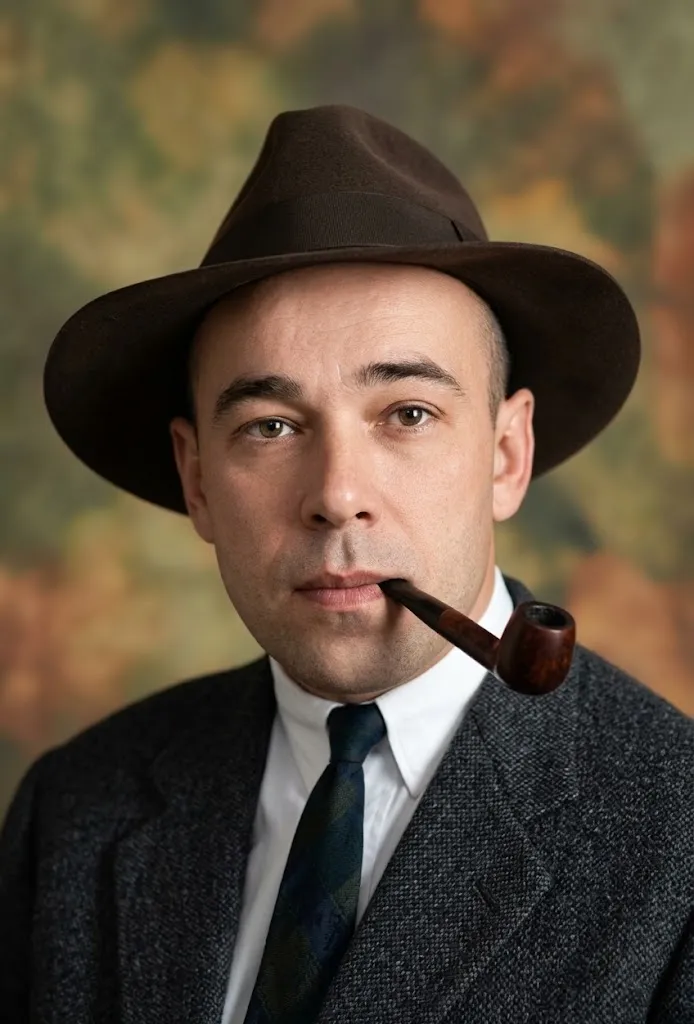
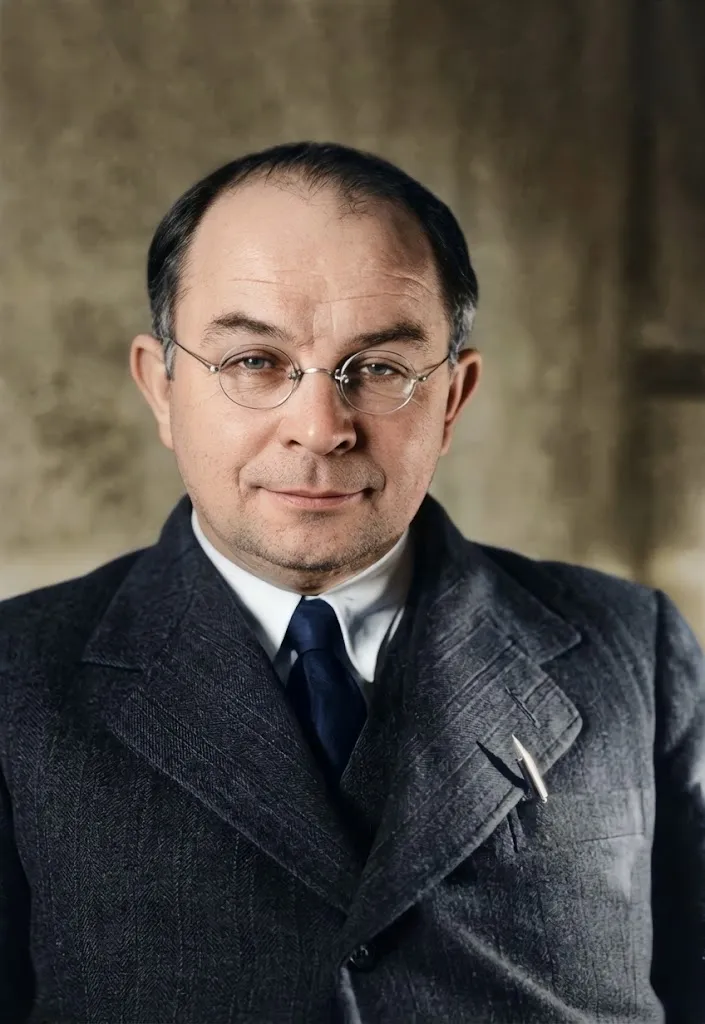
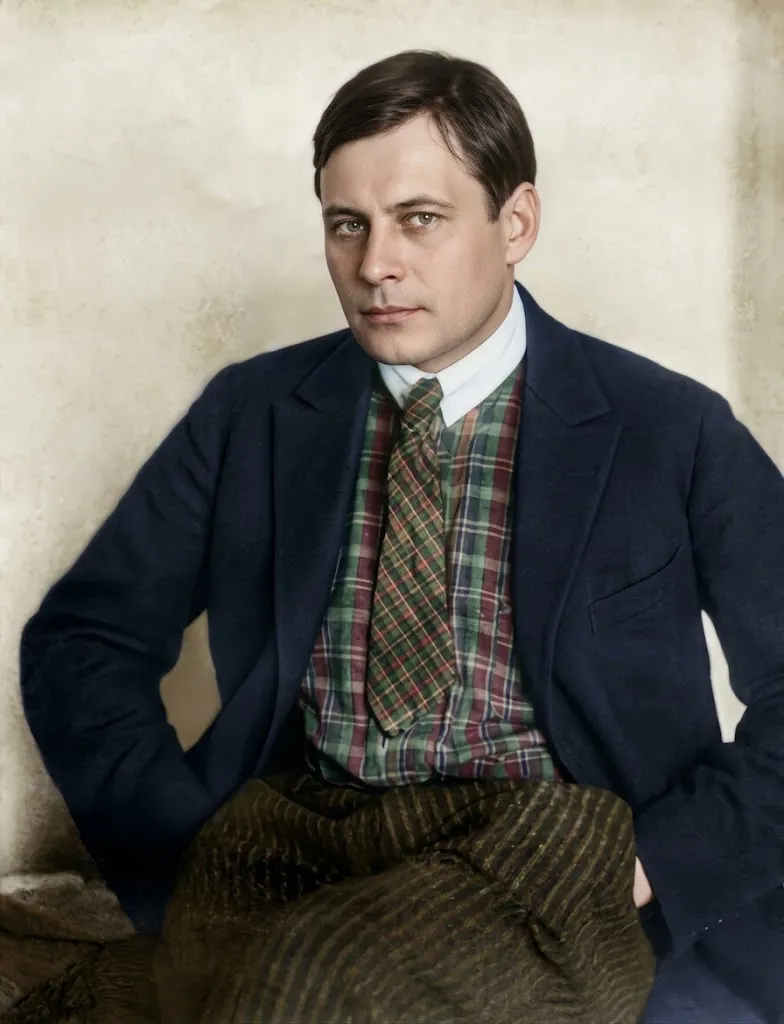
He was arrested on his birthday: on 19 March 1931 Maksym Rylskyi turned 36. A Neoclassicist poet and translator of Mickiewicz and Pushkin, after prison he had to become an “official” poet. Of the Kyiv Neoclassicists, he alone lived through the terror while staying in Ukraine.
Key accomplishments
- Translation of Adam Mickiewicz’s Pan Tadeusz (published as a book in 1927)
- Translations of Pushkin’s Eugene Onegin, Rostand’s Cyrano de Bergerac and Shakespeare’s King Lear
- Collections Beneath the Autumn Stars (1918), The Blue Distance (1922), Autumn in Holosiiv
- Member of the Academy of Sciences of the Ukrainian SSR (1943); director of the academy institute that now bears his name (1944–1964)
- Lenin Prize (1960) for the collections Roses and Grapes and Distant Horizons
The boy from Romanivka
Maksym Rylskyi was born in Kyiv in 1895. His father, the ethnographer and public figure Tadei Rylskyi, married Melaniia, a peasant woman from Romanivka, where the Rylskyi estate stood (now in the Zhytomyr region). That is where the future poet grew up. As a gymnasium student he lived with the families of Mykola Lysenko and Oleksandr Rusov. Rylskyi published his first poem in 1907 and his first collection, On the White Islands, in 1910, at 15. He studied medicine, then history and philology, and in the turbulent years of the revolution he taught in village schools, including in his home village of Romanivka.
The five Neoclassicists
Rylskyi returned to Kyiv in 1923 and joined the circle of Neoclassicist poets: Mykola Zerov, Pavlo Fylypovych, Mykhailo Drai-Khmara and Oswald Burghardt, known as Yurii Klen. They shared a love of strict classical forms, and official critics accused them of ignoring “relevant” themes. Rylskyi’s Ukrainian translation of Adam Mickiewicz’s Pan Tadeusz (published as a book in 1927) was a cultural event.
Arrested on his birthday
Rylskyi was arrested on the day he turned 36: 19 March 1931. The arrest is linked to the trial in the fabricated case of the “Union for the Liberation of Ukraine”. He spent five months in Kyiv’s Lukianivka prison, taken from there to interrogations by the secret police (GPU), and came to know its system of intimidation, forced self-accusation and “repentance”. After his release the poet wrote a verse “Declaration of the Duties of a Poet and Citizen” (1931) and the collection The Sign of Libra (1932), in which he accepted the new rules of Soviet literary life. Most of his Neoclassicist friends later died in Stalin’s camps, and Burghardt had to emigrate. As his closest friends vanished into the camps one after another, Rylskyi told Halyna, the wife of Yevhen Pluzhnyk, that he wanted to shout down the line to the Kremlin: “you are taking out Ukraine’s brain and leaving her to live without a brain”.
Carrot and stick
Rylskyi became an “official” poet. During the war he was made an academician, joined the Party, headed the Writers’ Union of Ukraine, and from 1944 until his death ran the academy’s institute of folk art and art studies. He received Stalin Prizes (1943, 1950) and the Lenin Prize (1960). But honours alternated with persecution: after the war he was again accused of “nationalist errors”, and the secret police even planned to stage his murder as if by OUN nationalists. A chain of circumstances and the poet’s standing prevented it. In the last year of his life the translator of Mickiewicz was made an honorary doctor of the Jagiellonian University in Kraków.
Debates and assessments
Some scholars write that after 1932 Rylskyi became one of the main official Soviet poets, although his eulogies of the Party and Stalin were often ambiguous, and judge his later verse merely technically proficient. At the same time they acknowledge that in his essays of the early 1960s Rylskyi carefully and tactfully, but unflaggingly, defended Ukrainian culture against Russification. Others note that in the “noose” of socialist realism the poet had to write topical verse that lasted a day, yet kept his true talent, and as a public figure fearlessly defended the language and supported young talent. He has also been called a poet of the “not-quite-executed” Renaissance.
Why it matters today
Rylskyi is considered to have done more than any of his contemporaries to develop the Ukrainian literary language. His translations showed that Ukrainian could carry the world’s classics, from Mickiewicz to Shakespeare. “The richer the thought, the richer the language,” he said. Anyone who reads Shakespeare or Mickiewicz in Ukrainian today is following a path he opened.