1860–1944
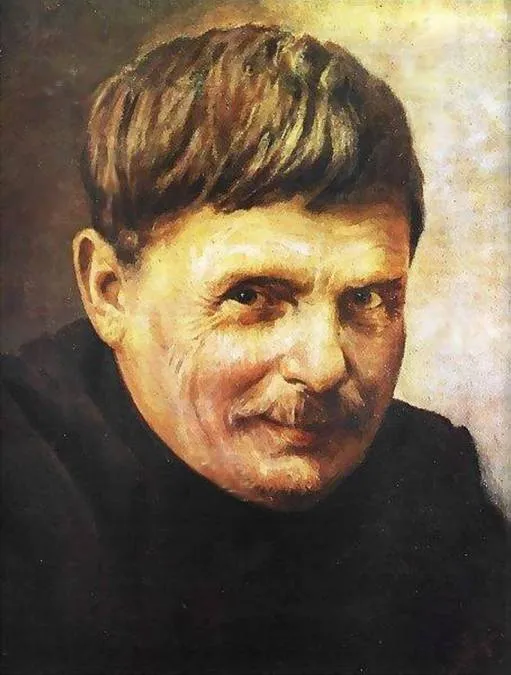
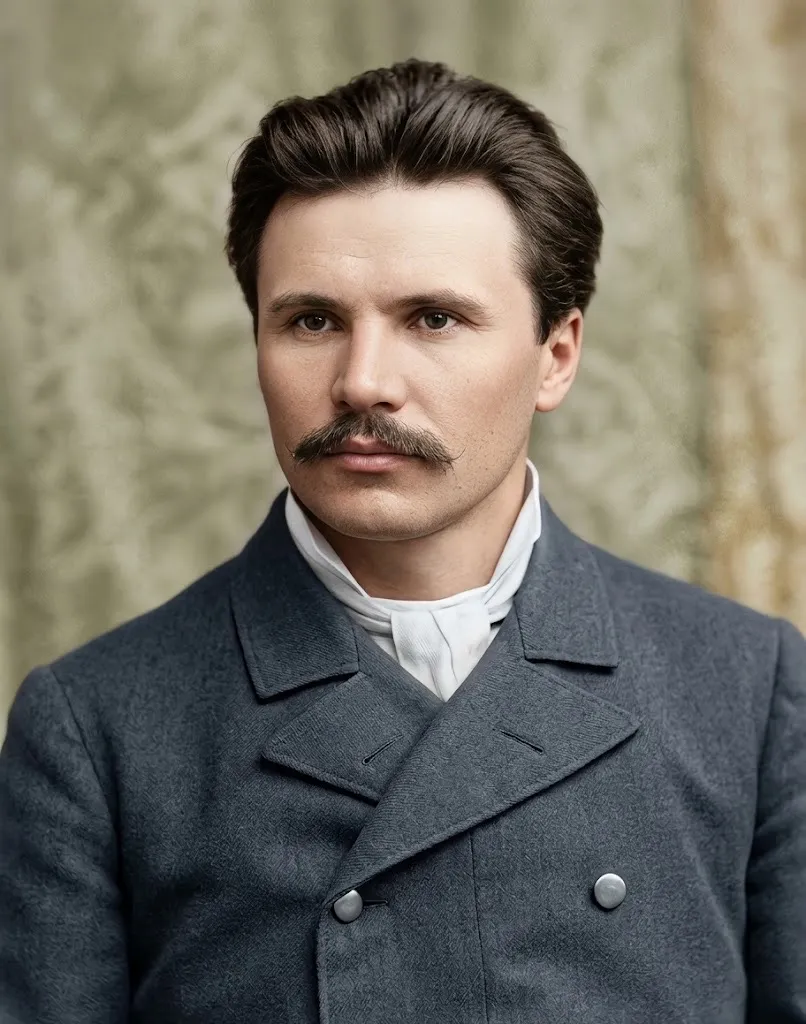
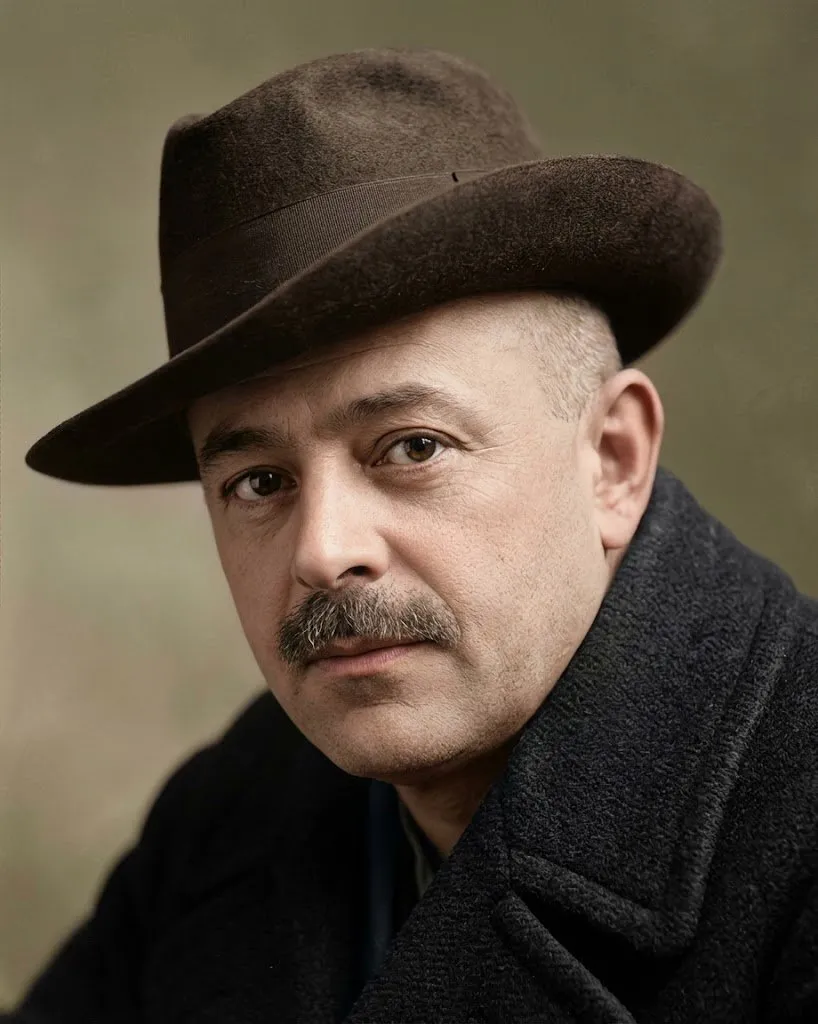
Mykola Samokysh
Battle painter, academician
At school he was punished for secretly drawing horses and battles. Mykola Samokysh from Nizhyn became an academician of painting, showed Khmelnytskyi, Bohun and Kryvonos in battle, made the album From Ukrainian Antiquity with Vasylkivskyi and founded an art school in Simferopol.
Key accomplishments
- Academician (1890) and professor of the St Petersburg Academy of Arts, head of its battle-painting studio
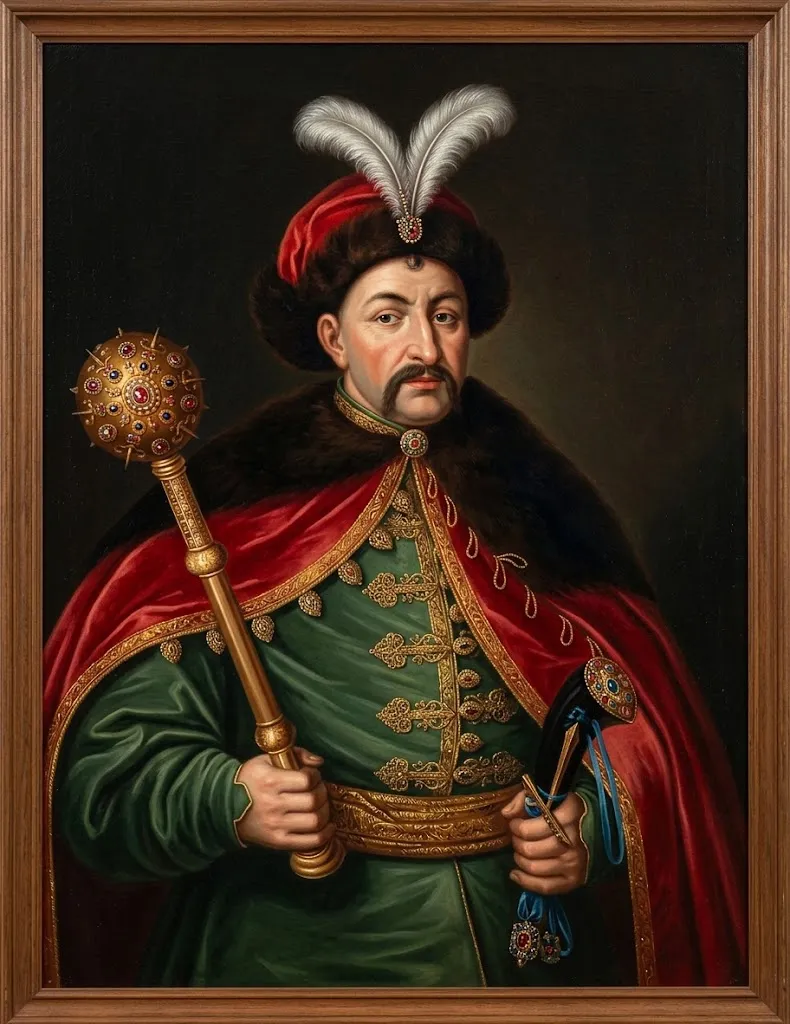
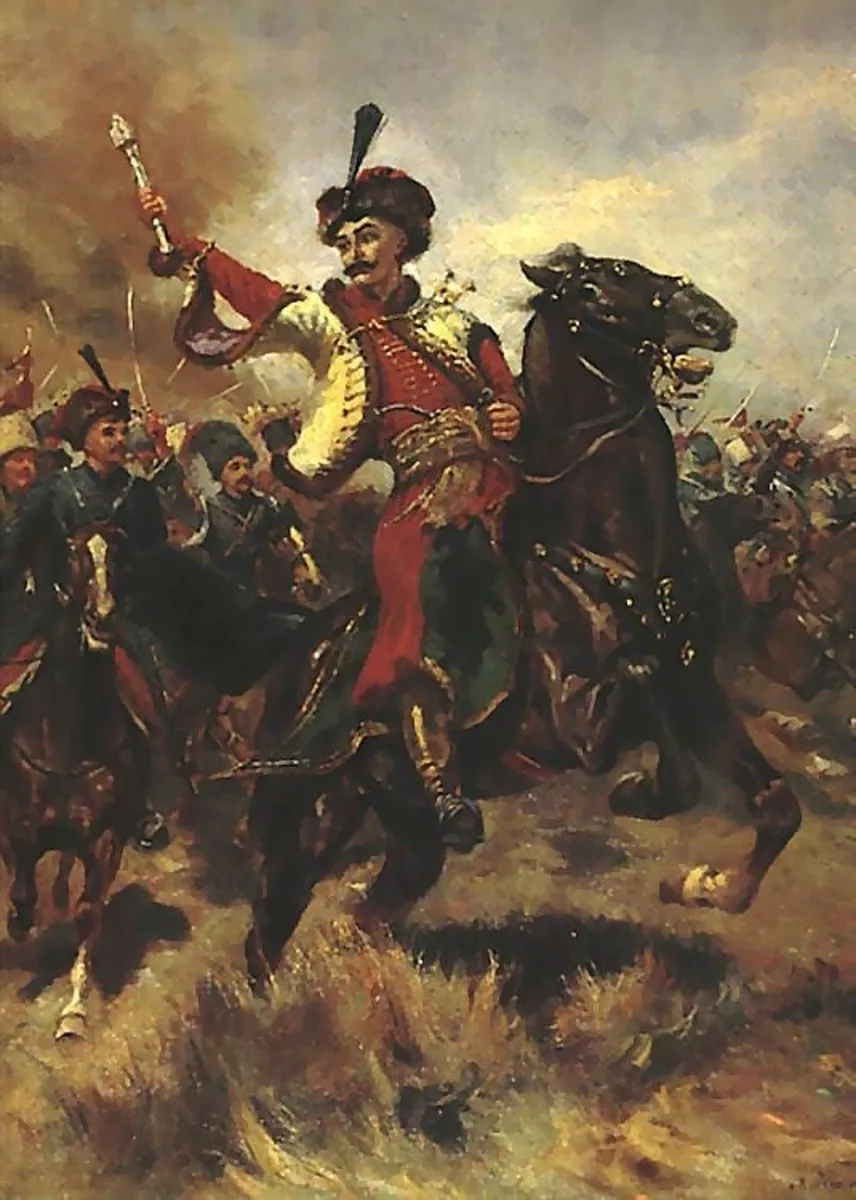
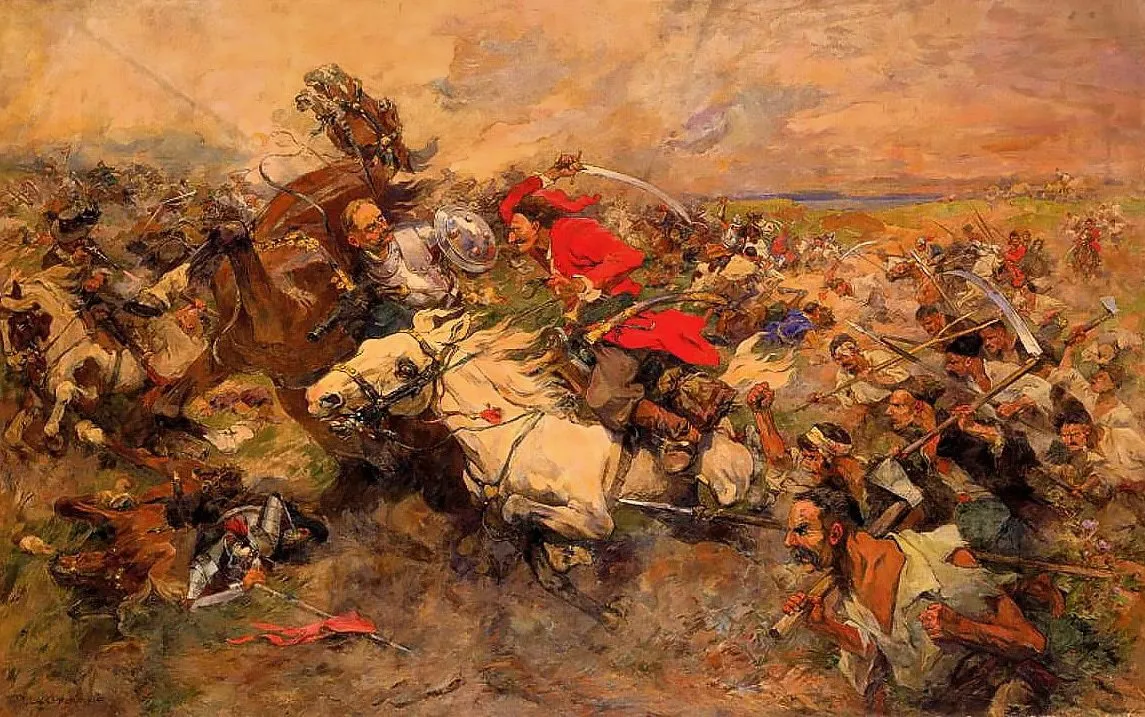
- Paintings of Cossack history: Bohdan Khmelnytskyi Entering Kyiv in 1648 (1929), The Battle of Zhovti Vody (1930), Ivan Bohun Fighting Czarniecki at Monastyryshche (1931), Maksym Kryvonos Fighting Jeremi Wiśniowiecki (1934)
- The albums From Ukrainian Antiquity (1900, with Serhii Vasylkivskyi, text by Dmytro Yavornytskyi) and Motifs of Ukrainian Ornament
- Illustrations to Mykola Hohol, Marko Vovchok and Ivan Nechui-Levytskyi
- Founder of the Simferopol studio that grew into the Crimean art school named after him
- More than 10,000 paintings and drawings
Punished for horses
At the gymnasium in Nizhyn, Mykola Samokysh was punished for secretly drawing horses and battles. Later, horses and battles made him an academician of painting. He was born on 25 October 1860 in Nizhyn, and came from Cossack families on both his father’s and his mother’s side. The Academy of Arts in St Petersburg did not take him at once: he spent a year as an auditor in its battle-painting studio and was admitted only in 1879.
From St Petersburg to Paris
Samokysh graduated from the Academy in 1885 with the Large Gold Medal, then spent three years in Paris studying with the battle painter Édouard Detaille. In 1890 he was made an academician for a painting of a herd of horses at a watering place. His horse paintings are considered the first and finest animal paintings in Ukrainian art. As a student he was friends with a circle of Ukrainophile artists, among them Serhii Vasylkivskyi.
A painter at war
In 1904 Samokysh went to the Russo-Japanese War as a correspondent for the magazine Niva and brought back an album of drawings. He later headed the Academy’s battle-painting studio, and in the First World War he took his students to the front to draw. This is described as a unique case in the history of world art.
Ukrainian antiquity
In 1900, with Vasylkivskyi and Dmytro Yavornytskyi, he published the album From Ukrainian Antiquity to bring Ukrainian history to a wide audience. They also worked together on the decoration of the Poltava provincial zemstvo building and on the album Motifs of Ukrainian Ornament. Samokysh illustrated Mykola Hohol, Marko Vovchok and Ivan Nechui-Levytskyi, and designed the album The Drawings of Taras Shevchenko for the Shevchenko Society in St Petersburg.
Khmelnytskyi, Bohun and Kryvonos
In 1918 Samokysh moved to Crimea, and in 1922 to Simferopol, where he founded a studio that grew into the art school now named after him. From 1929 he painted a cycle on the 17th-century war of liberation: Bohdan Khmelnytskyi Entering Kyiv in 1648, The Battle of Zhovti Vody, Ivan Bohun Fighting Czarniecki at Monastyryshche and Maksym Kryvonos Fighting Jeremi Wiśniowiecki. His old friend Yavornytskyi helped him gather material. From 1937 Samokysh headed the battle-painting studio of the Kharkiv Art Institute, and he himself worked 10–12 hours a day. He died on 18 January 1944 in Simferopol, then occupied by the Germans.
Debates and assessments
Under Soviet rule Samokysh was loyal to the authorities and received honours, among them the Stalin Prize in 1941. Many of his late canvases are devoted to the Red Army and the Civil War, such as the large Crossing the Syvash. At the same time, it was in these years that he painted his cycle on the Ukrainians’ fight for freedom in the 17th century. During the German occupation of Crimea he did not evacuate; according to witnesses, he sold or bartered his paintings to survive.
Why it matters today
Samokysh made Cossack history visible: on his canvases Khmelnytskyi, Bohun and Kryvonos lead the Cossacks into battle once more. With Vasylkivskyi and Yavornytskyi he published an album that taught Ukrainians to take pride in their own heritage. And his demand for accuracy, from the weapons he collected to his 10–12-hour working days, shaped generations of artists in Kharkiv and Crimea. Anyone who tells history so that people believe it carries his work on.